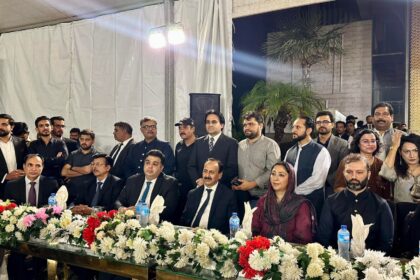




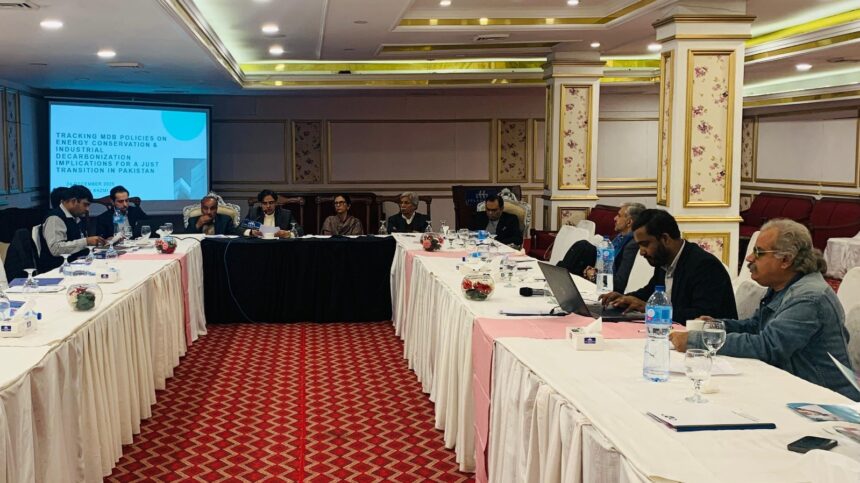
ISLAMABAD — Industry experts, policymakers and civil society representatives gathered at a seminar organised by Alternate Development Services to press for urgent structural reforms that would advance a just Industrial Transition in Pakistan, reduce dependence on fossil fuels and raise export competitiveness, especially within the textile sector.
The event, hosted by ADS CEO Amjad Nazeer and attended by more than 50 stakeholders, showcased new primary research and policy analysis aimed at accelerating solar adoption, aligning multilateral development bank support with national priorities and advancing climate justice measures such as concessional finance and debt relief for highly indebted countries like Pakistan.
Researchers led by Dr. Ali Abbas Kazmi and Usman Bin Ahmad unveiled a scoping study based on primary data from 80 textile mills in Faisalabad and Multan. The fieldwork mapped 82 textile industries with a combined installed solar capacity of 237 MW. Techno-economic modelling in the study showed that centralised solar scenarios could achieve up to an 87% renewable fraction with the lowest levelized cost of electricity, while distributed models deliver faster paybacks for individual mills. The study estimates annual greenhouse gas reductions of 1.6 to 1.76 billion kilograms of CO2 and highlights important implications for exporters facing the EU Carbon Border Adjustment Mechanism.
To translate these findings into action, researchers proposed targeted policy measures including tiered wheeling charges, incentives for solar-plus-storage systems, and the creation of a Green Market Stabilisation and Blended Funds facility to de-risk private investments and speed project finance for industrial decarbonisation.
A complementary study tracking MDB policies for a just transition, presented by lead author Twangar Kazmi, evaluated the World Bank Group and Asian Development Bank country frameworks against Pakistan’s NDC 3.0, IGCEP and national energy and adaptation policies. While the analysis found strong directional alignment, it identified critical gaps in measurable metrics, reform sequencing, institutional capacity and safeguards to protect workers and communities. The Punjab Green Development Program was assessed at just 45 percent alignment, underscoring the need for stronger monitoring, reporting and verification systems. Recommendations included civil society-led MDB scorecards, multi-stakeholder working groups and preparedness for Article 6 carbon market mechanisms.
The seminar’s first session on solar barriers under the Competitive Trading Bilateral Contract Market examined regulatory constraints such as high Use of System Charges and legacy power purchase agreements. Panellists Dr. Afia Malik, Qurat-ul-Ain Cheema and Aamir Imran highlighted operational and compliance hurdles for textile firms, with practical examples of hybrid solar deployments at Kohinoor Textile Mills and the particular decarbonisation challenges faced by SMEs.
A second session focused on MDB priorities featured Dr. Afia Malik, Zubair Faisal Abbasi and Abdul Khaliq. Abbasi welcomed the study’s practical civil society “menu card” while calling for micro-level surveys and restorative justice approaches, and he criticised prevailing neoliberal tendencies in MDB programming. Khaliq warned that roughly 70 percent of climate finance arrives as loans rather than grants, a dynamic that risks trapping Global South countries in debt and led to calls for a parliamentary debt audit commission and reframing climate finance as climate justice. Dr. Malik added that loan structures often channel funds back to lenders without meeting non-bankable local needs, and Dr. Khadim Hussain urged attention to deeper structural issues such as overproduction, overconsumption, interprovincial inequities and elite subsidies while demanding accessible knowledge sharing for industrial stakeholders.
At the close of the seminar, Amjad Nazeer emphasised the need to steer MDB financing toward inclusive decarbonisation and highlighted debt justice as central to effective climate action. He urged advocacy for grants over loans to avoid worsening Pakistan’s existing fiscal pressures, noting the country’s roughly $2 billion monthly external repayment burden. The interactive discussions and networking lunch reinforced commitments to joint advocacy on provincial integration, SME support and practical policy steps to advance a fair and rapid Industrial Transition for Pakistan’s textile industry.
Read in Urdu: فوسل فیول پر انحصار کم کیے بغیر صنعتی ترقی ممکن نہیں، ماہرین کا انتباہ