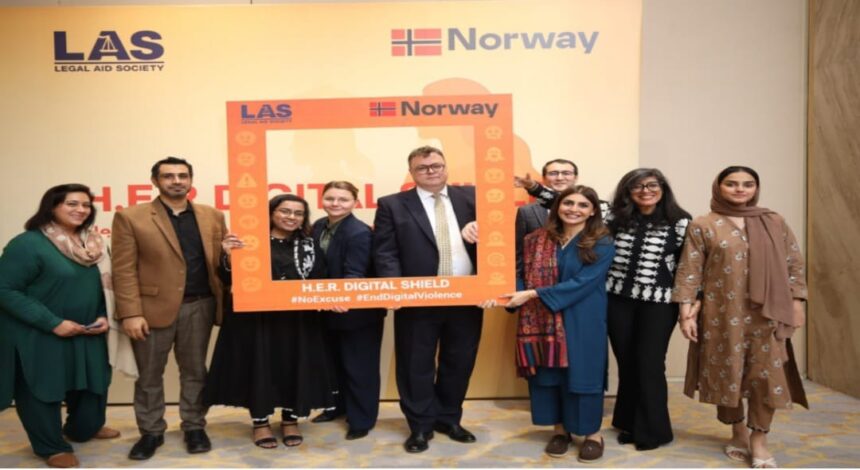
Participants at an event in Islamabad stressed that policy measures are urgently needed to create a safe digital environment in Pakistan, highlighting rising incidents of online harassment, cyberstalking and the non-consensual sharing of images. The seminar, organised by Legal Aid Society in collaboration with the Norwegian embassy as part of the 16 Days of Activism against Gender-Based Violence, drew experts from government, law enforcement, international agencies and civil society.
Abdul Khaliq Sheikh, Federal Secretary for Human Rights, told attendees that the government is committed to protecting every citizen’s digital rights and that ensuring women and girls can access the online world safely and equally remains a top priority. The Norwegian ambassador H.E. Per Albert Ilsaas reiterated Norway’s long-standing support for gender equality and digital rights, calling for policy dialogue, state action and multi-stakeholder cooperation to counter digital violence and establish a safer online space.
Legal Aid Society chief executive Haya Iman Zahid urged a focus on digital safety, stronger laws and survivor-centred support systems, warning that the opportunities of the digital world have also turned it into a risky environment for many women. Organisers screened awareness videos based on real cases of digital violence to underline the human impact of these offences.
A panel chaired by journalist Maira Imran included experts such as Pari Gul from Islamabad Police, Nargis Raza of the National Cyber Crime Investigation Agency, Nadia Tariq Ali from UNDP and Dilshad Pari from UNFPA. Panelists discussed law enforcement challenges, the importance of victim support and the need for coordinated policy responses to reduce online harm and strengthen a safe digital environment for vulnerable populations.
The second session, led by Maliha Zia, focused on technology-based solutions. Speakers included Anam Baloch of Digital Rights Foundation, Osama Khalji, a representative from Google Pakistan, Sadaf Khan of Media Matters for Democracy and Asim Ghaffar of the Public Interest Law Association of Pakistan. They highlighted emerging tools and platform responsibilities that can help prevent abuse, support survivors and improve reporting and investigation mechanisms.
Speakers at the event emphasised that building a safe digital environment requires comprehensive policy frameworks, stronger legislation, survivor-focused services and sustained collaboration between state institutions, technology firms and civil society. The gathering called on policymakers to prioritise concrete measures to curb technology-enabled abuse and protect the digital rights and dignity of all citizens in Pakistan.