



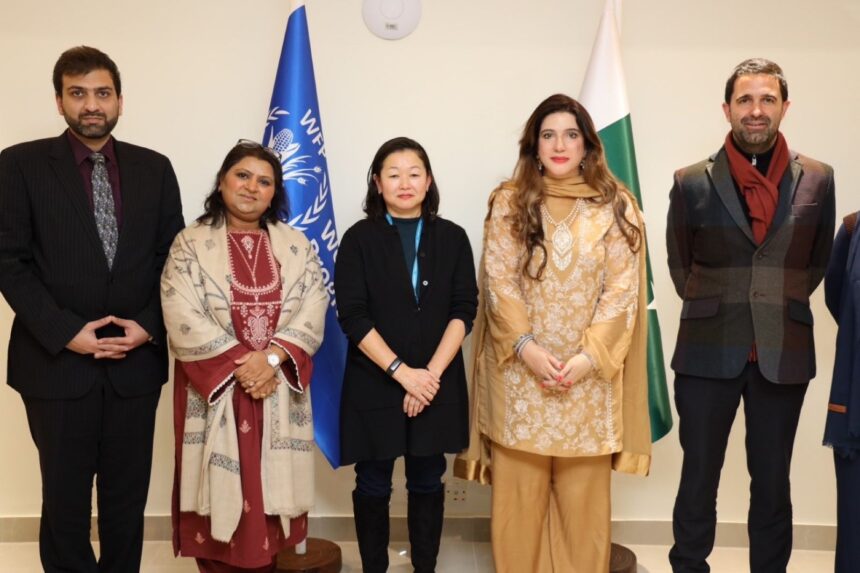
Jahan Ara Manzoor Wattoo, Vice Chairperson of the Punjab Social Protection Authority, met with WFP Country Director Coco Ushiyama in Islamabad to discuss ways to strengthen collaboration across Punjab’s social protection sector, review key joint initiatives and advance arrangements for signing a landmark memorandum of understanding.
Vice Chairperson Wattoo said the PSPA was created to unify Punjab’s social protection programs, reduce duplication and close operational gaps. She noted that the authority’s flagship initiatives are already improving outcomes for vulnerable and marginalised communities across the province and that closer partnership with WFP can scale those gains.
The meeting recalled the longstanding collaboration between PSPA and WFP, including joint work on insurance-based social protection that has recently been reinforced under a global climate risk initiative. Both sides agreed to deepen cooperation by linking social protection with disaster risk financing and by exploring pre-arranged solutions to respond more effectively to floods and droughts, building a more resilient and adaptive system in Punjab.
Officials highlighted that a strengthened PSPA–WFP partnership would enable timely, dignified and effective assistance to vulnerable populations during natural disasters, climate shocks and other emergencies. The discussions also focused on strengthening research, programme design and data systems to ensure interventions are evidence-based and responsive.
Vice Chairperson Wattoo emphasised the need to improve grievance redressal mechanisms and monitoring frameworks so that service delivery remains transparent, equitable and accountable. Both organisations signalled support for integrating these reforms into the proposed agreement to enhance the performance of Punjab social protection programmes.
At the close of the meeting PSPA and WFP reiterated their commitment to advancing sustainable, inclusive and impactful social protection interventions under the proposed MoU, with the shared goal of improving quality of life for the province’s most vulnerable residents and further strengthening Punjab’s social protection architecture.