



ISLAMABAD: Pakistan Overseas Forum Vice Chairman Ghulam Mustafa Dewan has called upon the government to allocate reserved seats in parliament for overseas Pakistanis and grant them the right to vote.
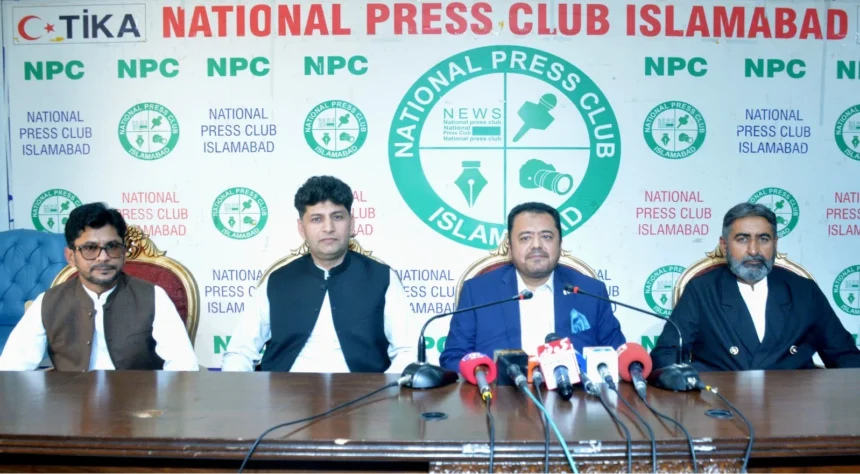
Addressing a press conference along with his team at the National Press Club Islamabad, Dewan said overseas Pakistanis were a valuable asset of the country and their services and sacrifices should be acknowledged through practical measures.
He demanded that travel facilities for overseas Pakistanis be maintained for up to six months after the expiry of their NICOP, and that all facilities required to resolve their problems be provided under one roof. He also urged the government to provide proper facilities to encourage overseas Pakistanis to invest in Pakistan.
Dewan said Pakistanis living abroad not only had deep affection for their homeland but also played an important role in national development through assistance to fellow citizens in difficult times, welfare activities and investment in Pakistan.
He said overseas Pakistanis faced several difficulties related to travel documents, passports, NICOP, legal matters and investment in Pakistan, adding that the government should take effective steps to resolve these issues.
He said overseas Pakistanis sent $40 billion annually to the country in the form of foreign exchange.
Referring to welfare services for overseas Pakistanis, Dewan said some members of the Pakistani community abroad practically supported their compatriots in times of difficulty, particularly in cases where legal documents were cancelled or where families faced the difficult task of transporting the body of a Pakistani who had died abroad back to Pakistan. He said such individual assistance became a major relief for affected families.
On the occasion, Abdul Razzaq called for discussion on the problems faced by overseas Pakistanis, while Chaudhry Fayyaz, who represents Europe, was asked to share his experiences regarding overseas Pakistanis’ investment and business in Pakistan.
Speaking in the light of his business experience abroad and investment in Pakistan, Chaudhry Fayyaz said when an overseas Pakistani invested in his own country, he expected proper facilities, encouragement and an environment where his investment was secure and business affairs could proceed transparently.
He said he had come to Pakistan for investment four to five years ago and now had six franchises in the country. However, he added that certain difficulties also emerged during the investment process and needed to be addressed.
Malik Abrar, based in Canada, highlighted travel-related problems faced by overseas Pakistanis. He said some Pakistani citizens faced difficulties due to the expiry of passports, NICOP and other travel documents, or delays in their renewal.
Citing an example, he said a Pakistani family recently faced hardship when a woman’s Pakistani passport expired one day before travel. The airline did not allow her to travel, resulting in ticket cancellation, rebooking and additional financial expenses.
The speakers proposed that Pakistani citizens whose NICOP or other identity documents were close to expiry should be provided travel facilities or temporary relief under specific conditions, especially those who held Pakistani citizenship or had a birth connection with Pakistan. They said minor documentation issues should not affect their travel plans and financial matters.
They said an effective system was needed to understand and resolve the problems of overseas Pakistanis. The government, they added, should take steps through diplomatic missions, relevant institutions and online facilities for the prompt redressal of complaints, timely renewal of travel documents and simplification of the investment process in Pakistan.
The speakers stressed that overseas Pakistanis were a valuable asset of the country and their problems should be resolved so that they could continue to contribute with greater confidence to Pakistan’s development, economic stability and welfare activities.