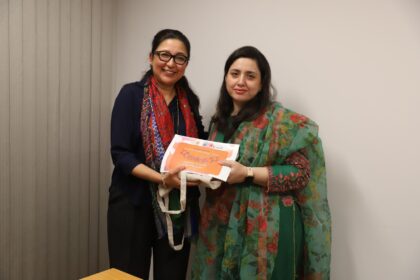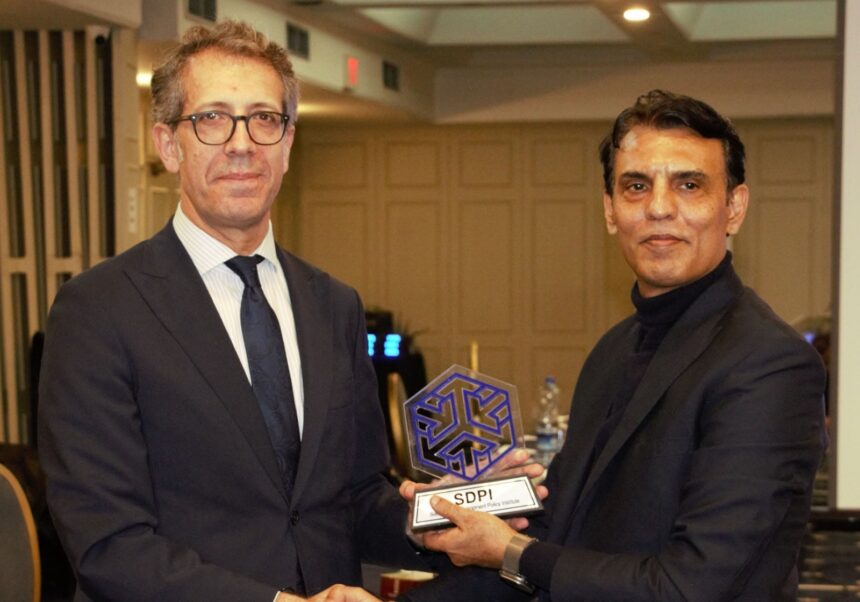
The Sustainable Development Policy Institute convened its annual SDPI retreat in Islamabad to review institutional performance, conduct a SWOT exercise and set policy priorities for 2026 and beyond. Faculty and staff took part in a daylong stocktake that identified emerging opportunities and mapped initiatives to strengthen the Institute’s relevance on national and international stages.
Dr Mahir Binici, Resident Representative of the International Monetary Fund in Pakistan, commended SDPI as a policy check and balance grounded in evidence and independent analysis. He urged the Institute to translate complex research into accessible language to widen public and policymaker engagement and highlighted how digital technology and AI enabled tools can bridge the gap between technical work and public understanding. Dr Binici also called for deeper comparative analysis and closer engagement with universities, international organisations and global research networks to broaden reach and quality.
Dr Abid Qaiyum Suleri, Executive Director SDPI, framed the retreat as a structured forum to review performance and set direction for future policy engagement. He announced stricter performance and accountability norms across SDPI units and proposed reviving the Policy Solutions Lab to generate rapid, practical policy recommendations, including the capacity to respond to major developments within 72 hours. Dr Suleri emphasised the need to strengthen strategic communication, digital outreach and knowledge dissemination to amplify SDPI’s impact.
Dr Ehsan Mehmood Khan, Senior Advisor Emeritus at SDPI, described the Institute as an efficient, credible and high performing think tank with a strong external reputation. He urged more robust policy dissemination and an expanded digital footprint to widen influence and public engagement, and stressed converting strategic thinking into execution through clearer annual thematic priorities to guide programmes and partnerships.
Dr Shafqat Munir, Deputy Executive Director SDPI, opened the retreat noting its purpose to gather broad institutional input, review progress and challenges, and translate collective reflection into a practical roadmap for 2026. Participants focused on aligning research priorities with Pakistan’s development agenda while exploring innovative modalities for faster policy response.
The retreat concluded with a shared commitment to sharpen research priorities, improve outreach and communication, strengthen institutional coordination and deepen SDPI’s role as a trusted source of evidence based policy advice for Pakistan’s development priorities. The outcomes from this SDPI retreat aim to bolster the Institute’s national relevance and international engagement through timely, policy relevant evidence and enhanced digital outreach.