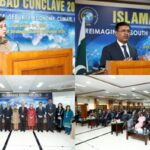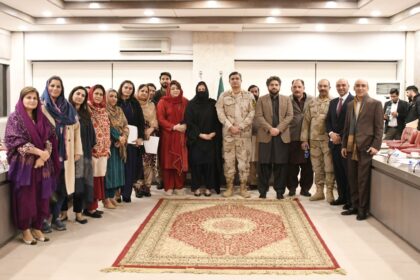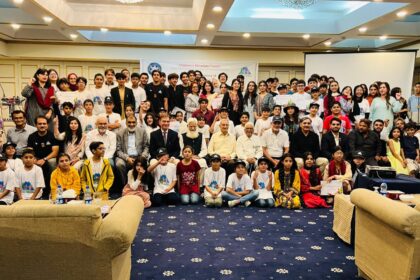





FAO Pakistan, supported by the Green Climate Fund project Transforming the Indus Basin with Climate Resilient Agriculture and Water Management, convened a provincial workshop in Hyderabad to promote fair, transparent and gender-responsive land tenancy systems in Sindh.
The event brought together representatives from the Agriculture Extension Department, the Board of Revenue, the Labour Department, the Women Development Department, the Sindh Irrigation and Drainage Authority, the Sindh Chamber of Agriculture, the Sindh Abadgar Board, academia, water user associations, farmer organizations, landowners and farm managers to examine current practices and next steps for reforming land tenancy arrangements.
Participants discussed local tenancy practices and examined key challenges and opportunities for establishing fair tenancy arrangements that support smallholders. Good practices in transparent and gender-responsive tenancy were highlighted and the Voluntary Guidelines on the Responsible Governance of Tenure (VGGT) were introduced as an international framework to strengthen responsible land governance across Sindh.
A multi-stakeholder panel provided space for practical exchange between government officials, civil society and farming communities. Engr. Prof. Dr. Altaf Ali Siyal, Vice Chancellor of Sindh Agriculture University Tando Jam, delivered opening remarks underscoring the importance of inclusive and transparent tenancy arrangements for climate-resilient agriculture and rural livelihoods.
In closing, Dr. Allah Warayo Rind, Director General of the Agriculture Extension Department, Government of Sindh, Hyderabad, called for enhanced collaboration among FAO, government departments and community organizations to better support smallholder farmers and tenants. FAO reiterated its commitment to promoting responsible land governance and climate-resilient agriculture to build a more sustainable and inclusive future for Sindh’s farming communities and to strengthen land tenancy protections for women and men alike.