



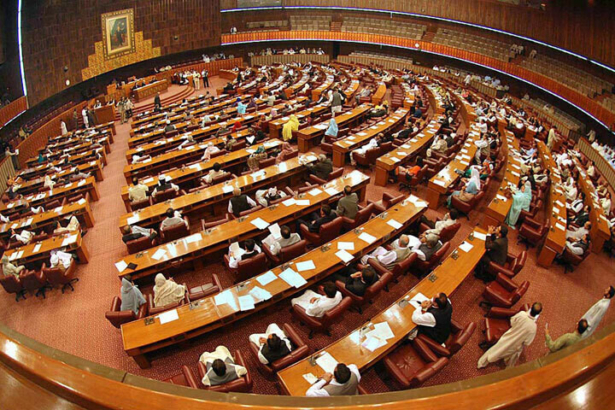
The review of the second year of the 16th National Assembly finds a legislature that increased its bill passage rate while continuing to struggle with attendance, agenda management and thorough scrutiny. The parliamentary year ran from March 1, 2025 to February 28, 2026, during which the Assembly met for 84 sittings, down from 93 in its first year, while total working hours rose to 231 from 212, reflecting longer but fewer sittings.
Legislative productivity intensified: the Assembly passed 59 bills in the year compared to 47 in the previous year, a 25.5% rise. This output also stands above the average of 21.75 bills recorded in the second years of the 12th to 15th National Assemblies, marking the highest legislative output among recent parliaments. Reliance on ordinances declined to 8, down from 16, indicating a relative drop in executive-driven lawmaking.
Among significant measures enacted was the 27th Constitutional Amendment, which introduced changes affecting judicial appointments and institutional balance. The year also saw passage of the Elections (Amendment) Bill, 2026, which narrowed public access to legislators’ asset declarations by allowing information to be withheld on security grounds. Several major laws moved through the House within compressed timeframes, raising concerns about limited committee scrutiny and constrained clause-by-clause deliberation.
Agenda management remained weak: 47.59% of scheduled daily agenda items were left unfinished, a marginal improvement over 49.18% in the first year but still leaving roughly half of planned parliamentary business incomplete. Such carryover points to persistent scheduling and prioritisation challenges within the Assembly.
Member engagement also declined. Average attendance of MNAs fell to 58.80% from 66.29% in the first year. Quorum was pointed out 19 times and 8 sittings were adjourned for lack of quorum. Prime Minister Mian Muhammad Shehbaz Sharif attended 6 out of 84 sittings, an attendance rate of approximately 7% for the year.
The Assembly faced an institutional vacuum in the opposition leadership after the disqualification of Omar Ayub Khan on August 5, 2025; the Leader of the Opposition post remained vacant until January 16, 2026. Observers note that this prolonged vacancy reduced opportunities for structured government–opposition engagement at a time when consensus-building was particularly needed.
The review highlights a paradox: the 16th National Assembly delivered the highest legislative output among recent assemblies while its internal processes—attendance, agenda completion and committee scrutiny—show structural weaknesses that may undermine legislative quality and public confidence in parliamentary oversight.