



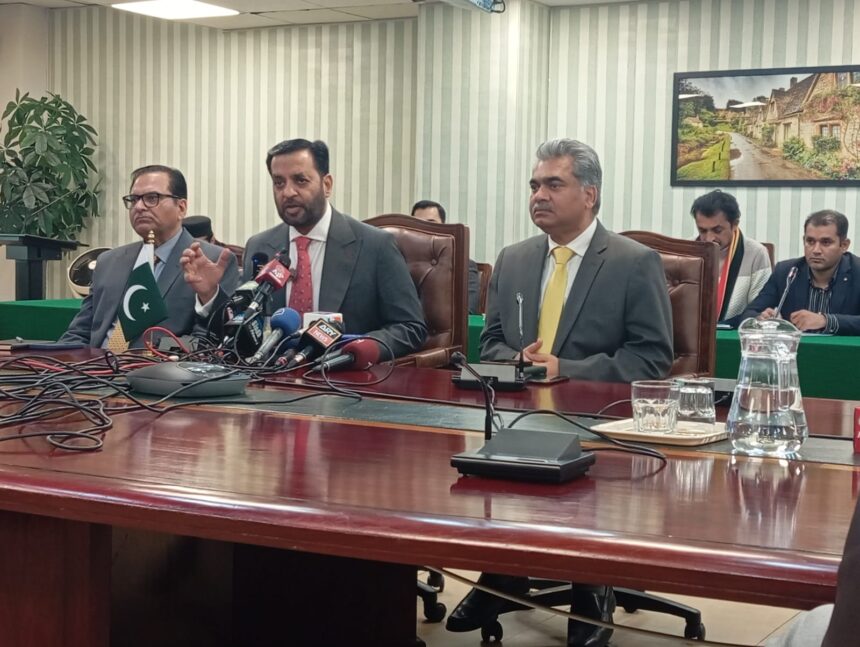
Federal Health Minister Syed Mustafa Kamal outlined an urgent plan to accelerate local vaccine production as Pakistan prepares for a potential $1.2 billion annual vaccine bill when international donor support tapers off. He warned that without timely investment in domestic capacity, the country’s fragile economy could struggle to absorb the looming cost shock and face preventable outbreaks.
Kamal said Pakistan currently provides free vaccination against 13 diseases through a coordinated federal-provincial system and doorstep services at Basic Health Units. He noted the country serves around 25 crore (250 million) people with roughly 62 lakh (6.2 million) births each year and that routine immunization purchases now cost an estimated $400–$500 million. That bill has been affordable largely because pooled procurement and partners under the Gavi framework cover about 49 percent of vaccine costs while Pakistan pays 51 percent, but donor support is expected to decline as the country moves toward full self-financing around 2030–31.
Kamal stressed that Pakistan must prepare to bridge this gap through focused industry development and said the Ministry of National Health Services, DRAP and the National Institutes of Health have spent the last six to seven months pursuing the single strategic objective of building a sustainable domestic vaccine industry. He said the government recently added the HPV vaccine to the routine schedule and anticipates future vaccine additions as global standards evolve, noting that some countries vaccinate children against 47 to 60 diseases.
The minister described extensive outreach to potential partners, including several meetings with health authorities in China and Indonesia and multiple engagements with Saudi Arabia’s health and industrial leadership. Saudi Arabia, which has worked on local vaccine production for a decade, designated Advisor Nizar bin Hariri as the focal person for the collaboration while Pakistan named DRAP CEO Dr. Ubaid as its focal point. Those exchanges included six video conferences and an 11-member Saudi delegation that visited DRAP, NIH and a private sector facility to assess prospects for cooperation on local vaccine production in Pakistan.
Kamal was candid about institutional challenges, saying the NIH requires a complete overhaul and pledging a renewed public institution to serve as the focal point in any government‑to‑government vaccine partnership. He also committed to resolving alleged land encroachment issues linked to NIH to secure the site for future development.
Recognising that vaccine manufacturing is not a typical high-margin business because governments are the main buyers, the minister said Pakistan is drafting an enabling framework to make production viable. This includes the country’s first national Vaccine Policy, already presented to the prime minister, and a planned Vaccine Alliance that would assign specific production lines to selected partners to avoid duplication. The government is also considering demand‑support measures such as a buy‑back guarantee to provide predictable markets for manufacturers.
Domestic need is currently estimated at about 130–140 million doses, while commercial viability often requires production nearer to 300 million doses, making export markets essential for scale. Kamal outlined a phased approach spanning pack-and-fill and local processing through seed development and research for new vaccines, with initial stages possibly starting within about a year and deeper manufacturing capabilities taking several years, accelerated through technology transfer and partner experience.
The minister also highlighted recent budget pressures that initially left new ministry projects unfunded, a situation later addressed through prime ministerial intervention and support from Ahsan Iqbal’s team to reallocate priorities within existing programmes. He said revised priorities include telemedicine, the Universal Medical Record initiative, a Complaint Management System and upgrades to strengthen primary care towards secondary services as part of wider health sector reforms to support the shift toward national vaccine self-reliance.