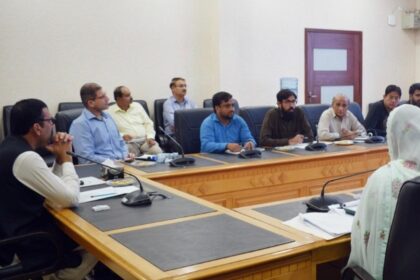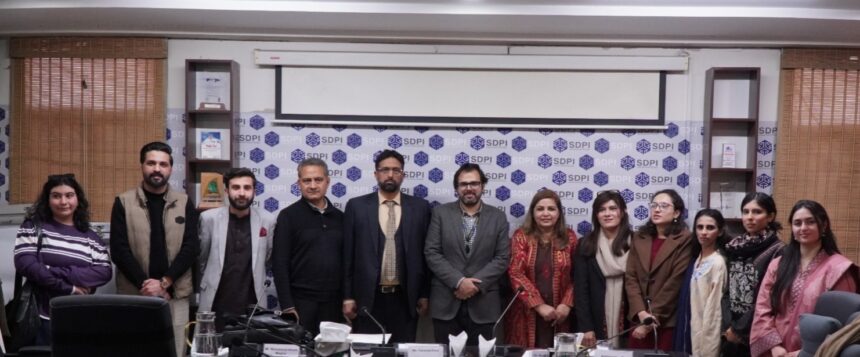
At a high-level seminar in Islamabad hosted by the Sustainable Development Policy Institute, experts and digital rights advocates urged an urgent overhaul of Pakistan’s cyber-governance and the creation of One Stop Crisis Centers to respond to a sharp rise in technology-facilitated violence against women and girls.
Speakers highlighted official figures showing cybercrime complaints reached 171,000 in 2025, up from 102,000 five years earlier, and warned that the surge requires coordinated legal, medical and psychological support for survivors of TFVAW.
Dr Razia Safdar, SDPI’s Senior Policy Advisor, said the government’s digital push must be matched by stronger safety measures, noting that global data shows 67 percent of women face online misinformation and 66 percent experience cyber harassment. “Online harassment is no longer confined to the digital space; it translates into real-life threats,” she said, adding that AI-driven deepfakes and manipulated content inflict lasting emotional and reputational damage.
Fahmida Khan of UN Women Pakistan recounted how her own photograph was misused online and warned that if prominent professionals can be exploited so easily, women in rural and conservative communities face catastrophic risk. She pointed out that around 99 percent of non-consensual deepfake pornography targets women, while cultural stigma and policy gaps keep many victims silent.
Dr Syed Kaleem Imam, an SDPI visiting fellow and former IG Police, criticised the uneven institutional response across the country, noting Islamabad has introduced facilitation centres but most provinces lack specialised units for gender-sensitive, trauma-informed interviewing. He rejected the notion that cybercrime cannot be traced, saying “every digital act leaves a forensic footprint” and stressing the need for better investigative training.
Muhammad Akram Mughal of the National Cyber Crime Investigation unit described severe resource constraints, with investigators handling well over 400 cases each compared with an international benchmark of about 10 cases per officer. He said the conviction rate for cybercrime remains low at 3.7 percent, even as awareness efforts have helped: more than 250 university seminars reportedly reduced some incidents by roughly 30 percent.
Naghmana Hashmi of the Federal Ombudsperson Secretariat warned about the economic fallout, estimating nearly 15 percent of professional women leave jobs because of online harassment and stressing that Pakistan loses billions annually in productivity when women are pushed out of the workforce by digital abuse.
Usman Zafar from UNDP highlighted the deliberate use of gendered propaganda and malinformation to silence women activists and journalists, distinguishing harmful sharing of private real content from broader misinformation campaigns that undermine public participation.
The panel recommended a multi-level strategy to address TFVAW, including drafting a comprehensive legal framework specific to technology-facilitated gender-based violence, adopting One Stop Crisis Centers on the Thailand model to deliver legal, medical and psychological support without requiring an immediate FIR, integrating digital citizenship and privacy management into the national school curriculum, and enforcing human rights standards for technology companies operating in Pakistan.
Speakers called on policymakers, law enforcement and tech firms to prioritise resources, training and trauma-informed procedures so survivors of TFVAW can access justice and support. They stressed that stronger coordination across government, civil society and the private sector is essential to rebuild trust in Pakistan’s digital public sphere.