



Climate experts, policymakers and development practitioners at an SDPI webinar in Islamabad on 2 March 2026 urged that the waste sector be elevated to a strategic pillar of Pakistan’s climate mitigation agenda under the Nationally Determined Contributions. The consultation emphasized practical steps such as robust data systems, life-cycle emissions accounting and the formal integration of informal waste workers into municipal frameworks.
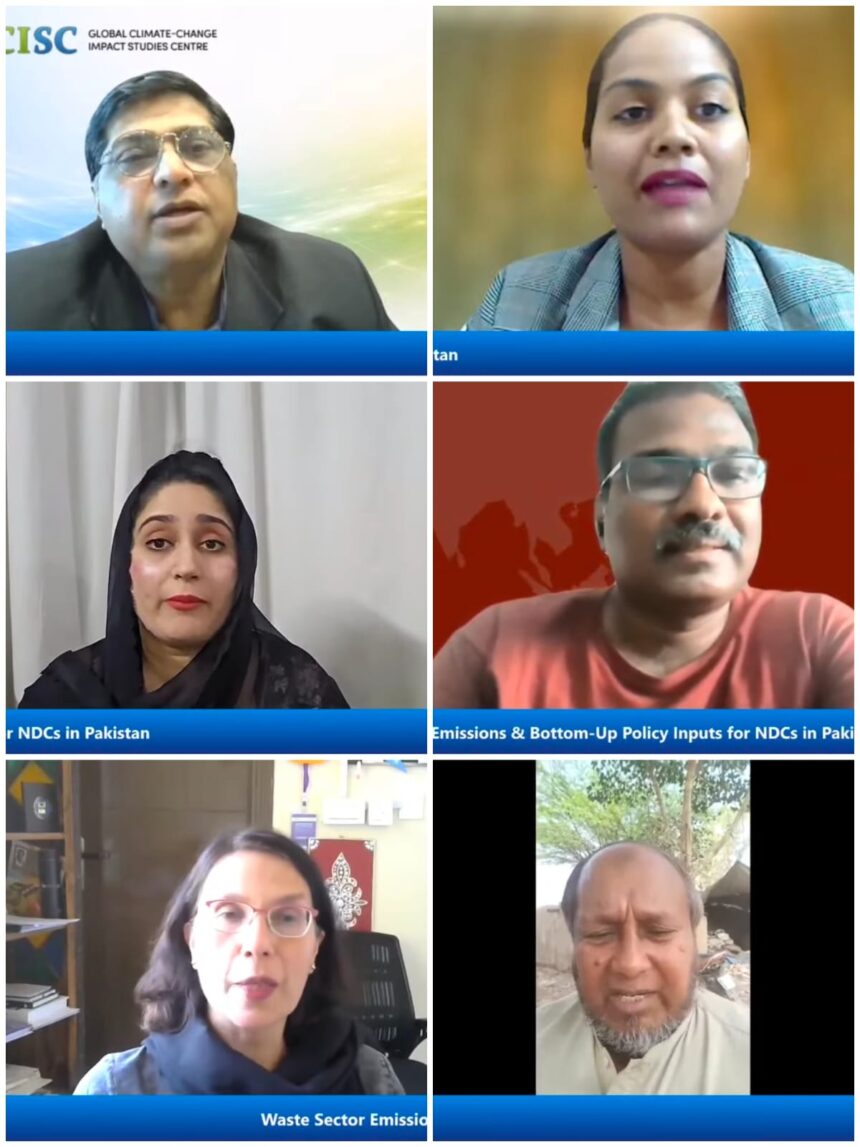
Arif Goheer, Executive Director of the Global Change Impact Studies Centre, highlighted that the waste sector is one of the most under-recognized yet high-impact mitigation opportunities for Pakistan. Citing the 2024 GHG inventory reported under the UNFCCC, he noted the waste sector accounts for roughly eight percent of national emissions, driven largely by methane which has nearly 20 times the short-term global warming potential of carbon dioxide.
Goheer outlined key national figures: Pakistan generates about 45 million tonnes of municipal solid waste annually, with volumes growing at seven to eight percent each year due to rapid urbanization and changing consumption patterns. While the national per capita waste estimate used in inventories is 0.65 kilogrammes per day, metropolitan cities such as Karachi and Lahore now produce between one and 1.25 kilogrammes per day. He warned that 70 to 80 percent of collected waste is openly dumped and wastewater treatment coverage is only around 10 percent, leading to unmanaged anaerobic decomposition and significant methane and nitrous oxide emissions.
Speakers called for a shift from bulk emissions inventories to a life-cycle approach supported by time-series data at district and municipal levels. Establishing a centralized dashboard and structured data management would improve baseline setting, enable credible emissions accounting and strengthen access to climate finance. To sustain these efforts, SDPI proposed forming a Waste Sector Emissions Working Group to consolidate practitioner evidence and provide data-driven policy inputs to national processes.
Zainab Naeem of SDPI’s Ecological Sustainability and Circular Economy Unit warned that the dominance of informal actors, lack of source segregation, open dumping and inadequate landfill infrastructure pose serious challenges across South Asia. She urged recognition of locally practiced circular economy solutions and cautioned against relying solely on imported models amid ongoing global negotiations on plastic pollution.
Speakers also stressed the social dimensions of waste sector reform. Dr Ayesha Khan, CEO of the Akhtar Hameed Khan Foundation, said formal recognition of informal waste workers is essential for sustained impact, noting that cooperative pilots often fail to scale without legal, social and contractual recognition. Rabia Razak from the ILO recommended adopting just transition principles in NDC implementation, including mapping waste workers and ensuring decent working conditions.
Representatives from the private and civil society sectors added that mitigation must be paired with adaptation and corporate accountability. Angel Imdad of a circular economy SME urged enhanced awareness among waste generators and stronger ESG reporting to drive industry behaviour change. Shibu Nair of GAIA advocated zero-waste models as climate tools and encouraged leveraging international methane partnerships and climate finance for large cities.
Participants agreed that diversion and recovery strategies could cut landfill methane emissions by nearly 30 percent in urban centres while delivering co-benefits such as improved public health, lower air pollution, renewable energy generation and job creation. Aligning municipal waste management systems with national climate commitments will require institutionalized data collection, life-cycle based inventory preparation, formal integration of informal workers under just transition principles and structured engagement between local governments and federal climate bodies.