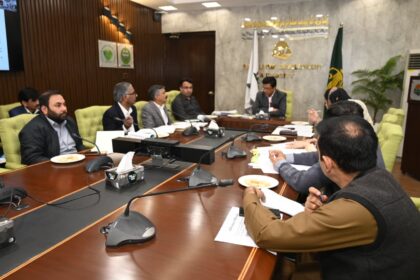




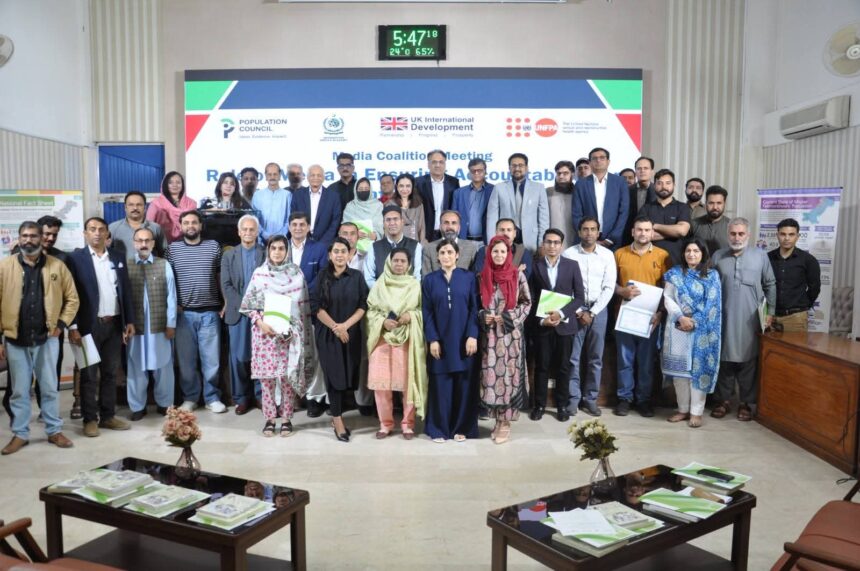
Government officials, senior journalists and development partners met in Islamabad on 13 March to stress the media’s role in advancing the National Population Plan under the Council of Common Interests. The Population Council, in collaboration with the Information Service Academy and UNFPA, convened the media coalition to examine progress, highlight implementation gaps and build momentum for provincial action.
Dr Ali Mir, Senior Director at the Population Council, emphasised that responsible journalism is central to shaping a national narrative that balances population and resources. He said progress on the National Population Plan requires persistent media coverage that exposes implementation gaps, service delivery obstacles and the realities faced by communities on the ground.
Adnan Akram Bajwa, Director of the Information Service Academy, reaffirmed his institution’s commitment to equipping journalists with verified information and professional training to report on rapid population growth and its consequences. He argued that media is not merely a messenger but a pillar in building the national narrative needed to align family resources and population goals.
Population Council communications manager Ikram Alahad highlighted the human toll of limited access to family planning and reproductive health services. He noted that Pakistan faces around 6 million unintended pregnancies annually, leading to an estimated 3.8 million abortions each year, many occurring in unsafe conditions. These figures, he said, point to a crisis of access where women lose control over their health, safety and futures when contraceptive options are unavailable.
Members of the media coalition presented a joint review of implementation across Punjab, Sindh, Khyber Pakhtunkhwa, Balochistan and Islamabad. The assessment identified persistent challenges including urban‑rural disparities in health infrastructure, shortages of Lady Health Workers, repeated disruptions in contraceptive supply chains, uneven policy enforcement and limited access in remote districts.
Participants urged continuous, evidence‑based reporting to hold provincial and federal governments to their commitments under the National Population Plan. Journalists called for data-driven coverage of issues such as maternal mortality, limited reproductive health services in rural areas and supply interruptions, to strengthen public awareness and policy accountability.
Dr Jamil Ahmed Choudhry, UNFPA Programme Specialist, underlined the urgency of collective action to protect the health and rights of women and girls, reminding attendees that every preventable maternal or newborn death demands immediate response. The meeting closed with a shared pledge to deepen collaboration among media, government bodies and development partners to accelerate Pakistan’s reproductive health and population goals.