



Over five decades since the launch of Pakistan’s Expanded Programme on Immunization in 1978, Pakistan immunization efforts in partnership with the World Health Organization have protected more than 160 million children and 130 million mothers with life saving vaccines. These sustained campaigns have averted an estimated 2.6 million child deaths from vaccine preventable diseases and built on the country’s earlier success in eradicating smallpox in 1976.
Globally vaccines have saved an estimated 154 million lives since 1974, and Pakistan ranks among the top five countries worldwide for absolute reductions in child deaths thanks to vaccination. WHO estimates Pakistan’s EPI averts up to 17% of all childhood mortality, making immunization the most cost effective public health intervention available in the country.
Since 1994 the country has reduced paralytic polio cases by 99.8%, from an estimated 20,000 cases to 31 cases in 2025, while certification for the elimination of maternal and neonatal tetanus has been achieved in Punjab, Sindh, Pakistan-Administered Kashmir, Islamabad Capital Territory and Gilgit-Baltistan, covering roughly 80 percent of the population where neonatal tetanus no longer poses a public health threat.
Under government leadership and with support from Gavi, the Vaccine Alliance, WHO supports routine immunization of over 7 million children and 5.5 million women each year and supplements these efforts with campaigns that vaccinate some 45 million children against polio. To deliver these services WHO trains and mobilizes around 15,000 routine vaccinators and more than 400,000 frontline polio workers, forming one of the largest vaccination workforces in the world.
WHO Representative in Pakistan Dr Luo Dapeng expressed gratitude to the hundreds of thousands of frontline workers, scientists, authorities and communities who turn vaccine science into action, saying the scientific evidence is clear and vaccines save lives. Pakistan immunization programmes have not only reduced deaths but also prevented tens of millions of illnesses, disabilities and hospitalisations, eased pressure on families and the health system, and delivered years of healthy life valued by WHO at an average of 66 years of full health for every death averted.
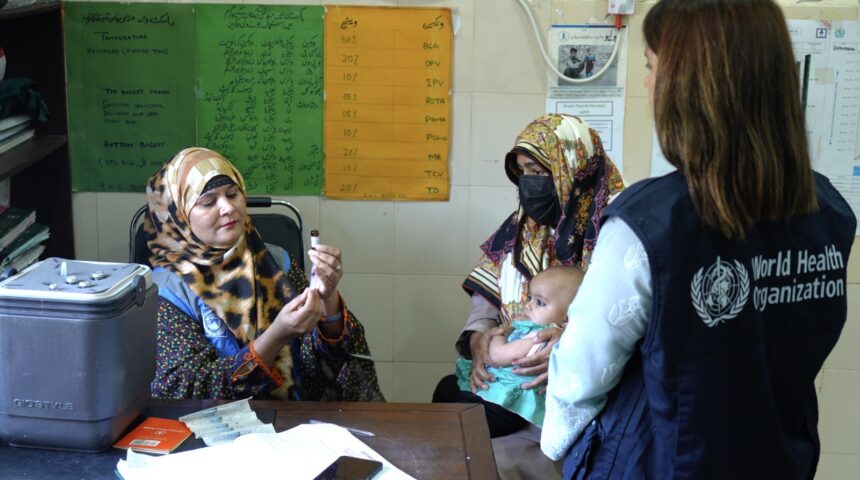
A vaccinator, Sanam Sarfaraz, is pictured administering a vaccine at a rural health centre in Barakahu, Islamabad in April 2026, illustrating the ongoing commitment on the ground to reach every child and mother regardless of where they live. Continued collaboration between government, WHO and partners remains central to sustaining and expanding the gains of Pakistan immunization for future generations.