



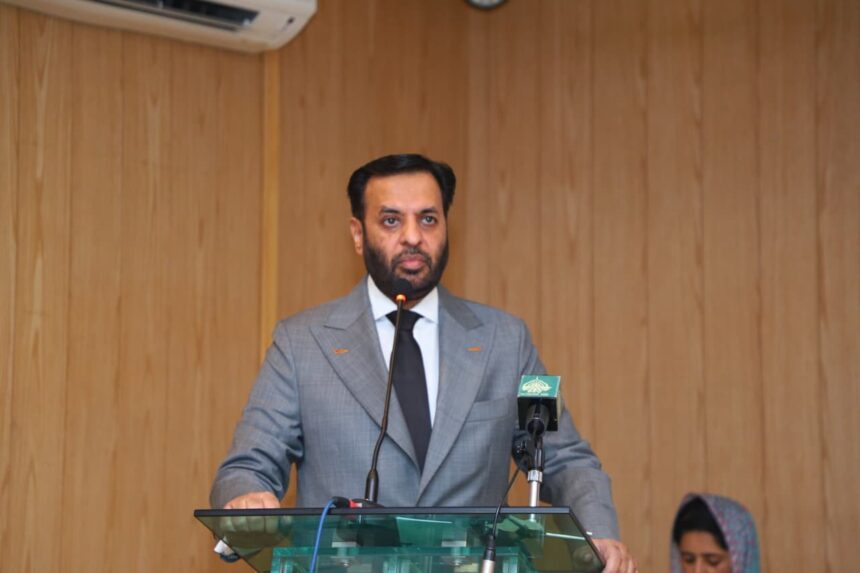
At the Pakistan-China International Academic Conference hosted by the Shaheed Zulfikar Ali Bhutto Institute of Science and Technology, Federal Minister Syed Mustafa Kamal highlighted the urgent need to tackle health and nutrition challenges as Pakistan manages rapid population growth. He welcomed researchers, professors and media representatives and said such forums strengthen knowledge exchange and international collaboration on public health issues.
The minister stressed a decisive move toward preventive healthcare, arguing that hospitals today bear the weight of a system designed mainly to treat illness rather than prevent it. “Prevention is better than cure,” he said, calling for proactive strategies to reduce disease incidence and ease pressure on tertiary care facilities.
He cautioned that simply building more hospitals and hiring additional doctors will not solve long-term problems. The focus must be on strengthening the overall healthcare system so people remain healthy and avoid hospitalization. Drawing lessons from the COVID-19 pandemic, he noted that even advanced systems can collapse under sudden surges and Pakistan must prepare to manage demand through prevention and resilience.
The Ministry of National Health Services, Regulations & Coordination has developed a new health strategy in consultation with international experts to reduce hospital burden and promote healthier lifestyles. The minister said collaboration with global scientists is critical to ensure the strategy aligns with best practices and delivers measurable improvements in public health.
He also urged integration of traditional systems of medicine, including herbal, Chinese and Unani approaches, alongside modern care, and highlighted emerging research that supports lifestyle medicine as a sustainable solution. Emphasising timely decision making, he added that the time for experimentation has passed and Pakistan must adopt the right preventive healthcare measures now to build a healthier, more resilient society.