



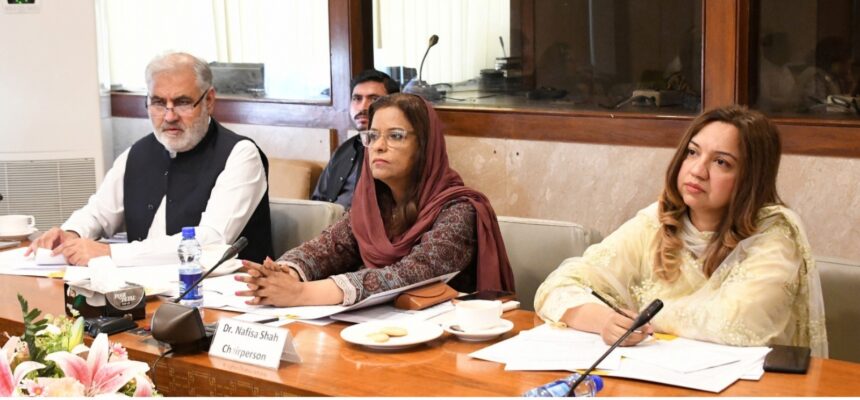
A parliamentary Special Committee on Gender Mainstreaming in Islamabad has raised strong concerns over the prolonged NCSW delay and the negligible allocation for women-specific development in the federal budget. Chaired by Dr Nafisa Shah, the committee reviewed gender-responsive budgeting, implementation gaps in protection policies and institutional representation at national and international forums.
Members singled out the continued absence of a permanent chairperson at the National Commission on the Status of Women as the most troubling issue, saying the NCSW delay has weakened the commission’s ability to implement policies, represent women’s rights before parliament and engage effectively with stakeholders. The committee urged a transparent and expedited appointment process to restore leadership and institutional effectiveness.
The committee also criticised the absence of senior officials from the Ministry of Human Rights at the session and directed ministries to ensure meaningful representation when sensitive matters such as women’s protection, gender budgeting and international commitments are under discussion. Members said active engagement from line departments is essential to accountability and follow-up.
Another major concern was the extremely low gender-specific share under the Public Sector Development Programme. Officials informed the committee that Gen-3 allocations amount to only about 0.4pc of the development budget. Lawmakers described the 0.4pc figure as alarming and insufficient given persistent gaps in women’s access to education, health, employment and mobility, and warned that tagging projects without real funding will not advance gender equality.
The committee called for a dedicated Gender Budget Statement to accompany the federal budget and asked the Planning Commission to strengthen gender analysis, monitoring and periodic reporting on women-focused projects. Members emphasised that gender budgeting must move beyond technical exercises to measurable targets, visible outcomes and sustained investment in women-centred programmes.
Growing incidents of honour crimes and other forms of gender-based violence were highlighted as areas of serious concern. The committee noted that weak enforcement, social pressure and poor prosecution continue to leave survivors vulnerable. It urged better institutional coordination, improved prosecution mechanisms, public awareness campaigns and stricter accountability to protect victims and deter perpetrators.
Lawmakers also expressed disappointment over the non-participation of the NCSW at a recent United Nations Commission on the Status of Women meeting, saying Pakistan’s principal statutory institution on women’s rights should be present at such international forums. The committee demanded an explanation and stressed continued engagement with global platforms to uphold national commitments under conventions and treaties.
Members concluded that gender mainstreaming must be central to national planning, budgeting and governance rather than rhetoric. With women constituting more than half the population, the committee insisted on meaningful representation in development priorities, public spending, institutional leadership and policymaking to translate commitments into real progress.