



Cotton Crisis and Mismanagement in PARC Raises Alarms as Farmers Exploitative
Practices Exposed
Nadeem Tanoli
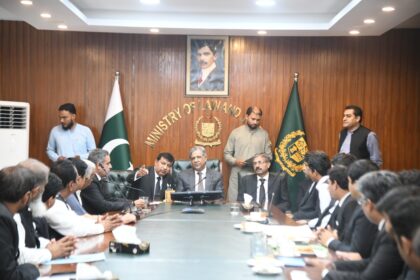
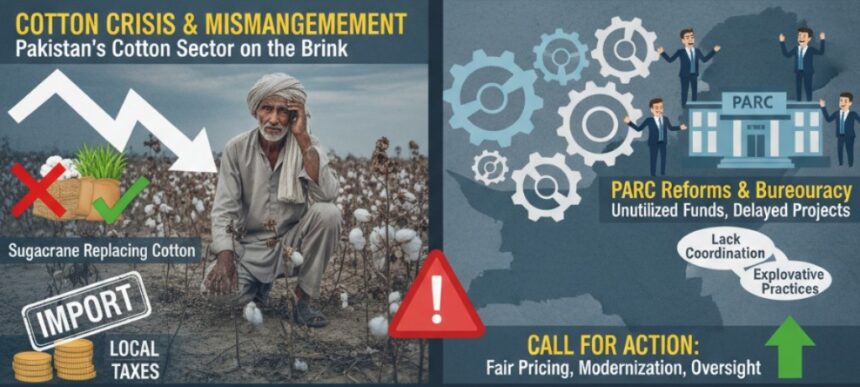
Islamabad: Pakistan’s cotton sector is on the brink of collapse, with
traditional cotton belts shrinking and local growers facing severe exploitation,
the Senate Standing Committee on National Food Security and Research was
informed during a session on Thursday. Senator Abid Sher Ali warned that
Pakistan, once a major cotton exporter, has now become reliant on imports due to
flawed policies and rising input costs, while sugarcane cultivation increasingly
replaces cotton in key production areas.
The Committee heard allegations that influential mafias benefit at the expense
of farmers, with imported cotton enjoying zero taxes while local cotton
producers bear the brunt of levies. Senator Sher Ali emphasized the urgent need
for a robust coordination mechanism between federal and provincial governments
to revive cotton production and protect farmers’ livelihoods.
Federal Minister Rana Tanveer Hussain acknowledged the crisis but attributed low
production to weak zoning implementation, expansion of sugarcane, and
climate-related challenges. He maintained that there is no fertilizer shortage
and that prices remain competitive compared to global rates.
The Pakistan Agricultural Research Council (PARC) is undergoing reforms to
modernize research, seed technology, and mechanization support. Despite these
efforts, committee members expressed concern over insufficient wheat and cotton
yields, inadequate provincial cooperation, and delays in infrastructure
projects, noting that billions allocated for agricultural laboratories in
Khuzdar and Turbat remain unutilized.
During the session, Senator Shahadat Awan questioned the Ministry about farmers’
actual incomes and highlighted the significant gap between production costs and
profits, stressing that low yields are undermining Pakistan’s agricultural
potential. The Minister assured that PARC is being transformed into a center of
excellence, emphasizing modern seed development, technology transfer, and
enhanced farmer support mechanisms.
The Committee also discussed proposed amendments to seed rules from 2016
and 2021, focusing on licensing procedures, regulatory mechanisms, and improving
legal clarity for new seed businesses. Proposals for establishing sugar mills in
cotton-producing areas were reviewed, following requests from the Pakistan
Cotton Ginners Association.
Senator Syed Masroor Ahsan, Committee Chairman, stressed that agricultural
extension services and coordination between federal and provincial governments
are critical to reversing declining productivity, particularly in wheat and
cotton sectors.
The meeting concluded with a call for stricter oversight, fair pricing for local
cotton, and accelerated modernization of research institutions to ensure
Pakistan regains its position in the global cotton market .
Copied From: Acting Now on Pakistan Cotton Crisis – Peak Point