



Civil society organisations, medical associations and patient groups in Islamabad have welcomed the proposal to bring several ultra processed foods into the Third Schedule of the sales tax framework, subject to approval of the Finance Bill, making them liable to 18 percent sales tax. While the coalition supported taxing categories such as sugar confectionery, infant formula, sauces and condiments, packaged pasta and noodles, fruit and vegetable preparations like jams and purees, and vegetables and edible oils sold in retail packing, it urged the government to avoid taxing staple healthy items such as unsweetened milk, lassi and wheat flour.
The coalition called on the federal government to base tax decisions on robust scientific evidence, highlighting the NOVA food classification system and World Health Organization guidance on thresholds for salt, sugar, trans fats, saturated fats and non-sugar sweeteners as sound technical foundations for policy. Adopting an evidence-based approach, they said, would both raise revenue and deliver measurable public health benefits.
Members of the coalition pressed for a stronger levy on sweetened beverages, recommending an increase in Federal Excise Duty to 40 percent on all sugar-sweetened and flavoured drinks, including sodas, packed juices, flavoured milk, iced tea, coffee-based drinks, squashes and syrups. They warned that many packed juices, stripped of natural fibre, exert metabolic effects similar to sugar-sweetened beverages and contribute to rising rates of type 2 diabetes and childhood obesity in Pakistan.
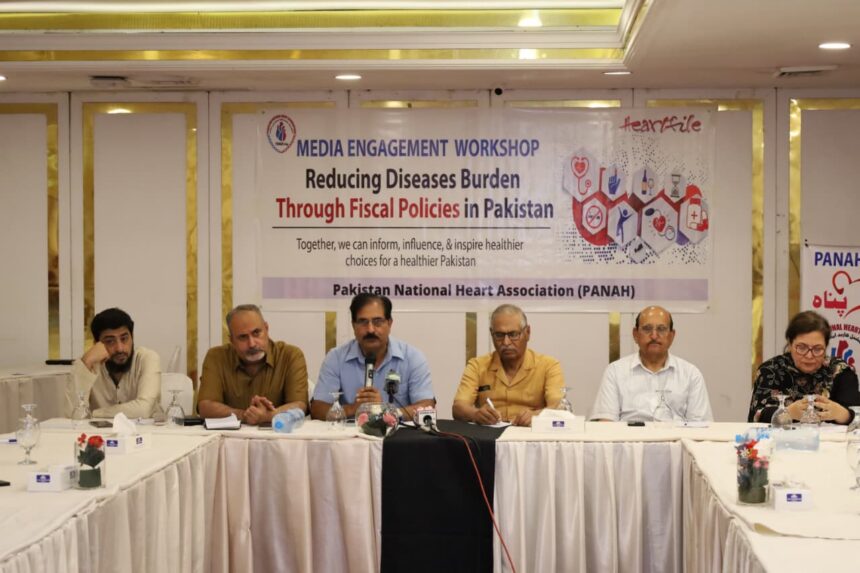
Major General (R) Masud ur Rehman Kiani, president of the Pakistan National Heart Association, emphasised that heart disease and other non-communicable diseases are largely lifestyle related and that diet plays a pivotal role. He noted that ultra processed foods are typically high in added sugars, unhealthy fats and salt, often contain artificial additives, and offer little nutritional value. He urged policymakers to ensure that fiscal measures in the Finance Bill 2026-27 send a clear message that public health is prioritised over commercial interests.
Munawar Hussain, a health and nutrition policy expert, warned that commercial beverage production uses only a small fraction of the country’s fruit output and said genuine agricultural support does not come from promoting unhealthy packaged juices. He recommended that tax revenues be reinvested in farmer-centred measures, such as solar-powered cold-chain storage and better direct market access for fresh fruit, to strengthen smallholder livelihoods.
Sana Ullah Ghumman, general secretary of PANAH, criticised attempts by some industry actors to influence policy by invoking farmers’ interests. He urged decision-makers to remain vigilant against efforts to obtain tax relief for unhealthy beverage products and called for transparency to prevent commercial interests from undermining evidence-based public health policy.
Representatives from Heartfile, Pakistan Youth Change Advocates, CPDI, Pakistan Kidney Patient Welfare Association, Diabetic Association of Pakistan, Pakistan Family Physicians Association and youth advocates reiterated their commitment to supporting policies grounded in evidence. They urged federal and provincial governments, regulators and the private sector to collaborate on creating healthier food environments across Pakistan.
The coalition expressed hope that taxation of ultra processed foods will contribute to the prevention of non-communicable diseases, improve population health, support progress towards Sustainable Development Goal 3 and reduce the burden of premature NCD deaths by 2030 while promoting sustainable economic development.