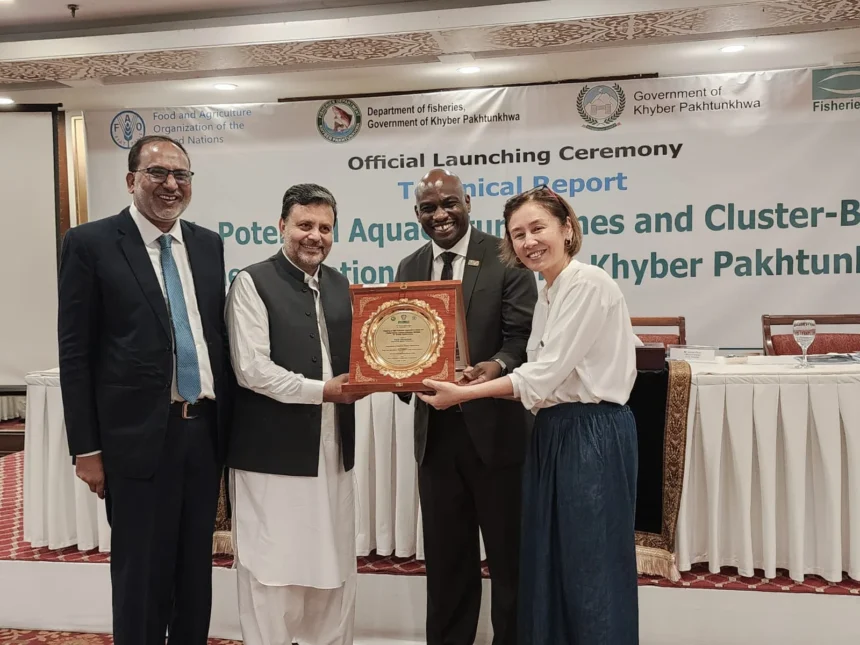
PESHAWAR: The Food and Agriculture Organization of the United Nations (FAO), in collaboration with the Government of Khyber Pakhtunkhwa and the Fisheries Development Board (FDB), has launched a technical report aimed at advancing sustainable aquaculture development, investment and commercialisation across the province.
The report, titled Mapping High-Potential Aquaculture Zones and Cluster-Based Commercialization Strategy for Khyber Pakhtunkhwa, provides a roadmap for the sustainable growth of the fisheries sector in the province.
According to the report, Khyber Pakhtunkhwa has abundant freshwater resources suitable for aquaculture, but the province had so far lacked comprehensive spatial mapping and an integrated commercialisation strategy to guide sustainable sector growth.
Developed under FAO’s Technical Cooperation Programme, the report identifies high-potential zones for cold-water trout, semi-cold and warm-water aquaculture. It also introduces a cluster-based commercialisation strategy to promote sustainable production, improve livelihoods, strengthen food security and encourage public and private investment in the fisheries sector.
The aquaculture sector in Khyber Pakhtunkhwa currently produces around 5,022 metric tonnes of fish annually, with an estimated farm-gate value of Rs3.21 billion. However, provincial demand is projected to reach nearly 100,000 metric tonnes by 2030, underlining the need for strategic investment and commercialisation.
The report provides practical guidance to help bridge this gap and unlock opportunities for expanding high-value aquaculture, including trout production.
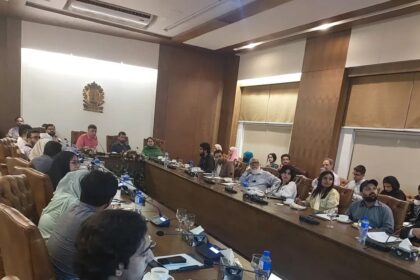
The launch ceremony in Peshawar was attended by senior government officials, development partners, technical experts, academics, private sector representatives and fish farmers. Participants discussed the findings of the report and the way forward for sustainable aquaculture development in the province.
Speaking as chief guest, Zarif Ul Maani, Secretary Livestock, Fisheries and Cooperative Department, Government of Khyber Pakhtunkhwa, said the report would help strengthen the sector.
“This report provides a solid foundation to guide future planning and investment in the aquaculture sector. It will help unlock the province’s fisheries potential while contributing to food security, livelihoods and sustainable economic growth,” he said.
James Robert Okoth, Officer In-Charge, FAO Pakistan, reaffirmed FAO’s commitment to supporting the government in developing a competitive and sustainable fisheries sector.
“This report represents an important milestone in strengthening informed planning for the aquaculture sector in Khyber Pakhtunkhwa. Through our partnership with the Government of Khyber Pakhtunkhwa and the Fisheries Development Board, FAO is proud to support aquaculture development that enhances food security, creates livelihood opportunities and promotes inclusive economic growth,” he said.
Presenting the technical report and commercialisation strategy, Muhammad Junaid Wattoo, Chief Executive Officer of the Fisheries Development Board and team leader of the project, said the mapping of high-potential aquaculture zones and the commercialisation strategy provided a strong basis for future investment and planning.
“The report offers practical guidance for developing environmentally sustainable and commercially viable aquaculture clusters that can accelerate the growth of the fisheries sector in Khyber Pakhtunkhwa,” he said.
Dr Kanwar Muhammad Javed Iqbal, FAO Project Manager, presented an overview of the project and highlighted the GIS-based mapping, field surveys and stakeholder consultations carried out across the province.
The event also marked the launch of the project website, which will provide stakeholders access to the technical report and other project outputs.
The report is expected to guide future public and private investment, strengthen informed decision-making and support the sustainable expansion of aquaculture across Khyber Pakhtunkhwa, while helping improve livelihoods and enhance food security.