



Unchecked Biological Data Transfers: A Growing National Security Threat for Pakistan
Nadeem.ch
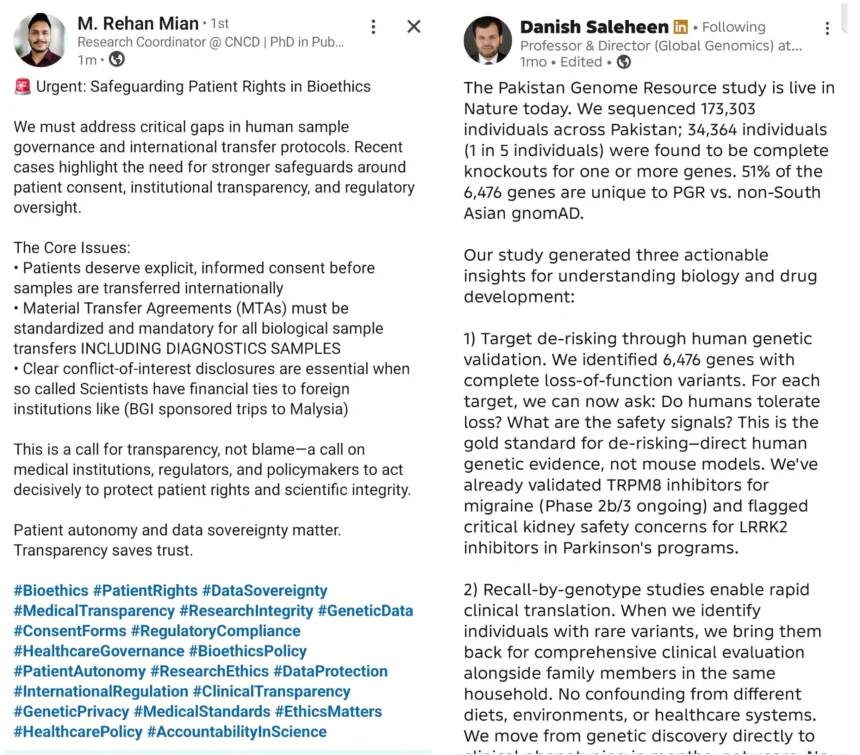
The publication of the Pakistan Genome Resource (PGR) study in Nature, based on the genetic sequencing of over 173,000 Pakistanis, has been celebrated by lead researcher Dr. Danish Saleheen as a landmark achievement for drug discovery. However, beneath the clinical promises of “target de-risking” and international pharmaceutical partnerships lies a grave, unaddressed issue: the large-scale extraction and transfer of Pakistani biological samples and genomic data to foreign entities without robust national oversight.
The global biotechnology ecosystem relies heavily on diverse genomic data, but the unmonitored export of human biological samples poses severe risks to bioethics, data sovereignty, and national defense.
Ethical Gaps and Institutional Oversight Failure
Public commentary, including concerns raised by researchers such as Rehan Mian, points to systemic vulnerabilities in how foreign-funded biological research operates in Pakistan. Millions of diagnostic and research samples are transferred internationally under the guise of scientific collaboration, often bypassing stringent regulatory scrutiny.
Informed Consent Deficits: Patients routinely provide biological samples for medical diagnoses or local studies without explicit knowledge that their DNA will be sequenced, stored, or monetized by foreign institutions or multinational pharmaceutical corporations.
Lack of Mandatory MTAs: Material Transfer Agreements (MTAs)—the legally binding frameworks meant to govern sample ownership, usage rights, and data sharing—remain poorly enforced across Pakistani medical facilities and labs.
Conflicts of Interest: Financial linkages, foreign academic grants, and international sponsorships create incentives for local institutions to ship raw biological material overseas, compromising patient autonomy for academic exposure.
The Threat of Population-Specific Biological Exploitation
Pakistan presents a unique genetic profile due to high rates of consanguineous marriages, resulting in rare gene knockouts and distinct allele frequencies. While this makes the population invaluable for global drug development, it simultaneously turns Pakistan’s genomic dataset into a sensitive strategic asset.
In the era of modern biotechnology, human genomic data is not merely medical information; it is dual-use data. Uncontrolled access to the genetic architecture of an entire ethnic group opens dangerous avenues for future biological warfare:
Targeted Bioweapons: Advances in CRISPR and synthetic biology theoretically enable the development of ancestry-specific biological agents designed to target metabolic or genetic traits predominant in specific populations.
Genomic Sovereignty Exploitation: Foreign pharmaceutical firms capture immense commercial profits by patenting therapeutics derived from Pakistani DNA, while local healthcare systems receive negligible benefit, data access, or drug discounts.
A Call for Urgent Policy Action
To protect its citizens and national security, Pakistan must immediately establish a comprehensive framework for bio-data governance:
Mandatory National Bio-Sovereignty Protocols: Legally mandate standardized MTAs for all human diagnostic and research samples crossing international borders.
Centralized Regulatory Oversight: Establish a national ethics and bio-surveillance committee to audit foreign-funded genomic projects, ensuring strict consent protocols and data residency requirements.
Domestic Sequencing Capacity: Invest in local genomic infrastructure to ensure sensitive bio-data remains within national borders under Pakistani jurisdiction.
Without decisive intervention from regulators and policymakers, the unchecked export of Pakistan’s biological identity will continue to trade away national security and patient rights for foreign scientific acclaim.