



ISLAMABAD: The Pakistan Academy of Letters (PAL), under the National Heritage and Culture Division, Government of Pakistan, organised a ceremony on August 18, 2026, to launch the Urdu translation of Prison Diary, the poetic work of Ho Chi Minh, the renowned Vietnamese revolutionary leader, poet and founder of modern Vietnam.
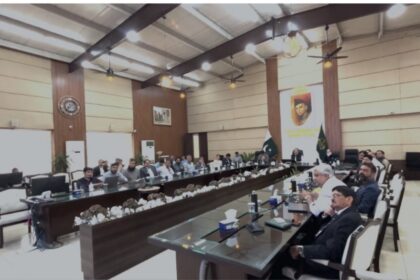
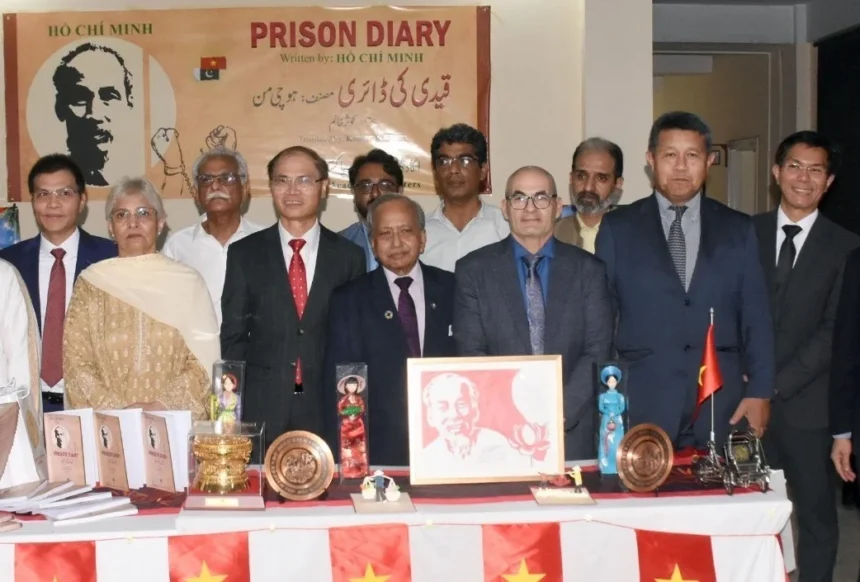
The ceremony was held at the Sheikh Ayaz Conference Hall of the Pakistan Academy of Letters in Islamabad. It was attended by diplomatic representatives of various ASEAN countries, along with writers, intellectuals and literary figures.
Vietnamese Ambassador Phan Anh Toan was among the distinguished guests. Other diplomatic representatives in attendance included the Ambassador of Thailand, High Commissioner of Malaysia, High Commissioner of Brunei Darussalam, Ambassador of Cuba, Chargé d’Affaires of Indonesia and Chargé d’Affaires of Myanmar.
Welcoming the guests, PAL Chairperson Prof Dr Najiba Arif said Prison Diary was not merely an account of a revolutionary leader but also a poetic expression of human freedom, hope, courage and determination.
She said the Urdu translation had been undertaken under the Memorandum of Understanding signed between the Pakistan Academy of Letters and Vietnam, describing it as an important milestone in promoting literary and cultural cooperation between the two countries.
Dr Najiba Arif also expressed her resolve to further strengthen literary ties with ASEAN countries. At the conclusion of her address, she led a Fatiha for renowned writer, poet and intellectual Haleem Qureshi, who had passed away the previous day, and paid tribute to his literary services.
Prof Munir Fayyaz and former ambassador Salahuddin Chaudhry spoke on various aspects of Prison Diary, Ho Chi Minh’s personality, poetry and struggle, and presented selected verses from the book.
Presiding over the session, Imdad Akash described Ho Chi Minh as a symbol of courage, resistance and freedom for oppressed nations and also recited selected verses from the book.
In his remarks, Ambassador Phan Anh Toan thanked Dr Najiba Arif and the Pakistan Academy of Letters. He said Ho Chi Minh’s poetry represented Vietnamese national thought, freedom and sovereignty.
He described the Urdu and English translations of the book as an important development in promoting literary relations between Pakistan and Vietnam.
Prison Diary is regarded as one of the significant literary works of the twentieth century. The book gives poetic expression to imprisonment, loneliness and human suffering, while also highlighting freedom, hope, courage and unwavering determination.
The Urdu translation has been rendered by Ms Kausar Khanum, while Ms Najma Saqib carried out its revision.
At the conclusion of the ceremony, Ambassador Phan Anh Toan presented commemorative gifts to the Chairperson of the Pakistan Academy of Letters, speakers and organisers. Dr Najiba Arif presented the distinguished guests with gift packages comprising publications of the Pakistan Academy of Letters.
Following the ceremony, diplomatic representatives and distinguished guests visited a book exhibition and cultural stall arranged by the Embassy of Vietnam at the Pakistan Academy of Letters. They were introduced to books highlighting Vietnam’s literary and cultural heritage, as well as various cultural artifacts.
The ceremony reinforced the commitment to promoting literary and cultural cooperation, mutual understanding and stronger ties among Pakistan, Vietnam and ASEAN countries.
Pakistan expert on Vietnam and Editor Pakistan in the World, Mr Tazeen Akhtar, welcomed the translation of Vietnamese literature, noting that the first translation from the work of the first and top leader of Vietnam was an important development.
He said it could serve as an inspiration for the Pakistani people in general and politicians in particular to read and learn how nations rise from difficult circumstances and how their leaders guide them towards success and achievements.