



Cambridge Exams Under Fire as Student Claims 11 Papers Leaked and Papers Sold for £300 to £500 Online
Nadeem Tanoli
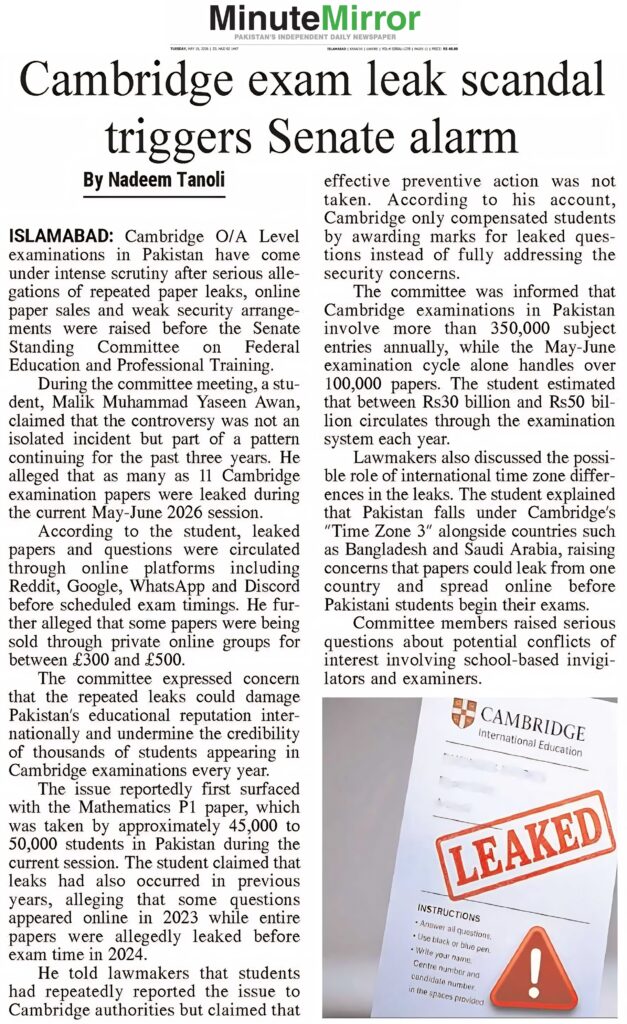
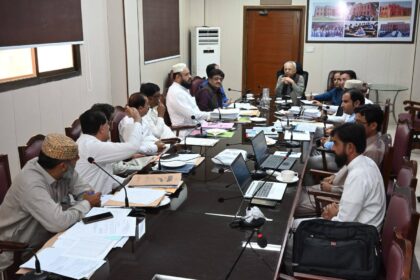
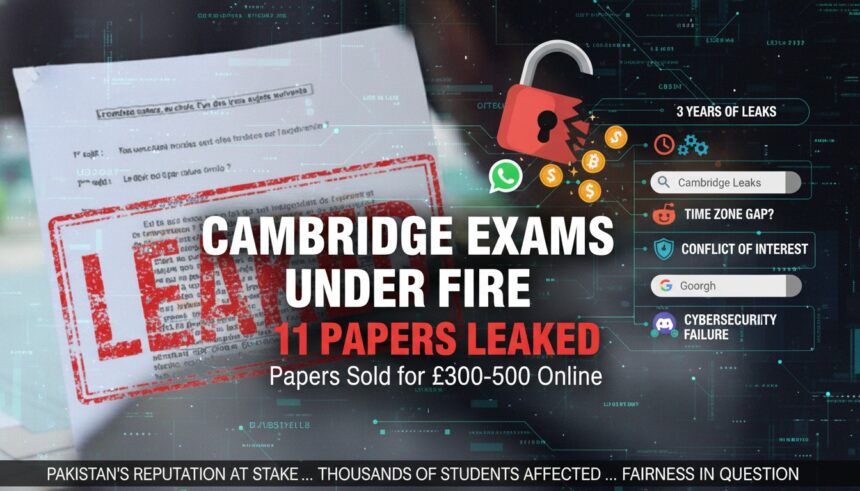
Islamabad: Cambridge O/A Level examinations in Pakistan have come under serious scrutiny after a student told the Senate Standing Committee on Federal Education that paper leaks were not a one time failure but had continued for three years, with allegations that 11 papers were leaked this year, earlier papers were sold through online groups for £300 to £500, and exam material circulated on Reddit, Google and WhatsApp before exam time. The committee warned that the issue is damaging Pakistan’s reputation and questioned whether Cambridge’s handling of papers, time zones, school based staff and implementing partners has created serious gaps in exam security. The matter was raised during a meeting of the Senate Standing Committee on Federal Education and Professional Training, where a student, Malik Muhammad Yaseen Awan, was invited to explain the Cambridge paper leak controversy. He said the problem first surfaced with the Mathematics P1 paper, taken by around 45,000 to 50,000 students in the May June session, and alleged that the issue later became more serious. According to the student, some questions were leaked in 2023, while in 2024 the paper was allegedly leaked before exam time. He said the leaked material spread through Reddit, Google and WhatsApp groups, and further claimed that a Discord group was selling the paper for £300 to £500. He alleged that students reported the sale of papers but Cambridge did not take proper action and only compensated students by giving full marks for the leaked questions. The student claimed that the controversy became even bigger this year, saying that 11 papers had leaked instead of only one. He told the committee that Cambridge conducts more than 100,000 papers in Pakistan and that more than 350,000 subject entries are involved. He also claimed that the cost of one O/A Level paper is above Rs50,000 and estimated that Rs30 billion to Rs50 billion moves through the MayJune session annually. The committee also discussed the possible role of time zone gaps in the leak controversy. The student said Pakistan shares Time Zone 3 with countries including Bangladesh and Saudi Arabia, and argued that because of time differences, papers may leak from another country and reach Pakistan before the exam. The issue was described as serious enough for officials to say it had been raised with the concerned authority. A major conflict of interest concern was also raised over practical examinations and invigilation arrangements. The student said Cambridge instructions are sent to examiners, and some examiners are teachers from the same institutions whose students appear in the exams. He alleged that such teachers may guide their own students about likely practical questions in subjects such as Physics and Chemistry. When the committee asked whether Cambridge or British Council had its own pool of invigilators, the student said most staff are taken from schools, prompting the chairperson to call it a conflict of interest. Officials also discussed concerns that Cambridge had added large school chains as implementing partners alongside British Council in recent years. The committee observed that using local school teachers or school linked staff in the examination process raises serious conflict of interest questions if those same schools later advertise top grades and distinctions. The committee was told that even after Pakistan postponed one paper, the same paper allegedly leaked outside Pakistan, which officials described as Cambridge’s responsibility rather than Pakistan’s. It was stated during the discussion that Cambridge had accepted its mistake and was not blaming Pakistan. Officials from ministry also said they referred the matter to cybersecurity authorities (NCCIA) because many papers are transmitted online or through internet linked systems, making it necessary to identify where the leak originated. The chairperson Senator Bushra Anjum Butt said the controversy is bringing a bad name to the country and raised concern about the consequences for Pakistani students if such incidents continue. She questioned what would happen if students are barred or affected in future because of repeated paper leaks, adding that these are not small examinations and require serious follow up with the concerned authorities. The committee indicated that Cambridge, IBCC and other concerned authorities should be called for a detailed briefing. Members stressed that Pakistan should actively raise the issue before blame is shifted onto local students, especially when the leak chain appears connected with exam administration, time zone handling, cyber transmission and implementing partners. The issue has now become a major education accountability matter because thousands of students spend large sums on Cambridge examinations and depend on fair results for university admissions. The allegations of paid leaks, repeated breaches, weak action, conflict of interest and possible cyber failure have created serious questions about exam credibility, student protection and the role of Cambridge in safeguarding the integrity of its own papers.
Read in Urdu: کیمبرج امتحانات کا معاملہ سنگین، 11 پرچوں کے لیک ہونے اور 300 سے 500 پاؤنڈ میں فروخت کے دعوے
Copied From: Cambridge exams under fire as student claims 11 papers leaked and papers sold for £300 to £500 online