



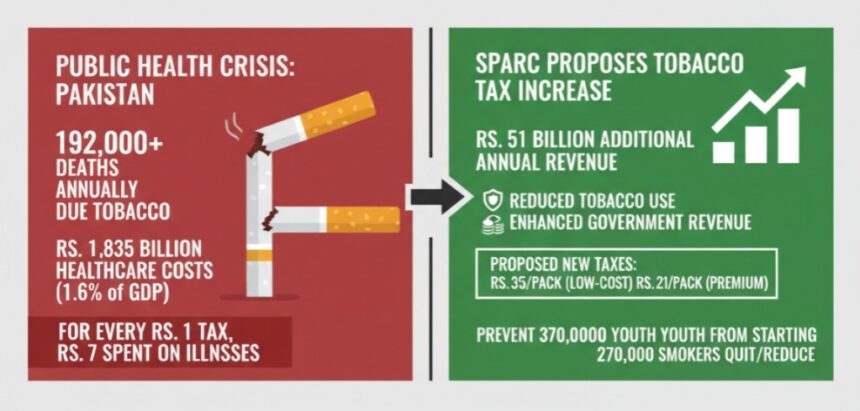
The Society for the Protection of the Rights of the Child (SPARC) says a strengthened cigarette tax regime could generate an additional Rs 51 billion in annual revenue while reducing tobacco consumption and related health costs.
Dr. Khalil Ahmad, Program Manager at SPARC, highlighted the need for stronger tobacco taxation given Pakistan’s public health and fiscal challenges, noting that international evidence links higher cigarette tax with reduced tobacco use and improved population health.
Pakistan faces a substantial tobacco burden, with an estimated 31 million adults using tobacco products and more than 192,000 tobacco-related deaths each year, roughly 526 lives lost daily from cardiovascular disease, cancer and other smoking-related illnesses.
SPARC pointed out that Federal Excise Duty rates on cigarettes have remained unchanged since February 2023, which has lowered the tax share of retail prices and increased affordability, particularly for low-cost brands. While fuel and essential goods have become more expensive, stable cigarette taxation has made many brands relatively more affordable even as household budgets tighten.
The organisation quantified the economic cost, estimating health-related expenses from tobacco at about Rs 1,835 billion, equal to roughly 1.6 percent of GDP, compared with Rs 266 billion in tobacco tax revenue. SPARC calculates that Pakistan spends nearly seven rupees treating tobacco-related disease for every rupee collected in tobacco taxes.
To address this imbalance, SPARC has proposed raising the Federal Excise Duty by Rs 35 per pack on low-cost brands and Rs 21 per pack on premium brands, along with a phased move toward a uniform tax structure. According to SPARC’s analysis, the cigarette tax increase could yield up to Rs 51 billion more in revenue, prevent approximately 370,000 young people from starting smoking and prompt about 270,000 current smokers to quit or reduce consumption.
SPARC said the cigarette tax reform aligns with the WHO Framework Convention on Tobacco Control and the WHO MPOWER strategy, offering a dual outcome of improved public health and stronger fiscal stability. The organisation urged policymakers to incorporate these measures in the forthcoming federal budget to reduce cigarette affordability and protect children and young people from tobacco initiation.