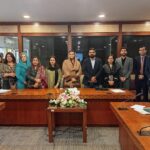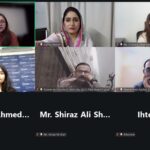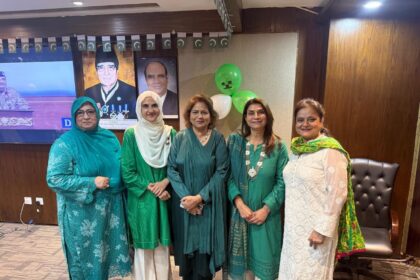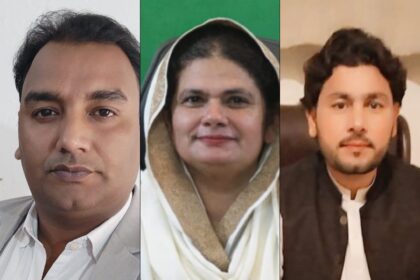




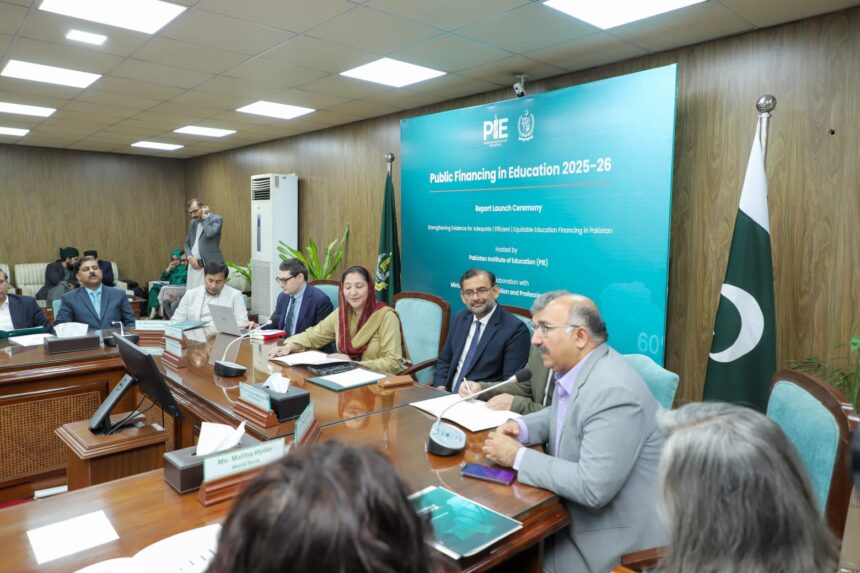
The Pakistan Institute of Education has released the Public Financing in Education 2025–26 report, produced in collaboration with the World Bank and the Foreign, Commonwealth and Development Office. The report was launched at Allama Iqbal Open University and attended by Minister of State Wajiha Qamar, Additional Secretary Hassan Saqlain, Director General Dr. Muhammad Shahid Soroya and AIOU Vice Chancellor Prof. Dr. Nasir Mahmood.
Findings show a 72% overall increase in education spending over the past five years, yet stark differences remain in per-student allocations. Per-student expenditure ranges from PKR 22,332 in Gilgit-Baltistan to PKR 72,124 under the Federal Directorate of Education, reflecting uneven fiscal capacity and administrative arrangements across regions.
Regional budget growth varied widely, with Gilgit-Baltistan recording a 318% rise and Sindh a 286% increase as its education budget grew from PKR 169 billion to PKR 654 billion. Punjab’s allocation rose by 122%, Khyber Pakhtunkhwa by 141%, while the federal level showed the lowest growth at 45%.
The report urges Pakistan to gradually increase education finance to meet the UNESCO benchmark of 4–6% of GDP and recommends mainstreaming gender, locality and school-based budgeting into existing financial platforms. It warns that current tracking systems are insufficient to monitor how resources reach the estimated 25.37 million out-of-school children, a majority of whom are girls in rural areas, and calls for a standardized budget tagging system and improved financial codes across provinces.
Minister Wajiha Qamar welcomed the report as a milestone for transparency and data-driven planning, saying its findings will guide long-term policy and more equitable resource distribution. Representatives from development partners including Salim Salamah of the British High Commission, Maliha Hyder of the World Bank, Aurelia Ardito of UNICEF and Dr. Nishat Riaz of the Malala Fund highlighted the need to raise education spending as a share of GDP, implement gender-responsive budgeting and expand non-salary budgets without undermining teacher salaries.
By adopting the recommended reforms—better budget tagging, clearer financial codes and targeted budgeting measures—Pakistan can make public expenditure more effective in improving access and quality across the education system and better reach the large population of out-of-school children.