



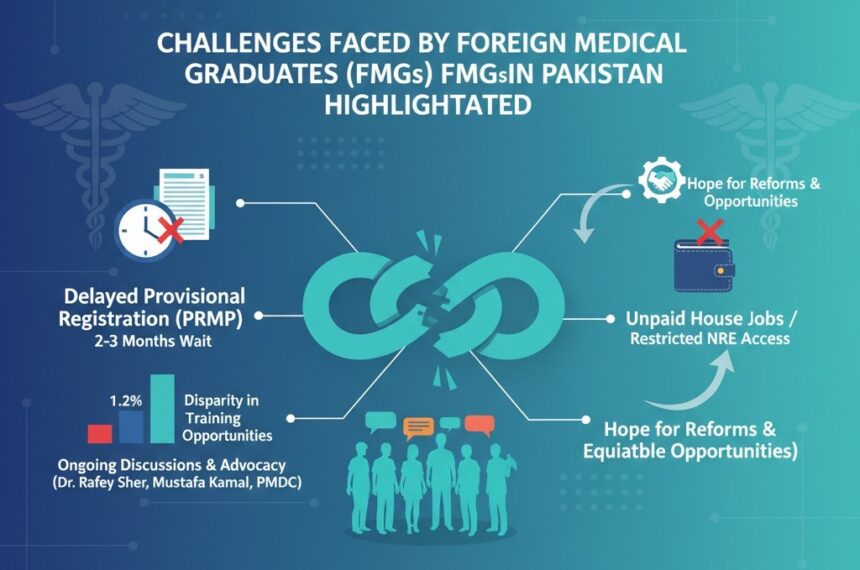
Foreign Medical Graduates continue to report systemic obstacles that are slowing career progression and creating uncertainty for young doctors across Pakistan. FMG challenges are increasingly visible as large numbers of graduates face administrative and training-related barriers after completing overseas qualifications.
One of the most pressing problems is the delay in issuance of Provisional Registration (PRMP). Many graduates who successfully passed the National Registration Examination (NRE) and applied for PRMP two to three months ago are still awaiting approval, leaving them unable to take up supervised practice or move forward with required training pathways.
Training disparities compound the issue. Even after qualifying FCPS examinations, foreign graduates find themselves allocated only a small fraction of available training positions, with reports indicating approximately 1.2% of FCPS seats going to FMGs. At the same time there are worrying reports of unpaid house jobs and instances where eligible candidates have been restricted from appearing in the NRE.
The financial and professional toll on recent graduates is significant; many have invested large sums in medical education abroad and now face prolonged delays before they can begin clinical work in Pakistan. Stakeholders, professional bodies and policymakers are being urged to introduce structured reforms that ensure transparent, fair and timely processing of credentials and training placements.
Dr Rafey Sher has been engaging with representatives of FMGs to raise these concerns with relevant authorities. He highlighted ongoing discussions with stakeholders aimed at securing clear timelines for PRMP issuance and equitable access to postgraduate training. Mustafa Kamal, the federal minister overseeing the Ministry of National Health Services, Regulations and Coordination, has been described by FMG advocates as pursuing a progressive vision to strengthen Pakistan’s health sector, and the community is hopeful that the minister and the president of the Pakistan Medical and Dental Council will take constructive steps.
FMG delegations remain in contact with the Pakistan Medical and Dental Council to explore viable solutions and push for policy-level changes. Continued dialogue between graduates, regulators and government ministries is seen as the most promising route to achieve timely resolutions that safeguard careers and ensure fair opportunities for all medical graduates in Pakistan.