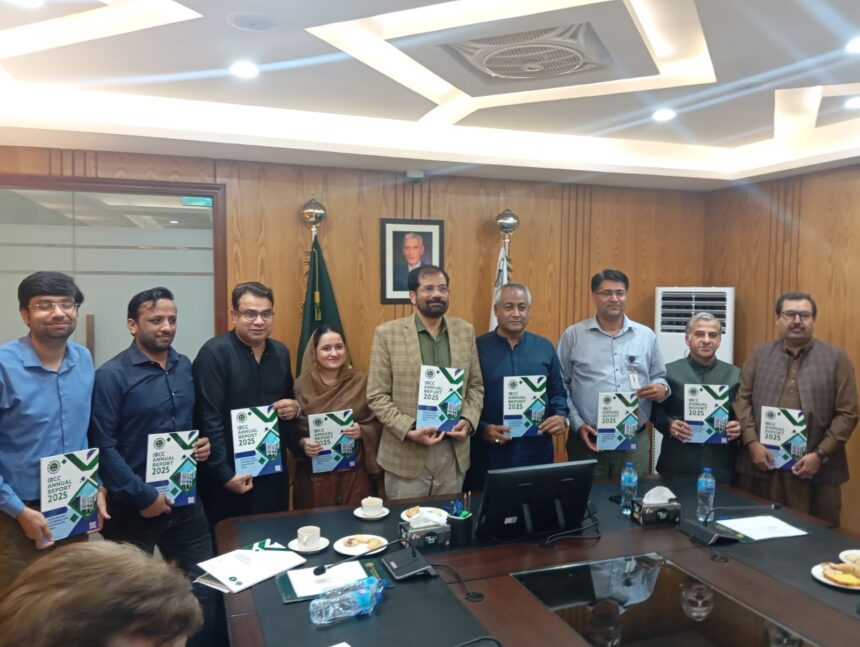
Dr. Ghulam Ali Mallah, Executive Director of the Inter Boards Coordination Commission, launched the IBCC Annual Report 2025 at the IBCC Secretariat in Islamabad and outlined a shift toward fully digital, visitor free services as part of IBCC Vision 2030. He said the reforms aim to place student facilitation at the centre of attestation, equivalence and verification processes.
The commission has moved the attestation process for matric and intermediate certificates online, eliminating the previous requirement for manually sealed verification envelopes from boards. By enabling direct verification between the issuing board and IBCC through software, the new system removes middlemen, reduces opportunities for manipulation and speeds up outcomes for students.
Equivalence services for foreign qualifications such as O-Level and A-Level have seen significant improvement. IBCC handles roughly 1,300 to 1,400 foreign qualifications and now receives about 70% of equivalence applications online. Under normal procedures certificates are issued within three days, while urgent applications can be processed in one day.
IBCC has introduced a regulatory framework for foreign boards through an Act of Parliament and major international boards have begun the registration process, with Cambridge also moving toward submitting its application. The objective is to bring these boards under compliance and regulatory oversight to protect standards and students.
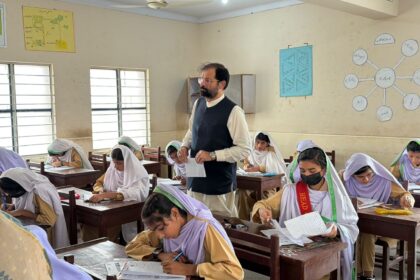
Addressing Pakistan’s examination challenges, Dr. Mallah highlighted rote learning as a persistent issue and described the Model Assessment Framework and minimum standards for paper setting and checking now being promoted. IBCC is supporting provincial boards in technology-based question papers and e-marking, conducting training for chairpersons, IT staff and teachers, and planning item banks to enable standardized paper generation.
On the matter of paper leaks, the commission noted a worrying trend that now includes some foreign board exams. IBCC has formally requested responses from the concerned boards and stressed that further action depends on receiving their official replies.
Regarding the presence of foreign boards in Pakistan, Dr. Mallah said seven such boards operate locally, including Cambridge, and observed that one reason families opt for foreign systems is limited international recognition of Pakistan’s Grade 12 for direct admission abroad. IBCC is working to strengthen Pakistani board credibility through improved assessment, digital systems, teacher training, QR coded documents and renewed ISO certification.
Long term, IBCC Vision 2030 aims to reduce student hardship by coordinating with provincial boards, the Higher Education Commission and the Ministry of Foreign Affairs so that verifications and equivalence work can be completed remotely and students no longer need to visit multiple offices in person.