The Arms Control and Disarmament Centre at the Institute of Strategic Studies Islamabad (ISSI) launched Ambassador Zamir Akram’s Islamabad Paper, “Commentary on Western Assessments of the India-Pakistan Crisis of May,” at an event that brought together academics, policymakers and practitioners to examine how Western think tanks and analysts portrayed the recent India-Pakistan confrontation. Speakers warned that Western analyses often echo Indian narratives, urged stronger Pakistani engagement in global debate, and recommended practical steps to correct information asymmetries and reduce the risk of future escalation.
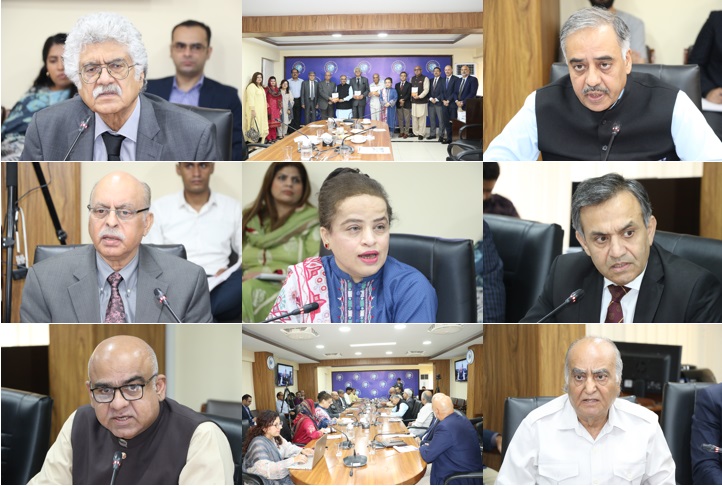
The event opened with remarks by ISSI Director General Ambassador Sohail Mahmood, who described the May conflict as one of the most consequential developments for both countries and the wider region. He argued that while India and Pakistan advanced their own accounts, third-party analyses played a critical role in shaping global perceptions. Ambassador Mahmood said India had moved quickly to recast the outcome in its favor and that many Western assessments reflected structural affinities with India, including close strategic ties. He called for a proactive Pakistani effort to counter misrepresentations and to press for more objective analysis.
Malik Qasim Mustafa, Director of the ACDC, summarized Ambassador Akram’s paper, which analyzes leading Western reports across four recurring themes: terrorism, military engagements, the issue of restraint, and what India has termed a “new normal.” Mustafa noted the intensity of the confrontation—87 hours of fighting that brought the region close to all-out war—and said these themes dominated Western commentary despite uneven sourcing and interpretation.
Dr. Naeem Ahmad Salik praised the paper for dissecting select Western think-tank reports and highlighting their subjective tendencies. He attributed much of the Western tilt toward India to New Delhi’s investment in cultivating sympathetic academics and analysts. Dr. Salik criticized the lack of transparency about Indian military losses in many Western accounts and the tendency to accept, without independent verification, Indian claims that Pakistan backed terrorist incidents—an assumption he warned could have dangerous policy implications. He urged greater academic rigor and integrity in Western commentary on the crisis.
Dr. Asma Shakir Khawaja called for a decolonization of Western-centered narratives that she said have been instrumentalized against Pakistan, especially on terrorism. She recommended pursuing forensic transparency through international platforms such as the United Nations to challenge one-sided accounts. Dr. Khawaja rejected India’s proclaimed “new normal” as inconsistent with international law and dangerous for regional stability, and argued Pakistan’s own response—described as “Quid Pro Quo Plus”—represented a different kind of deterrence. She also highlighted a persistent data asymmetry between India and Pakistan, urging Pakistan to improve its information capabilities and to promote reliable crisis de-escalation mechanisms rather than allow regional security to be driven by extremist ideologies.
Ambassador Zamir Akram described the constraints Pakistani analysts face in projecting their perspectives within Western academic and policy circles. He said publication barriers, structural alignments such as the Five Eyes framework, and the predominance of pro-Western positions among the few Pakistani scholars who do get published have limited Pakistan’s voice. Amb. Akram recommended closer collaboration among Pakistani think tanks and universities and a stronger use of domestic platforms to present Pakistan’s analyses and counter biased narratives.
A vigorous question-and-answer session followed the presentations. Participants emphasized the need to contest Western narratives, to invest in placing Pakistani expertise in international research arenas, and to confront the influence of think-tank and corporate networks that can shape South Asia coverage to Pakistan’s detriment. Several speakers also noted increasing skepticism in some Washington circles about India’s reliability as a strategic partner vis-à-vis China.
Ambassador Khalid Mahmood, chairman of ISSI’s Board of Governors, closed the event by stressing that the Islamabad Paper addresses a vital security issue for Pakistan. He said the battle of narratives is one of many strategic challenges the country faces and urged coordinated efforts to ensure Pakistan’s perspective is heard and understood.