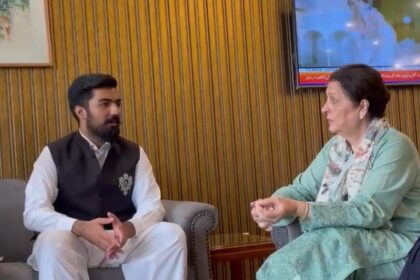
Experts at a public discussion in Islamabad argued that India's own submissions to the United Nations have placed the Kashmir dispute squarely within the UN framework, making many of New Delhi's unilateral moves legally unsupportable. The session, titled Resolution of Kashmir Problem under the UN Template, took place on December 22 at the Institute of Policy Studies and brought together legal and political analysts to examine implications of India's 1948 approach.
Dr Syed Nazir Gilani traced the argument to India's 1948 referral to the UN, noting that in its submissions New Delhi effectively recognised the will of the people of Jammu and Kashmir to choose accession to Pakistan or independence. That stance, he said, conceded UN jurisdiction and anchored the dispute within the principle of self-determination under the UN Charter. The Kashmir UN framework, Dr Gilani argued, therefore makes unilateral acts after August 5, 2019, legally untenable.
Emphasising the legal foundations, Dr Gilani invoked Article 1(2) of the UN Charter to stress the inalienable right of the people of Jammu and Kashmir to determine their political future through free and fair means. He warned that the continued loss of civilian life in the region amounts to a breach of the UN's commitment to self-determination and described the human toll as central to the legitimacy of the Kashmir UN case.
Speakers also recalled historical offers of third-party mediation, including proposals from the UK and the US to refer aspects of the dispute to the International Court of Justice. To pursue such avenues, panellists said Pakistan and the AJK leadership must build institutional expertise and political arrangements in Azad Jammu and Kashmir. Dr Gilani suggested invoking the principle of restitution as a legal tool to challenge India's actions under the UN framework.
Farzana Yaqoob urged a proactive strategy by both Islamabad and the AJK government, calling for full use of legal and political instruments available under their constitutions to press the Kashmir case at international fora. She emphasised that development and good governance in AJK should accompany legal outreach to strengthen the overall position.
Khalid Rahman underscored that Kashmir is an international conflict recognised by the United Nations and reaffirmed in its resolutions, not merely a bilateral or territorial matter. He recommended Pakistan build a robust legal case alongside documented human rights evidence, expose weaknesses in India's position and consistently advance the Kashmir UN narrative grounded in historical facts and international law.