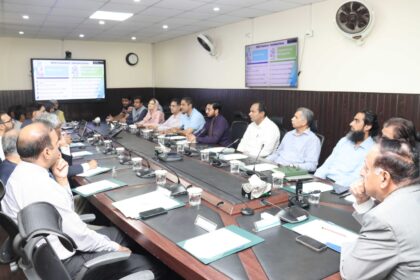
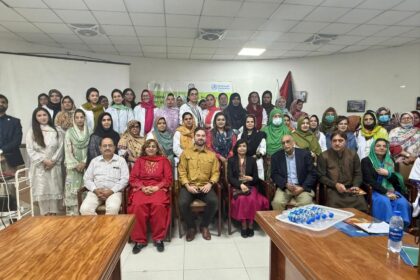
The Institute of Regional Studies hosted a talk shedding light on the alarming decline of the Indus River Delta—one of the world’s largest and most vital ecological zones—due to years of mismanaged water governance, environmental neglect, and the intensifying impacts of climate change. Experts stressed the urgent need for new policies that recognize the delta’s importance for communities, agriculture, and biodiversity, advocating for approaches that combine scientific insights with local knowledge.
During the session, Dr. Hameed Jamali, a climate policy and water governance expert, challenged prevailing views that consider freshwater flows to the sea as a loss. He emphasized that these flows are crucial for sustaining the delta’s communities, fishing industry, agricultural livelihoods, and fragile marine ecosystems. Dr. Jamali criticized the widespread technocratic focus on major infrastructure projects, such as dams, arguing that rivers must be treated as living systems with ecological needs.
The discussion highlighted the severe degradation facing the Indus River Delta, which once supported thriving mangrove forests and now stands on the brink of ecological collapse. Mangrove coverage has plummeted from 600,000 hectares to just 100,000 hectares. Seawater has intruded up to 80 kilometers inland, and over 80 percent of the delta is now affected by salinity, displacing local populations and causing estimated economic losses of 2 billion dollars annually.
While climate change is often cited as a key factor in the delta’s dwindling health, Dr. Jamali argued that poor water management, governance failures, and unchecked development have contributed just as significantly to the crisis. He cautioned against framing river outflows as mere wastage, and instead called for ecological water releases below the Kotri Barrage, adoption of basin-wide climate-resilient governance, and stronger community stewardship of water resources.
Dr. Rizwan Naseer, Senior Research Fellow at the Institute, echoed these concerns, highlighting that the delta supports millions and is now severely threatened by environmental changes, upstream water practices, and mounting social and economic pressures. He called for urgent, evidence-based action to address complex policy and governance challenges.
Concluding the event, Dr. Anjum Rasheed, Head of the Climate Resilience Program, urged for policy reforms that make ecological sustainability, local participation, and resilience to climate impacts central priorities in the future management of the Indus River Delta.