



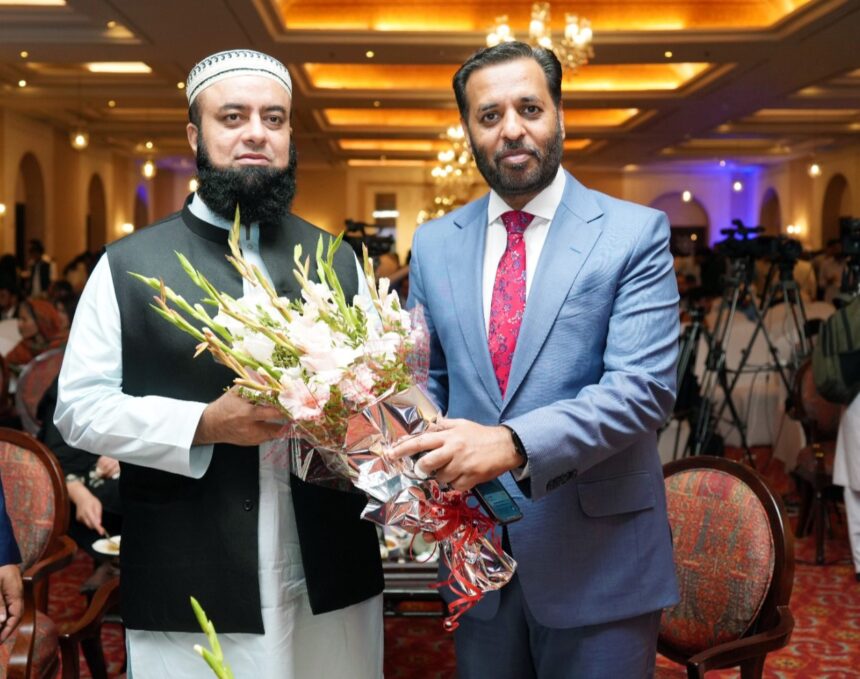
Islamic scholars in Pakistan have emphasized the permissibility and importance of birth spacing under Islamic law when maternal or child health is at risk. In a recent gathering in Islamabad, Mufti Muhammad Zubair, a prominent Islamic scholar and member of the Council of Islamic Ideology, highlighted the widespread misunderstanding surrounding birth spacing and urged religious leaders, government officials, and media representatives to clarify misconceptions to protect women’s health and well-being across the country.
Addressing an audience that included religious leaders and public officials, Mufti Zubair began by acknowledging dignitaries’ contributions to Karachi city and to the nation as a whole. He briefly mentioned an earlier landmark decision during former Prime Minister Raja Pervaiz Ashraf’s administration, highlighting the declaration of a national holiday to honor the Prophet Muhammad’s sanctity as an illustration of actions motivated by faith, rather than political considerations.
Focusing then on the pressing topic of family planning and maternal health, Mufti Zubair clarified that the primary challenge for Pakistan regarding population growth is not purely economic but fundamentally related to maternal health. He cited Quranic references that affirm Allah as the ultimate provider of sustenance, stating clearly that the fear of poverty alone should never justify avoiding childbirth. Nevertheless, he underscored that Islamic jurisprudence explicitly allows temporary contraceptive methods in situations where pregnancy poses a clear threat to the mother’s health or negatively impacts the care and upbringing of existing children.
Illustrating his point with an example, Mufti Zubair spoke of a woman severely ill in a hospital delivering her twelfth child. He stressed that Islam does not mandate unbroken successive pregnancies under circumstances that significantly threaten maternal health. Supporting his argument with authentic prophetic traditions (Hadith) and historical accounts, he explained that birth spacing (‘azl) was practiced even during the time of Prophet Muhammad, clearly indicating its permissibility within appropriate contexts.
Mufti Zubair significantly criticized existing government-sponsored awareness campaigns for framing contraception predominantly within an economic narrative. He maintained that slogans such as “Do Bachay Hi Achay” (“Two children are enough”) inadvertently undermine public trust by implying human control over divine sustenance. Such messaging, he argued, alienates people deeply committed to religious faith.
At the societal level, Mufti Zubair warned against dangerous misconceptions equating birth spacing with foreign conspiracies or anti-religious efforts. This misinformation, particularly prevalent in rural or underserved areas, endangers women’s lives as they continue suffering repeated pregnancies without adequate medical support.
To counteract these harmful misconceptions, he presented supportive fatwas from prominent Islamic institutions like Darul Uloom Karachi, Binori Town, Saudi Arabia’s Council of Senior Scholars, and the International Islamic Fiqh Academy under the Organization of Islamic Cooperation (OIC). These authoritative rulings confirm explicitly that temporary contraception methods are permissible under valid social or medical circumstances. However, Mufti Zubair clarified further that permanent sterilization methods remain impermissible unless extraordinary and medically justified circumstances require them.
Calling for a collective approach, Mufti Zubair advocated increased coordination among religious scholars, government administrations, and media outlets. He specified that authentic and carefully articulated religious rulings should be disseminated through Friday sermons, public health campaigns, and local fatwa centers. He emphasized that isolated regions rarely reject official messages outright but rather remain underserved and exposed to misleading narratives due to a lack of accurate information.
Concluding his speech, Mufti Zubair urged all stakeholders to abandon superficial assumptions and prioritize the genuine core issue: the health, safety, and well-being of mothers and children nationwide. Emphasizing compassion and faithfulness to Islamic principles, he reiterated that birth spacing under medically and socially justified conditions aligns fully with Islamic teachings and must be communicated clearly and compassionately to all communities across Pakistan.