



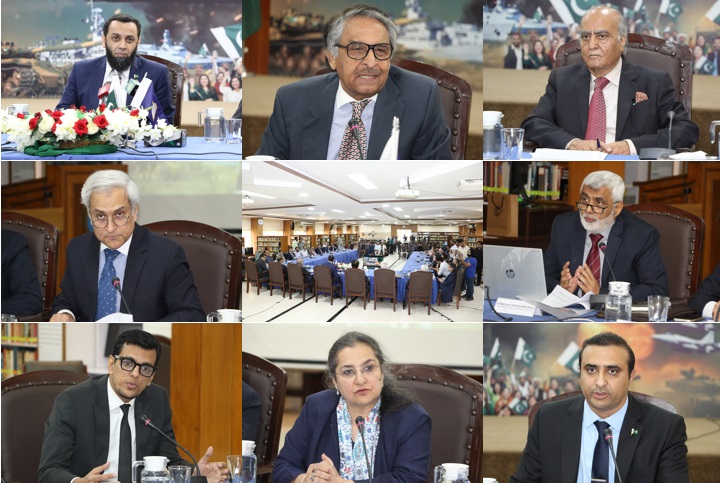
The India Study Centre at the Institute of Strategic Studies Islamabad and Digital Debate convened a seminar to mark one year of Marka-e-Haq, bringing together senior diplomats, military veterans and media figures to assess Pakistan’s response to the May 2025 crisis.
Ambassador Khalid Mahmood, Chairman ISSI, opened the session by underlining how May has repeatedly been decisive in Pakistan’s strategic history and how the Marka-e-Haq response combined battlefield achievements with coordinated diplomacy, information management and political coherence. He urged that these gains be converted into lasting institutional, economic and intellectual strength through continued national unity and foresight.
Federal Information Minister Attaullah Tarar criticised India’s reliance on unsubstantiated allegations following what Pakistan described as a false flag operation, noting that an FIR was registered within minutes without credible investigation. He highlighted Pakistan’s timely engagement with international media and diplomatic forums, the offer of a transparent joint investigation that remains unanswered, and the role of youth-led digital efforts in projecting Pakistan’s narrative globally.
Ambassador Jalil Abbas Jilani observed that India’s aggressive posture has intensified since 2014 and argued that the May 2025 crisis followed a familiar pattern of attempts to blame Pakistan. He said international acceptance of India’s narrative faltered amid concerns over transnational assassination campaigns, rising Hindutva extremism and strained neighbourhood relations, and he flagged international unease over India’s suspension of the Indus Waters Treaty as an irresponsible and destabilising step.
Dr Khurram Abbas, Director of the India Study Centre, stressed that the conflict had been imposed on Pakistan despite efforts to avoid armed confrontation and that Pakistan’s response sent a clear strategic message that coercion and intimidation would not succeed. He highlighted the enduring centrality of the Jammu and Kashmir dispute as a source of instability in South Asia.
Ambassador Tahir Hussain Andrabi walked through Pakistan’s diplomatic campaign, noting that the Prime Minister’s offer for a joint investigation and intensive outreach to some 60 capitals helped shift global attention toward Pakistan’s perspective and translate military credibility into diplomatic capital.
Air Marshal (Retd) Farooq Habib spoke on the kinetic dimension, describing coordinated preparations by the Air Force, Army and Navy that turned tactical successes into strategic gains. He warned of the changing character of war driven by advanced technologies, unmanned systems and the need for vigilance and proactive defence planning.
Ms Nasim Zehra highlighted Pakistan’s adaptation to evolving security dynamics including developments in Indian-administered Kashmir and pointed to strengthening strategic partnerships with China and deeper engagement in West Asia as markers of Pakistan’s responsible diplomatic role.
Mr Ahmad Hassan Al-Arabi explained how strategic narrative formation now rests on mobile platforms, AI, OSINT and citizen journalism, and he described how India’s disinformation tactics blend fact and fiction to saturate the information space. He praised Pakistan’s emphasis on truth, transparency and real-time communication during the Marka-e-Haq period and underscored the role of digital practitioners and youth in shaping perceptions through innovative tools.
The seminar reaffirmed the need to institutionalise the gains of Marka-e-Haq across defence, diplomacy and information domains while maintaining national unity. The event concluded with a group photograph of participants.