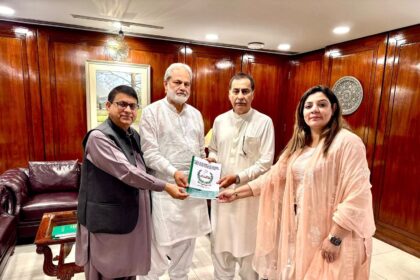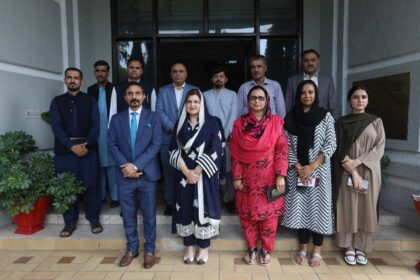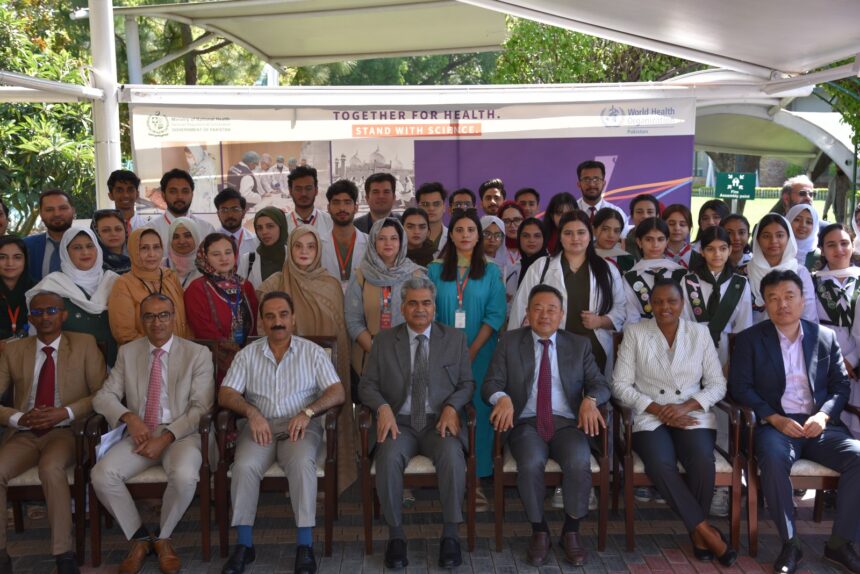
Pakistan marked World Health Day with a joint event hosted by the WHO country office and the Ministry of National Health Services, Regulations and Coordination, highlighting how medical science saves and protects millions of lives each year. The gathering included participation from students, partners and senior government officials, underscoring a national commitment to evidence based health action.
Muhammad Aslam Ghauri, Secretary Health, said trusting and following medical science is not an option but a necessity for the future of families across Pakistan. He recalled that 78 years ago Pakistan was among the founding member states that ratified the constitution of the World Health Organization, and said the nation’s determination to advance global and national health remains strong.
The Secretary emphasised the importance of the One Health approach, noting that medical science shows how human, animal and ecosystem health are interconnected and must be balanced for sustainable wellbeing.
Dr Luo Dapeng, WHO Representative in Pakistan, presented data illustrating the impact of medical science locally and globally. He noted that vaccines have saved over 150 million lives in the past 50 years, and that Pakistan reaches roughly 7 million children and 5.5 million women of childbearing age each year with life saving vaccines. Polio vaccination efforts have helped more than 20 million people avoid paralysis and have reduced polio cases in Pakistan by some 99.8 percent over the last three decades.
Dr Luo added that advances in tuberculosis treatment have saved more than 83 million lives over the past 25 years, and that Pakistan provided life saving TB treatment to over 5 million people in the last decade. He also highlighted that WHO and partners support treatment for approximately 70,000 children with severe acute malnutrition and medical complications each year.
The event reinforced Pakistan’s long standing partnership with WHO and a shared message to younger generations to stand with science. Officials urged continued investment in vaccination, treatment programmes and integrated health approaches so that medical science can keep protecting millions across the country.