



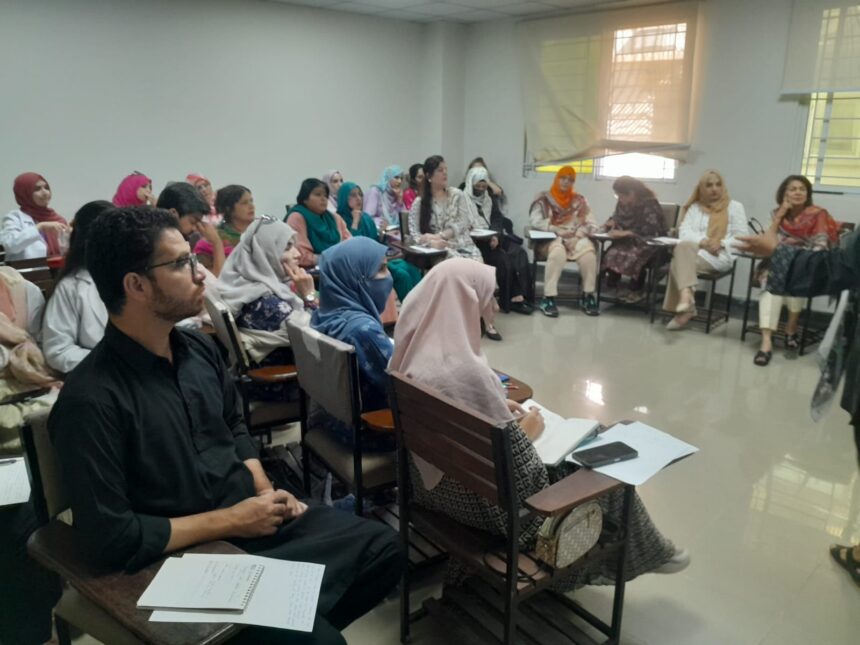
The closing workshop at NutriConnect 2025 brought a practical focus to nutritional surveillance, guiding participants through research methods and data analysis essential for monitoring population nutrition in Pakistan. The session emphasized how robust study design and careful data handling turn raw figures into actionable public health insights.
Professor Dr. Rukhsana Khan, Head of the Community Medicine Department at Fazaia Medical College, Air University, Islamabad, and Dr. Arsia Bilal, FCPS Supervisor and Associate Professor at Fazaia Medical College, Islamabad, led the training. Their presentations combined academic rigour with field relevance, illustrating analytical tools that surveillance teams can apply in provincial and district programmes.
Participants practised core elements of research design and data management, with discussions tailored to the challenges of nutritional surveillance in Pakistan. The speakers highlighted common pitfalls in data collection and interpretation and offered strategies to improve data quality and reporting for stronger programme decisions.
Beyond technical skills, the workshop framed nutritional surveillance as a catalyst for public health action, empowering health professionals to translate findings into targeted interventions. Attendees left better equipped to contribute to nutrition policy, monitoring systems and community-level responses across Pakistan.
The session provided a fitting close to a day devoted to learning and leadership in nutrition science, reinforcing the role of evidence-based practice in advancing national nutrition goals.