



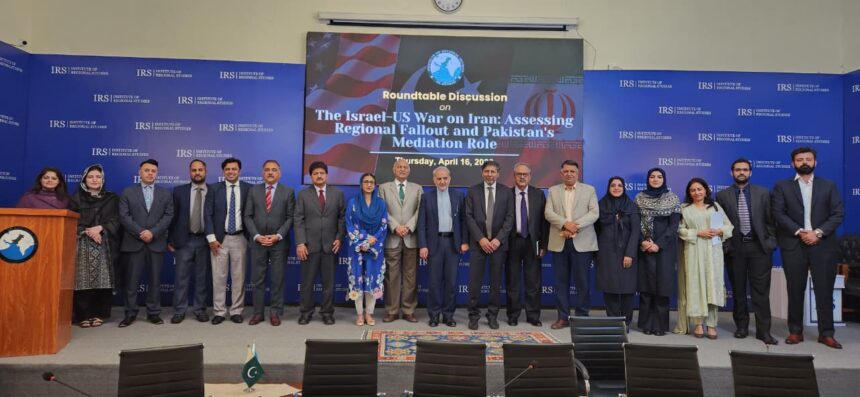
The Institute of Regional Studies in Islamabad convened a roundtable that brought together senior diplomats, policymakers and media figures to assess the fallout of the 40-day US–Israel conflict with Iran and to discuss Pakistan’s expanding mediation role. The panel included Dr. Reza Amiri Moghadam, Iran’s Ambassador to Pakistan; Senator Mushahid Hussain Sayed; Ambassador Asif Durrani; Maj. Gen. (r) Zahid Mahmood; journalist Hamid Mir; and media analyst Muneezay Jehangir, with the session chaired by the institute’s president Ambassador Jauhar Saleem.
Ambassador Saleem warned of wide-ranging consequences from the conflict, citing surging energy prices, interruptions to trade and the risk of broader regional escalation. He noted Pakistan’s growing diplomatic profile and said Islamabad’s facilitation had helped bring Tehran and Washington back toward negotiations, underscoring the importance of Pakistan mediation in averting uncontrolled confrontation.
In his keynote, Senator Mushahid Hussain described the moment as among the most consequential in Pakistan’s diplomatic history, drawing a parallel with Pakistan’s role in the Beijing Washington backchannel in the 1970s. He identified three structural shifts stemming from the crisis: the weakening of the Greater Israel trajectory, a decline in US influence in the region, and the pressing need for a cooperative security architecture led by regional stakeholders rather than external powers.
Iran’s Ambassador Dr. Reza Amiri Moghadam offered an on the ground perspective, expressing appreciation for Pakistan’s support and cautious optimism about the Islamabad Talks. He reiterated Iran’s willingness to engage in dialogue while warning of efforts by external actors to destabilize the country, and stressed that Iran’s resilience is rooted in institutional strength. He affirmed that Pakistan remains a trusted interlocutor for constructive diplomacy.
Ambassador Asif Durrani argued that US and Israeli actions did not achieve their strategic aims and called for a new regional security framework with backing from Russia and China to secure long term stability. Maj. Gen. (r) Zahid Mahmood placed the crisis within a broader shift toward multipolarity, noting that the conflict has strengthened ideological cohesion in Iran, increased incentives for regional nuclear deterrence, and raised the risk of horizontal escalation that could affect Pakistan. He urged a collective regional security approach and vigilance regarding any destabilising regional actors.
Senior journalist Hamid Mir said Pakistan’s mediation prospects are tied to Iran’s demonstrated resilience and suggested that recent events have dented the United States’ global image, compelling renewed diplomatic engagement. He expressed guarded optimism that the Islamabad Talks could foster a durable understanding between Washington and Tehran. Media analyst Muneezay Jehangir stressed Pakistan’s consistent advocacy for dialogue and observed that the war has little public support in both the United States and Pakistan, reinforcing the urgency of diplomatic channels.
The roundtable concluded with broad agreement that Pakistan mediation presents an opportunity with significant strategic promise and attendant responsibilities. Participants emphasized that Islamabad must balance regional relationships carefully while working with international partners to help shape a new, regionally rooted security architecture and to prevent further escalation that would harm Pakistani interests.