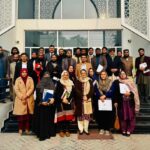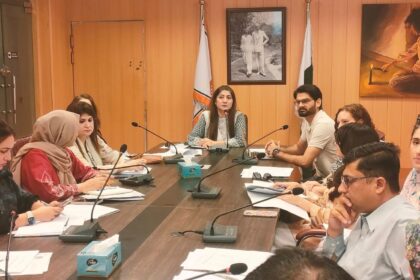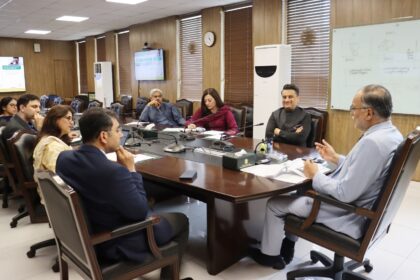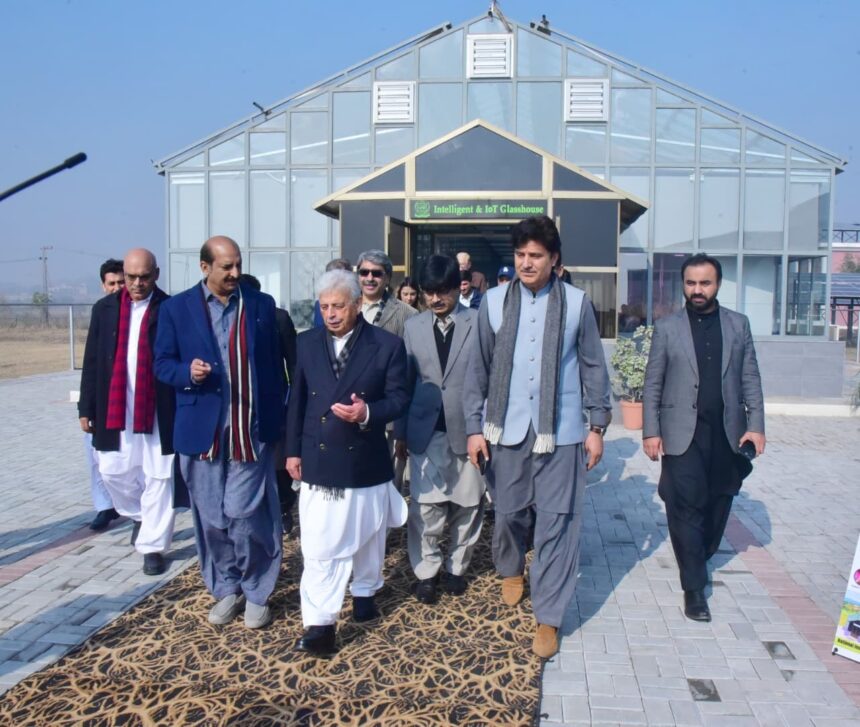
Federal Minister for National Food Security and Research Rana Tanveer Hussain inaugurated advanced speed breeding facilities for wheat and pulses and an IoT-based smart glasshouse at the National Agricultural Research Centre in Islamabad, marking a new phase in Pakistan’s agricultural research and development.
The introduced speed breeding systems use controlled LED lighting for up to 22 hours and tightly regulated temperature and humidity to compress crop life cycles. Under these conditions, wheat can complete its biological cycle in six to eight weeks, allowing five to six generations per year. This acceleration shortens the traditional timeline for developing improved varieties, enabling breeders to deliver better seed lines to farmers much sooner.
Established under the PSDP wheat improvement project at NARC, the wheat speed breeding facility combines glasshouse chambers, modern LED grow lights and environment control systems. More than 3,000 new wheat lines have already been rapidly developed and are now undergoing field yield evaluations. The facility has also served as a capacity building hub, training hundreds of scientists, breeders and students while expanding the methodology to other important crops.
A dedicated speed breeding facility for pulses, set up under the PSDP pulses project, addresses the critical role of pulses in national nutrition and soil fertility. The controlled growth chambers and adjustable LED regimes enable four to six generations annually for chickpea, lentil, mung and mash. Early results include the rapid development of improved chickpea lines, enhanced varietal traits across pulse species and more precise phenotyping under uniform conditions.
The newly opened smart glasshouse at the National Institute for Genomics and Advanced Biotechnology is a fully automated 2,640 square foot research installation equipped with IoT sensors, artificial intelligence, programmable control systems and data analytics. This smart glasshouse supports genomics-led speed breeding, stress biology studies and high‑precision phenotyping, and has already enabled heat stress screening, accelerated wheat line development, successful aquaponics trials and controlled-environment evaluation of gene-edited plants.
Dr. Syed Murtaza Hasan Andrabi, Chairman Pakistan Agricultural Research Council, highlighted PARC’s leadership in prioritising modern breeding technologies and digital agriculture to transform Pakistan’s research ecosystem. Federal Minister Rana Tanveer Hussain framed the investments as aligned with national priorities for food security, climate‑resilient agriculture and higher farmer incomes, stressing that faster varietal development will reduce import dependence and ensure timely availability of improved seeds. The new facilities are expected to strengthen national research capacity, foster international collaborations and promote public‑private partnerships for sustained agricultural innovation.