



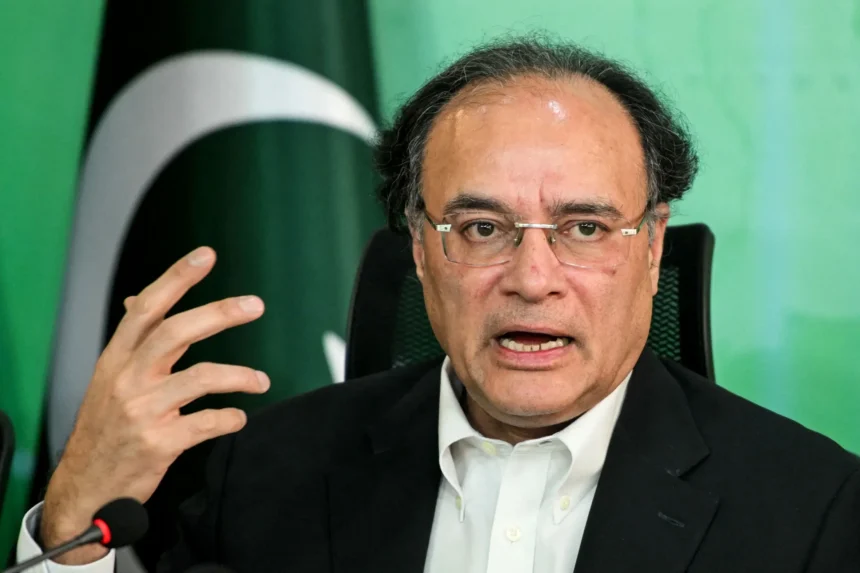
ISLAMABAD: Finance Minister Senator Muhammad Aurangzeb will leave for Bangkok, Thailand, to lead Pakistan’s delegation to the 2026 Annual Meetings of the World Bank Group and International Monetary Fund from October 12 to 18, where more than 60 high-level engagements have been planned with international financial institutions, global investors, finance ministers, banks and credit rating agencies.
The visit comes as Pakistan seeks to move beyond economic stabilisation towards sustainable growth led by investment, exports and private businesses. The finance minister is expected to highlight the government’s economic reforms, measures to strengthen public finances and foreign exchange reserves, and plans to attract international investment and create employment opportunities.
During the visit, Senator Aurangzeb will attend key meetings of the IMF and the World Bank Group and hold discussions with their leadership. His programme also includes meetings with the International Finance Corporation and the Multilateral Investment Guarantee Agency, with talks expected to focus on Pakistan’s economic outlook, progress on reforms, private sector development and future cooperation.
The finance minister will also attend the IMF managing director’s meeting with finance ministers, central bank governors and heads of regional financial institutions from the Middle East, North Africa, Afghanistan and Pakistan region.
He is scheduled to meet representatives of several international development and financial institutions, including the Asian Infrastructure Investment Bank, OPEC Fund for International Development, Saudi Fund for Development, International Islamic Trade Finance Corporation, Japan International Cooperation Agency, ECO Trade and Development Bank, United Nations Economic and Social Commission for Asia and the Pacific, and International Organization for Migration.
These meetings will provide an opportunity to discuss development financing, trade, investment, economic cooperation and support for Pakistan’s reform and growth plans.
On the bilateral front, Senator Aurangzeb will meet his counterparts from Saudi Arabia, China, Türkiye, Iran, the United Kingdom and the host country, Thailand. The discussions will focus on strengthening economic ties, increasing investment, expanding trade and improving development cooperation.
He will also engage with the United States Department of the Treasury to discuss bilateral economic cooperation and explain Pakistan’s reform agenda and efforts to attract investment.
A major part of the visit will focus on international investors and capital markets. The finance minister is scheduled to meet representatives of leading financial institutions, including JP Morgan, Citi, Deutsche Bank, Standard Chartered Bank, MUFG, Mashreq Bank, Dubai Islamic Bank, Abu Dhabi Commercial Bank, Ajman Bank, Barclays, Bank of America, Jefferies International, Alvarez and Marsal, and MSCI.
He will also take part in investment seminars, meetings with sovereign investors and roundtable discussions aimed at presenting Pakistan’s economic outlook, investment opportunities and progress on structural reforms.
The government hopes these engagements will help improve international understanding of Pakistan’s economic position, strengthen investor confidence and encourage investment in sectors with growth potential. The discussions will also cover Pakistan’s access to international financial markets and its efforts to build a more stable and competitive economy.
Senator Aurangzeb will separately engage with Alibaba International Digital Commerce to discuss Pakistan’s digital economy, electronic commerce and opportunities for investment in online business and trade.
The finance minister will also participate in several international economic and policy forums. These include the G24 Finance Ministers and Central Bank Governors Meeting, the 17th V20 Ministerial Dialogue, the 16th Ministerial Meeting of the Coalition of Finance Ministers for Climate Action, and the Ministerial Dialogue on Accelerating Implementation for More and Better Jobs.
His programme also includes the first meeting of the Governing Council of the Borrowers’ Forum and the plenary session of the annual meetings.
The finance minister is expected to contribute to discussions on reducing financial risks faced by countries that borrow through international markets. He will also participate in a World Bank Group session on turning changes in population patterns into improvements in education, skills, job creation and human capital.
Pakistan’s efforts to maintain access to international capital markets will be another important part of the visit. Senator Aurangzeb will hold meetings with all three major international sovereign credit rating agencies — Fitch Ratings, Moody’s and S&P Global.
These engagements will provide an opportunity to explain Pakistan’s economic performance, reform measures and plans for maintaining financial stability. The discussions will also focus on the country’s economic direction and its ability to attract long-term investment.
The finance minister will also meet representatives of major international media organisations, including Reuters, Bloomberg, Nikkei Asia, Channel News Asia, The Wall Street Journal and AFP.
In addition, he will participate in policy discussions with the Atlantic Council and Eurasia Group. These engagements will focus on Pakistan’s economic outlook, progress towards macroeconomic stability, remaining reform priorities and plans to attract international investment.
Across the meetings, Senator Aurangzeb is expected to present the government’s position that progress on economic stability must now lead to stronger investment, higher exports, greater productivity and more employment opportunities.
The government also aims to promote private sector-led growth and expand financial inclusion so that a wider section of the population can benefit from economic progress.
The visit reflects Pakistan’s effort to remain actively engaged with international financial institutions, development partners and global investors. The government’s stated objective is to turn improved economic stability into sustainable and inclusive growth while strengthening trade, investment and employment.