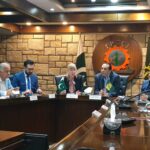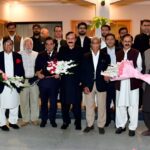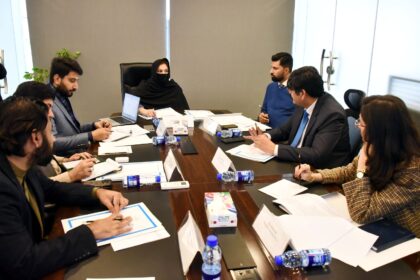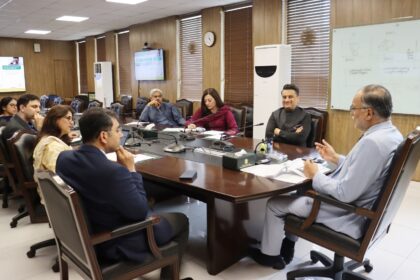




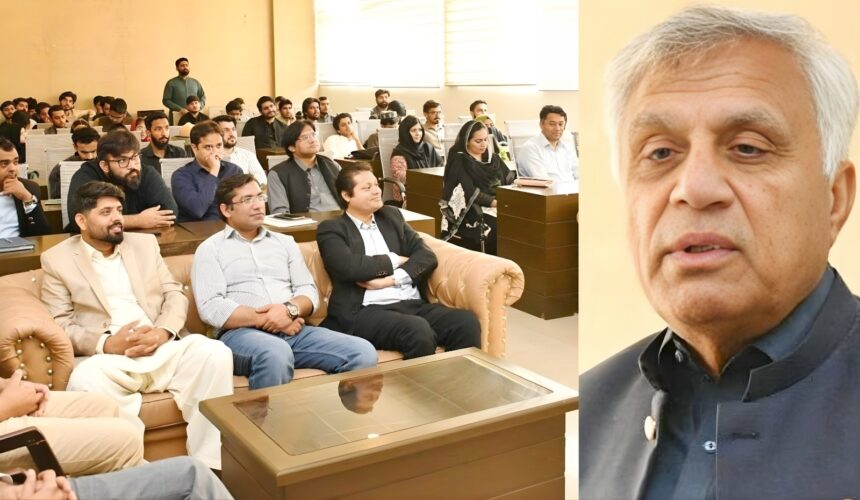
The Center for Precision Agriculture at Pir Mehr Ali Shah Arid Agriculture University Rawalpindi hosted an international seminar on Climate-Smart Irrigation and Precision Agriculture that brought together researchers, faculty and students to discuss sustainable water management in agriculture under the theme Supplemental Irrigation through Decision Support System in the Face of Climate Change.
Prof. Dr. Qamar-uz-Zaman, Vice Chancellor PMAS-AAUR, highlighted the urgent need for practical and applied research to tackle Pakistan’s agricultural constraints, especially in water-scarce regions. He emphasized that university-led and student-driven research can produce innovative, field-ready solutions that directly benefit farming communities, strengthen academic training and contribute to national food security.
The keynote speaker, Dr. Saad Javed Cheema from the University of Prince Edward Island, underlined the rising role of digital irrigation monitoring systems. He explained that technologies which track evapotranspiration and soil moisture in real time allow for precise irrigation scheduling, enabling farmers to supply water only when crops need it and improving on-farm resource use.
Dr. Cheema further noted that data-driven irrigation systems conserve precious water resources while boosting crop productivity and resilience to climate variability. Integrating advanced sensors and satellite inputs with decision support systems gives farmers actionable information for timely irrigation choices.
Other presenters reinforced that precision agriculture combines digital tools, sensors, satellite data and analytics to optimize farm management, reduce input costs and improve resource efficiency. These approaches are increasingly vital in Pakistan as climate pressures grow and water becomes scarcer.
The Center for Precision Agriculture at PMAS-AAUR continues to advance precision agriculture through research, training and outreach, promoting sustainable farming practices and climate-resilient agriculture in Pakistan. With strong student participation and applied research focus, the center aims to translate technology into practical benefits for local farmers and long-term food security.