



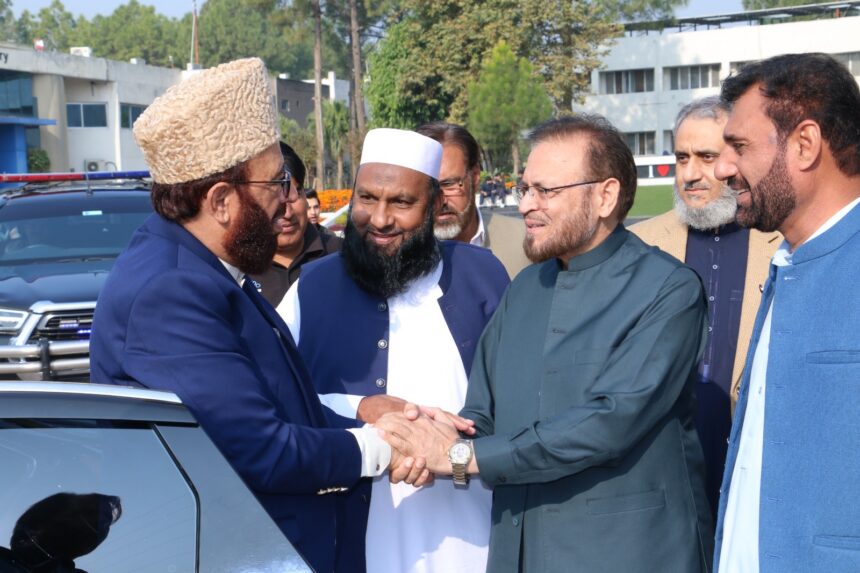
The two-day international Sufi Seerat conference at Allama Iqbal Open University brought scholars, researchers, and religious leaders together on 19 and 20 November 2025 to explore the role of Sufis in the Subcontinent. The opening session was presided over by Federal Minister for Religious Affairs Sardar Muhammad Yousaf, with addresses by Prof Dr Shah Maeen-ud-Din Hashmi, Prof Dr Muhammad Al-Arabi Bouazizi from Zaytuna University, Tunisia, and Prof Dr Nasser Mehmood, Vice Chancellor of AIOU.
Sessions ran in parallel across both days, covering interpretative approaches to seerat, Sufi methods and pedagogy in biographical writing, the reflection of seerat in Sufi poetry, and the imprint of seerat in the sayings and writings of mystics. Papers examined topics ranging from Rumi’s poetic portrayals of the Prophet to the seerat-related passages in Kashf al-Mahjub and the presence of prophetic biography in Pashto Sufi verse.
Chairing and special participation included prominent academics such as Prof Dr Ali Asghar Chishti and Prof Dr Abdul Hameed Abbasi, while guests like Khurshid Ahmad Nadeem and Prof Dr Abdul Quddus Saheeb contributed to the scholarly tone. Presentations analysed classical Sufi texts, the prophetic features in the works of Shah Abdul Haq Muhaddith Dehlvi, and methodological uses of seerat material in the ethical training advanced by Shah Waliullah.
The second day featured further thematic sessions led by Prof Dr Muhammad Al-Arabi Bouazizi and Prof Dr Saeed ur Rehman, with a range of papers on Ashraf Ali Thanvi’s sayings, the seerat in Amir Khusro’s poetry, and modern reflections such as Muhammad Iqbal’s treatment of the Prophetic biography. Discussions also highlighted research on Imam Rabbani’s file of sayings and the renewalist perspective of Mujaddid Alf Sani.
A notable moment was the launch of Darul Ma’arif Lahore’s new reference work Daira Ma’arif Seerat Muhammad Rasul Allah, introduced during a special session chaired by Prof Dr Saeed ur Rehman. Contributors including Dr Muhammad Saeed Shaikh and Prof Dr Hafiz Muhammad Saadullah praised the encyclopedia’s scholarly methodology and its potential to serve as a benchmark for seerat studies across the Subcontinent. Darul Ma’arif’s representative outlined the editorial approach and the volume’s contribution to contemporary seerat scholarship.
Conference secretary Dr Hafiz Saeed Rehman presented a set of comprehensive recommendations to strengthen the study of Sufi seerat. He urged preparation of a consolidated bibliography and an encyclopedia dedicated to seerat literature related to Sufis, and recommended rigorous authentication and indexing of seerat-related traditions within Sufi archives. The conference called for wider recognition of the contributions of hadith scholars and Sufis in fields of law and theology at international fora and urged further comparative research on key Sufi sources including the works of Sheikh Ahmad Sirhindi.
Delegates emphasised institutional measures, proposing dedicated centres for Sufi studies in universities, inclusion of biographical and ethical Sufi materials in Islamic studies curricula, and the development of training programmes for students using the teachings, practices, and sayings of Sufi masters. Organisers also proposed an international seerat conference series addressing twenty-first century trends and the creation of a directory and forum for seerat researchers under the auspices of AIOU’s Seerat Studies department.
The closing session chaired by Prof Dr Mohiuddin Hashmi featured remarks by Dr Sahibzada Sajid Rehman and expressions of thanks from Prof Dr Shah Maeen-ud-Din Hashmi to contributors and the university administration. Attendees commended the organisers for a well-run event that advanced scholarly dialogue on the intersection of Sufism and prophetic biography in South Asia.