



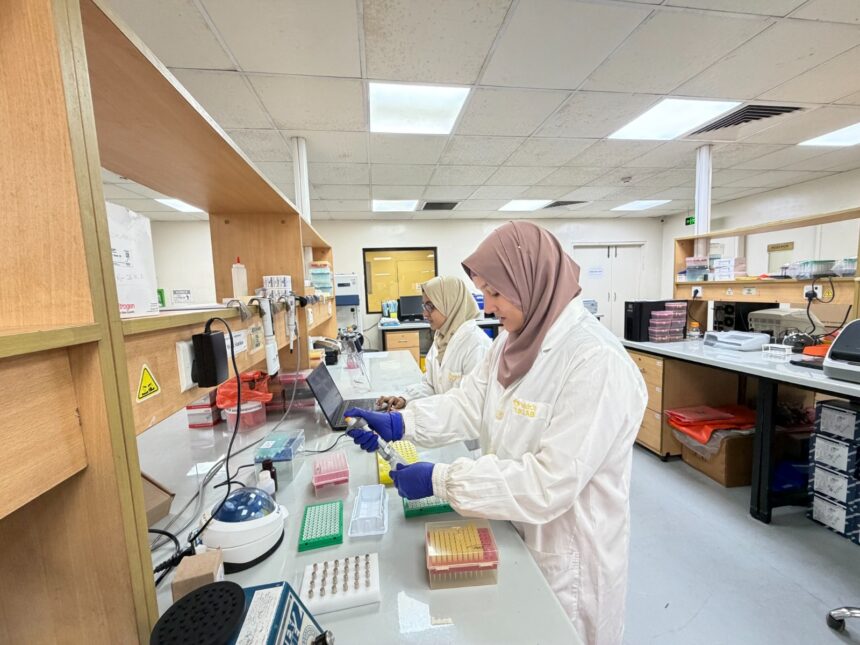
U.S. Government funding through the Stop TB Partnership’s introducing New Tools Project (iNTP) is supporting efforts against drug-resistant TB in Bangladesh by strengthening the icddr,b laboratory in Dhaka. In partnership with the National TB Programme, samples from people with rifampicin-resistant TB are sent to icddr,b where Illumina technology enables rapid detection of resistance to key drugs used in the BPaL/M regimen, with testing now routed through the tNGS lab.
Since 2022, icddr,b has used targeted Next-Generation Sequencing (tNGS) to deliver fast, accurate results that clinicians across Bangladesh rely on to tailor treatment plans. The availability of these results has helped physicians prescribe appropriate regimens sooner, saving lives and reducing the risk of further resistance.
“Molecular technologies like Xpert platforms and tNGS are game changers, providing the DST results very fast, e.g. Xpert for rifampicin, isoniazid, and fluoroquinolones in just 2 hours and tNGS for new and repurposed drugs like bedaquiline, pretomanid and linezolid in 3-4 days,” said Professor Dr. Md. Abdus Shakur Khan, Head of the Department of Respiratory Medicine at Anwer Khan Modern Medical College & Hospital in Dhaka.
Before these molecular tools and the establishment of the tNGS lab, clinicians often waited 8-12 weeks (about 3-4 months) for drug susceptibility testing for new and repurposed medicines. Support from the U.S. Government and the Stop TB Partnership has reduced that timeframe to roughly 3-4 days for critical drugs, enabling much faster, individualized care.
The U.S. support for the tNGS lab at icddr,b underscores a wider commitment to innovative solutions that strengthen global health systems and protect communities across the region by improving access to timely TB diagnostics and treatment.