




Author: Arqum Bin Habib
Advertising used to be relatively easy to recognize. A television commercial told us what a product could do. A billboard showed us what it looked like. A celebrity endorsement tried to associate the product with a familiar face. Social media has changed that relationship. Today, a product can appear in a creator’s morning routine, travel vlog, makeup tutorial, or casual conversation. It may not even feel like an advertisement at first. It feels like a recommendation from someone we follow. And that difference matters. Influencers have built something traditional advertising has always struggled to create: a sense of personal connection. They speak casually, share parts of their lives, joke with their audiences, and sometimes even show their failures. Over time, followers can begin to feel that they know the person behind the screen. Once that connection is established, a product recommendation carries a very different kind of weight.
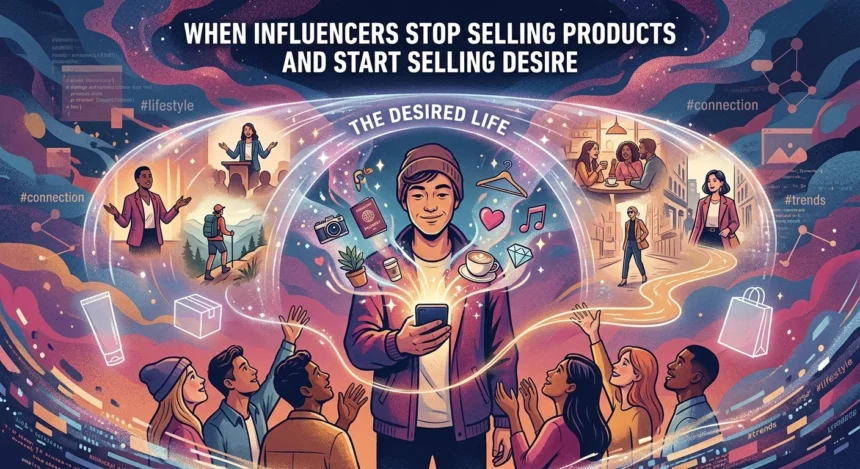
Research on influencer marketing keeps circling back to this idea that the recommendation doesn’t need to be objectively convincing. It just needs to come from someone who feels close. The more interesting question isn’t whether influencer marketing works. It’s what exactly people are buying. Sometimes it isn’t simply the product. It’s the lifestyle attached to it. An influencer doesn’t have to say “you need this.” The product can just appear alongside the life they’re presenting: the watch becomes shorthand for success, the skincare product for beauty, the clothing brand for being fashionable, the restaurant for a certain kind of life. The product becomes a small piece of an identity that audiences can purchase. This is particularly powerful with younger audiences, because influencers figured out something traditional advertising struggled with for years that younger viewers don’t want to be spoken to like consumers, they want to be entertained. The casual language, the humour, the roasting, the personality: none of it is accidental. It’s what makes commercial communication feel like ordinary social interaction, and it’s exactly what makes the line between recommendation and advertising so hard to see.
A billboard asks us to buy something. An influencer can make us want to be the kind of person who buys it. That’s a much subtler form of persuasion. What concerns the most, though, is speed. A product shows up in one viral video. People start talking about it. Other creators pick it up and The algorithm keeps surfacing it. Suddenly it seems to be everywhere, and when something seems to be everywhere, it’s easy to assume we should have it too None of this means influencers are inherently manipulative, or that every recommendation is dishonest. Plenty of creators genuinely use and like what they promote, and influencer marketing has also introduced people to smaller, less visible brands they’d never have found through a traditional ad campaign; a skincare line run by two sisters, an independent coffee roaster, a small clothing label that could never have afforded a billboard. The issue isn’t the honesty of any individual recommendation. It’s how much influence has become concentrated in individual personalities. Anyone with a phone, a following, and a recognizable voice can now become a powerful commercial communicator. No studio, no billboard budget, just a bedroom, a car, or a kitchen and an audience already listening. For brands, that’s enormously attractive. For consumers, it’s worth a little more caution because an influencer’s popularity isn’t the same thing as expertise. Someone can be extremely good at creating content, building an audience, and reading trends without knowing whether a product is actually worth buying. Yet the familiarity built up over years of following someone can make their word feel more credible than it objectively is, and that’s the part that worries me most: we’re not just being exposed to advertisements anymore; we’re being exposed to people we’ve grown attached to who are also advertising to us. The distinction sounds a bit small, but psychologically it isn’t. The answer isn’t to shut influencer marketing down. It’s too deeply embedded in digital culture now, and there’s nothing wrong with creators earning from their audiences. The responsibility falls on everyone in the chain: brands should be transparent, influencers should be upfront about commercial relationships, platforms shouldn’t let disclosure become a formality nobody reads, and audiences need to hold on to some ability to question what they’re being shown.
Most of all, we should keep asking one simple question before we click buy:
Do I actually want this, or have I simply been made to want it?
About the Author
Arqum Bin Habib is a Visiting Faculty member in the Arts and Media Department at Foundation University and a Senior Graphic & UI/UX Designer at ITnow Inc. His work combines academic experience with professional expertise in graphic design, digital media, and user experience.