



ISLAMABAD: Former Foreign Secretary of Pakistan and former Permanent Representative to the United Nations in Geneva, Ambassador Tehmina Janjua, has said that greater participation of women in peace, security and diplomacy rests on equity and drawing on society’s full talent.
Speaking as the keynote speaker at a seminar titled “Pakistan’s Women in Peace and Security,” she said access to higher education and removal of barriers to career progression were essential for expanding women’s role in national and international security affairs.
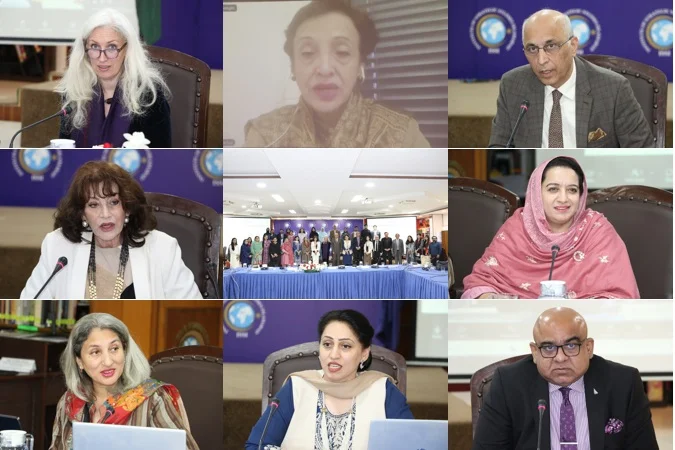
The seminar was organised by the Arms Control and Disarmament Centre (ACDC) at the Institute of Strategic Studies Islamabad (ISSI). It brought together women leaders, diplomats, strategic experts, policy practitioners and representatives of international organisations to examine women’s role across hard and soft security, including nuclear safety, security, strategic stability, peacebuilding and non-traditional security challenges such as climate change.
Ambassador Janjua stressed the need to expand women’s leadership in multilateral diplomacy, arms control negotiations and international disarmament structures. She said Pakistani women diplomats had consistently defended national security interests at global platforms, adding that national security and diplomacy remained incomplete without full female participation.
Acknowledging structural and social barriers, she said excluding women deprived the country of half of its expertise and peacemaking potential. She called for elimination of social barriers at home and in workplaces, higher education for women, data mapping of female experts across security sectors, student counselling, structured internships in think tanks and media, and inclusion of women in strategic counter-terrorism analysis.
Addressing the seminar as guest of honour, Ms Pernille Ironside, UN Resident Coordinator a.i. and UNICEF Representative in Pakistan, said women’s inclusion under UN Security Council Resolution 1325 was a clear security principle and not merely a welfare concern.
She noted that one in four civilians killed in conflicts were women and that women remained severely underrepresented in formal peace processes. She said robust security required utilising the full potential of women across science, diplomacy and security to enhance analytical rigour, question assumptions and ground strategies in local realities.
Ms Ironside said Pakistan’s young population, comprising 67 per cent of the country, was its greatest asset and key to long-term stability and prosperity. Referring to Pakistan’s climate vulnerabilities, including devastating floods, she said lasting national resilience and regional stability depended on empowering women as central decision-makers across economic, environmental and security frameworks. She also reaffirmed the UN’s support for Pakistan’s path towards inclusive growth and sustainable peace.
Speaking on women’s contributions in nuclear safety, security and regulation, Ms Noreen Iftakhar, Senior International Relations Officer at the Pakistan Nuclear Regulatory Authority (PNRA), said women’s technical, legal and regulatory expertise directly strengthened national nuclear safety regimes.
She outlined women’s roles at PNRA, including field inspections, licensing, emergency preparedness and environmental safety. She said an empowering workplace culture and equal access to international platforms such as the International Atomic Energy Agency were essential for advancing women in STEM and strategic regulation.
Dr Salma Malik, Associate Professor at the Department of Defence and Strategic Studies, Quaid-i-Azam University, spoke on women’s role in promoting strategic stability. She said bridging the gender gap in Pakistan’s security architecture required structured pathways, including a dedicated Women, Peace and Strategic Stability Forum, policy apprenticeships and formal integration into nuclear risk-reduction dialogues.
She also stressed the need to include women experts in nuclear risk-reduction and crisis-management dialogues, as well as in assessments related to artificial intelligence, cyber, autonomy and escalation risks.
Ms Fahmida Iqbal Khan, Deputy Country Representative of UN Women Pakistan, focused on women’s role in peacebuilding and peacekeeping. She said women were a decisive counter-terrorism and security asset and that their inclusion made peace more lasting.
She highlighted the need to bridge the gap between Pakistan’s strong global peacekeeping record and its internal security strategy. She said women must be engaged at the grassroots level to counter gendered security threats and weaponised technology. She called for institutional steps, including a National Action Plan on Women, Peace and Security, integration of WPS into counter-terrorism frameworks, and increased female representation across police and peacekeeping workforces.
Speaking on women’s contributions to climate resilience and non-traditional security, Ms Aisha Aziz Khan, Chief Executive of CSCCC, said rural women were on the front lines of climate disasters, food insecurity and water scarcity, but remained critically underrepresented in decision-making.
She said addressing Pakistan’s twin challenges of climate vulnerability and rapid population growth required urgent structural reform, noting that empowering women could boost GDP by 9 to 23 per cent. She called for a 20-year affirmative action plan to ensure reserved seats and equal access to resources for women across all sectors.
Earlier, in his welcome remarks, ISSI Director General Ambassador Moin ul Haque said women had a pivotal role in shaping national security, multilateral diplomacy and sustainable peacebuilding efforts. He said women’s empowerment was an investment in national resilience, security and progress, adding that no nation could realise its full potential without utilising the talent of all its people.
Setting the agenda for the seminar, ACDC Director Malik Qasim Mustafa said Pakistani women had made significant strides across foreign policy, scientific bodies, defence forces and academia. He said the seminar aimed to bring their technical, regulatory and policy contributions into sharper focus.