



ISLAMABAD: A dispute over mobile phone signals in the remote Chorbat Valley of Gilgit Baltistan has brought the Special Communications Organization (SCO) under scrutiny before the Pakistan Information Commission, after the organisation said all four mobile towers in the area were operational but did not provide the two-year outage and maintenance records sought by an activist.
Aun Ali, an RTI and transparency activist from Quetta, has challenged SCO’s response before the Commission, arguing that a statement about the present condition of the towers does not answer questions about network failures over the previous two years. He has requested the Commission to direct SCO to provide the existing technical records or clearly confirm if such records are not maintained.
The appeal, numbered 5914 08/2026, relates to mobile network services provided by SCO in Chorbat Valley, District Ghanche. Aun Ali submitted his original right to information request on July 29, 2026. SCO filed its written response on October 15, while the activist submitted his rejoinder on November 4, 2026.
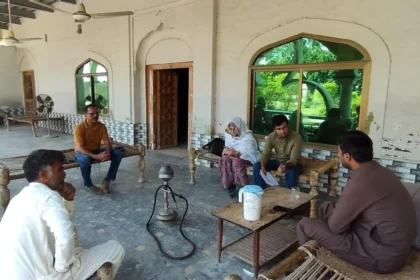
The matter took a fresh turn when Aun Ali travelled from Quetta to Islamabad and visited the Pakistan Information Commission’s office to submit his point-by-point rejoinder to SCO’s written reply. In a video account of the visit, he said he had hoped to meet the Commissioner and explain the problems being faced by residents of Chorbat Valley. However, he said the Commissioner left after a hearing without meeting him. According to Aun Ali, the Registrar informed him that a meeting could take place on Tuesday.
Aun Ali said he had travelled to pursue the matter because he wanted to represent the concerns of people living in a remote part of Gilgit Baltistan. He expressed disappointment over not getting an opportunity to explain his position and said he was waiting for the next hearing and decision.
In its reply, SCO stated that four mobile towers were serving Chorbat Valley and all four were operational at the time of its response. It said any daily outages remained within normal operational limits and maintained that the claim of repeated outages lasting two consecutive days had not been supported by technical evidence provided by the applicant.
Aun Ali, however, said his request was not limited to whether the towers were functioning on the day of SCO’s reply. He had sought monthly uptime and outage records for the previous two years, including the dates, duration, affected areas and recorded reasons for service interruptions. He maintains that SCO’s statement about the current status of towers does not address that request.
The activist also sought copies of fault reports, inspection records, maintenance logs, repair details and corrective action taken on the four towers. SCO replied that technical staff dealt with faults on a best-effort basis and said the applicant had not identified a particular tower, date or fault. Aun Ali argues that he had clearly identified the area and the two-year period, and wants the existing records for all towers serving the valley.
He also asked whether SCO had any approved, proposed or ongoing plans to upgrade, expand or replace mobile network facilities in Chorbat Valley. The information sought included project proposals, feasibility reports, approvals, estimated costs, funding details and expected completion dates.
SCO responded that network expansion depended on technical feasibility, population density, access to the area, financial viability and availability of public funds. It said future projects would require approval and funding. Aun Ali says this general explanation does not show whether any specific project for Chorbat Valley has been proposed, approved or funded.
Another issue raised in the appeal concerns the quality of mobile services. Aun Ali requested the service standards and performance targets used by SCO, along with area-specific reports showing whether those standards were met during the previous two years. SCO referred to a recent Pakistan Telecommunication Authority quality of service survey, saying it had secured first position.
Aun Ali argues that a first position in a general survey does not establish the quality of service in Chorbat Valley. He has asked for the relevant PTA report and any available local test results, complaints and corrective action records relating specifically to the valley.
The impact of electricity failures is also part of the dispute. SCO acknowledged that commercial power outages in the valley could affect mobile connectivity and advised the applicant to approach the relevant Gilgit Baltistan power authorities for electricity outage details.
Aun Ali clarified that he was not seeking electricity records from another department through SCO. He said he wanted SCO’s own information showing how power interruptions affect its towers, how much downtime is caused by power cuts, what backup power arrangements exist and what steps are taken to keep services running.
In its written reply, SCO said it had processed the request and provided the information available with its technical department. It also argued that the Right of Access to Information Act does not require a public body to create new records, technical analysis or compilations that it does not already maintain. SCO denied deliberately withholding permissible information and asked the Commission to treat the appeal as satisfactorily answered and dispose of it.
Aun Ali has requested the Commission to place his rejoinder on record, direct SCO to disclose the existing records in electronic form where available, and require the department to clearly state which records are not maintained or cannot be found. He has also asked that the appeal not be decided only on the basis that all four towers are currently operational.
The case highlights communication difficulties faced by residents of remote areas and the importance of clear information about public services. The Commission’s decision will determine whether SCO must provide further records or whether its existing response meets the requirements of the information law.