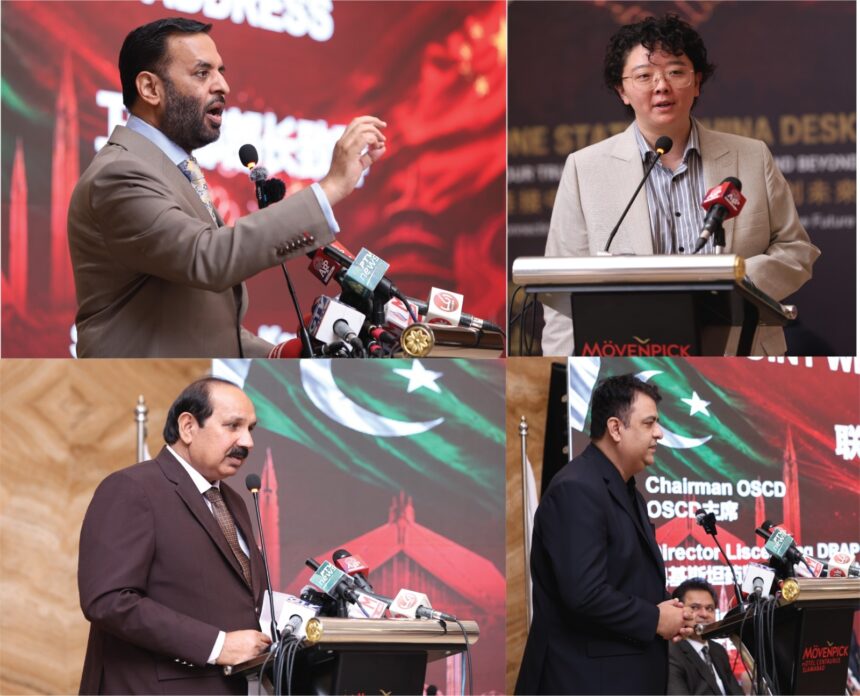
Ten Memorandums of Understanding were signed in Islamabad between Pakistani and Chinese companies to advance API production, vaccine collaboration and pharmaceutical investment, a step officials described as historic for Pakistan’s healthcare sector. The agreements, concluded at a high level ceremony at the Mövenpick Hotel, target local manufacturing of active pharmaceutical ingredients, technology transfer, and capacity building for both human and veterinary vaccines.
Federal Minister for National Health Services Syed Mustafa Kamal called the event a milestone for the industry and said the move toward API production will improve medicine affordability and long term supply security. He noted Pakistan already exports medicines to 51 countries yet remains dependent on imported raw materials, a vulnerability the government seeks to correct through targeted investment and industrial partnerships.
Officials highlighted two flagship agreements of particular strategic value: one focused on pharmaceutical raw material production and technology transfer, and another on poultry vaccine manufacturing. The partnership between Unichem Pharmaceuticals Pakistan and China’s Xinxu Group includes an investment of about Rs. 10 billion and has formally begun technology transfer to enable local production of key APIs, including Omeprazole, which Pakistan has historically imported at high rates.
Another major collaboration involves Lucky Core Group and Chinese pharmaceutical partners to broaden industrial cooperation. The MoUs were signed by Mr. Hamid, CEO of Unichem Pharmaceuticals Pakistan; Mr. Hou, CEO of Xinxu Group; Ms. Gong Yun (Alia), Head of Healthcare Department from the Chinese side; and Mr. Saboor representing Lucky Core Group, with the ceremony witnessed by the federal minister and Parliamentary Secretary for Commerce Dr. Zulfiqar Ali Bhatti.
Speakers at the event emphasised that API production is a strategic national priority tied directly to health security, foreign exchange conservation and export potential. DRAP leadership signalled a shift toward facilitative regulation to attract investors, support technology transfer and ensure regulatory standards that can open additional international markets for Pakistani pharmaceuticals.
The minister underlined vaccine manufacturing urgency, noting Pakistan currently imports poultry vaccines worth around US$4.5 million and that global immunization support is likely to change by 2030. He estimated the country could require roughly US$1.2 billion annually to procure vaccines once external funding arrangements end, reinforcing the need to develop local vaccine capacity now.
Government plans outlined at the summit include activation of the National Institute of Health for manufacturing support, an approved National Vaccine Policy, and efforts to achieve WHO Level 3 regulatory certification in coming months. Officials said these steps would increase export access from the current 51 countries to more than 150 markets, provided regulatory and manufacturing upgrades proceed as planned.
Organisers of the China Pakistan Pharmaceutical Industry Cooperation Summit included the Ministry of National Health Services, the Drug Regulatory Authority of Pakistan, One Station China Desk and the office of the Parliamentary Secretary for Commerce. Delegates described the MoUs as the start of a longer journey toward import substitution, stronger domestic industry, and deeper Pakistan China cooperation in pharmaceuticals and vaccines.
Speakers also placed the initiative in a broader national context, noting rapid population growth adds pressure on health and social systems and that maternal mortality and preventive healthcare remain urgent priorities. By backing API production and local vaccine manufacturing today, policymakers said Pakistan aims to strengthen healthcare resilience, protect public health, and create new opportunities for pharmaceutical exports in the years ahead.