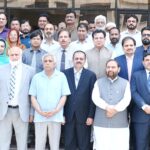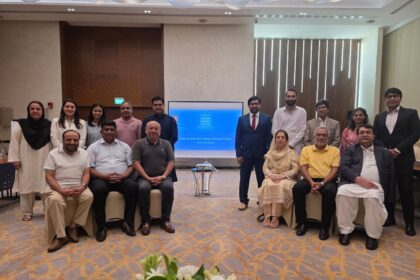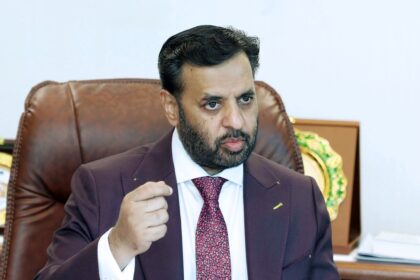




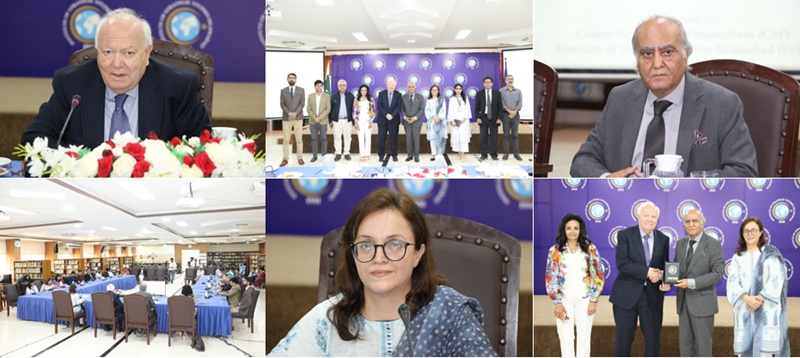
The Centre for Strategic Perspectives at the Institute of Strategic Studies Islamabad hosted a public talk by H.E. Mr. Miguel Ángel Moratinos, United Nations High Representative for the Alliance of Civilizations and UN Special Envoy to Combat Islamophobia. The session drew attention to the growing importance of dialogue and cooperation in a world increasingly shaped by polarization, mistrust and widening global crises.
In her introductory remarks, Dr. Neelum Nigar said the work of the United Nations Alliance of Civilizations remains highly relevant because its emphasis on dialogue among cultures and religions reflects Pakistan’s long-standing commitment to peaceful coexistence, interfaith harmony and respect for all faiths and civilizations. Her remarks set the tone for a discussion centred on coexistence, constructive engagement and the need to strengthen bridges between communities.
Ambassador Khalid Mahmood, in his welcome remarks, said the world is facing an alarming rise in identity-based polarization, hate speech, religious intolerance and violent extremism, while the space for meaningful dialogue continues to shrink. He described Islamophobia as one of the most serious expressions of these trends, warning that it has moved beyond isolated discrimination to become a global challenge that threatens equality, human dignity and religious freedom. Referring to anti-Muslim rhetoric, attacks on places of worship and discriminatory narratives, he said Pakistan has consistently maintained that no religion should ever be linked with terrorism or extremism. He also recalled Pakistan’s role in supporting the United Nations General Assembly’s designation of the International Day to Combat Islamophobia and welcomed the appointment of the UN Special Envoy to Combat Islamophobia.
Delivering the keynote address, Mr. Moratinos said the international system is at a defining turning point marked by geopolitical fragmentation, declining confidence in multilateral institutions and a growing list of transnational challenges. He argued that rebuilding trust, restoring dialogue and strengthening intercultural understanding are no longer idealistic goals but strategic necessities for peace, security and development. According to him, the world must shift away from confrontation and return to collective action if it is to respond effectively to present and future challenges.
He noted that global discourse has become increasingly dominated by narrow security concerns, while the broader goal of sustainable peace has often slipped from focus. Pointing to ongoing conflicts, inequality, climate change and the rapid rise of artificial intelligence, he said the international community must treat these issues as interconnected rather than isolated. While acknowledging the promise of AI, he also warned that it brings serious ethical, social and governance questions that require responsible regulation and stronger international cooperation.
Mr. Moratinos stressed that challenges such as climate change, terrorism, pandemics, artificial intelligence and sustainable development cannot be tackled by any one country acting alone. He said the central question of this century is whether states have the political will to cooperate in addressing common problems. Reaffirming that multilateralism remains the most credible framework for collective action, he said dialogue and international cooperation are essential for a more stable and prosperous future.
Expressing concern over deepening polarization, cultural divisions and misinformation, he warned that diversity is too often framed as a source of conflict rather than a strength. He said inclusive societies based on pluralism, mutual respect and intercultural dialogue are better placed to prevent conflict, counter extremism and promote peaceful coexistence. In this context, he highlighted the role of the United Nations Alliance of Civilizations in building understanding across societies and civilizations.
Referring to Pakistan, Mr. Moratinos said the country is well positioned to help address global challenges because of its strategic location, active diplomacy and role as a bridge between regions and civilizations. He commended Pakistan’s support for the United Nations, its contributions to peacekeeping and its commitment to multilateral cooperation. He also pointed to Pakistan’s civilizational heritage as a source of valuable lessons in cultural interaction and mutual understanding.
He concluded by calling for a renewal of multilateralism in line with current geopolitical realities and the emerging multipolar order. He said countries such as Pakistan have an important role in advancing inclusive diplomacy, strengthening intercultural understanding and contributing to cooperative global governance. Reaffirming the mission of the United Nations Alliance of Civilizations, he said dialogue and cooperation remain the most effective tools for building trust, reducing divisions and shaping a more peaceful world.