



Author: Arqum Bin Habib
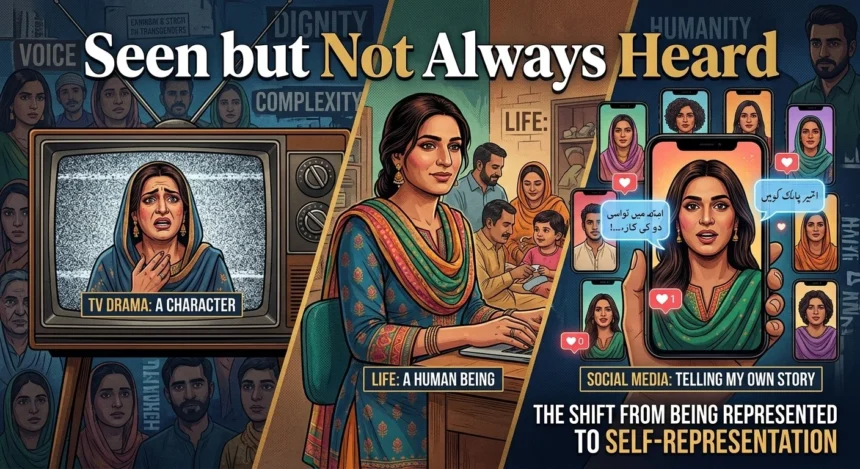
For people in Pakistan, their first time seeing a trans person might not have been in their neighborhood, at a workplace, or at school, but on television or in a movie. This means that how transgender people are shown in the media has significant consequences for public opinion. Transgender people in Pakistan still face a lot of problems, like social discrimination, exclusion, and lack of employment opportunities. There is another question that we should be asking: what do people in Pakistan see when they look at the transgender community? Pakistani television and movies have talked about transgender and gender issues many times, which has brought up questions about being treated unfairly, acceptance and rejection among families, and being socially excluded. Some examples are the shows Khuda Mera Bhi Hai, which was about a child who was born trans, and Alif Allah Aur Insan, which had transgender characters in a bigger story about faith, society, and relationships. These shows were important because they brought these issues to light. Television can introduce people to different set of ideas and experiences that they might not have otherwise. Just seeing something on television does not mean that people will understand it. This is where things get complicated for the media. If transgender people are only shown as victims, just for comic relief, or as symbols of suffering, then people might start to think that is all they are. Seeing people on television can challenge stereotypes, but it can also reproduce them.
In Rani, a transgender woman becomes the central character in a story about caring for an abandoned child. Rather than reducing the character to a social issue, the film explores responsibility, compassion, and human relationships. Building on this more nuanced portrayal, the movie Joyland offers another example of how transgender characters can be depicted with depth and complexity. The 2022 movie by Saim Sadiq puts a transgender character, Biba, at the center of a story about a man and his family and the pressures of a very male-dominated society. Biba is not a background character or someone to feel sorry for. She has her personality, desires, and dreams, and her relationship with Haider is a big part of the story. Joyland also showed how hard it can be to represent people in a way that challenges what society expects. The government first allowed the movie to be shown. Then the government of Punjab banned it, and there was a lot of debate about it on social media and in public. The federal government eventually allowed th e movie to be shown after some changes were made.
For a long time, television and movies controlled how marginalized communities were represented. Now transgender people in Pakistan are using social media platforms to tell their own stories. Social media can be a place where people can talk directly about their experiences rather than being represented entirely through the perspective of writers, directors, journalists, or television producers. Social media can also create new problems, as a person’s identity can quickly become something that everyone is talking about. A video that is meant to raise awareness can become something that people make fun of. It can lead to harassment or unwanted attention. The difference between visibility and dignity can therefore become very small online. This is why the media needs to do more than just show transgender characters on television. The question is not whether trans people are visible or not. The question is how they are visible. A transgender person should not have to be in the news only when something bad happens to them, be in a drama as a symbol of suffering, or be on social media only as entertainment. When people are allowed to appear as human beings with families, jobs, dreams, relationships, disagreements, vulnerabilities, and ordinary lives, then representation becomes meaningful. The media itself cannot solve discrimination on its own, but it can help shape how people perceive others. Laws, education, jobs, and social attitudes all matter. Stories can influence how people understand those they may not know personally. Television dramas and films, like those being made in Pakistan, can make something unfamiliar seem familiar. A movie can create empathy. Social media can allow people to speak for themselves. Pakistan has already started telling stories about its transgender community. The next step is to tell those stories with complexity, dignity, and humanity.
The question is no longer whether Pakistan’s transgender community deserves to have a voice. The question is whether the media is willing to listen to that voice or whether it will keep telling the story for them.
About the Author
Arqum Bin Habib is a Visiting Faculty member in the Arts and Media Department at Foundation University and a Senior Graphic & UI/UX Designer at ITnow Inc. His work combines academic experience with professional expertise in graphic design, digital media, and user experience.