



ISLAMABAD: Ambassador of the Islamic Republic of Iran to Pakistan Dr Reza Amiri Moghadam has said that Pakistan and Iran, as neighbouring countries with deep historical, cultural and people-to-people ties, have a shared interest in strengthening cooperation across all areas.
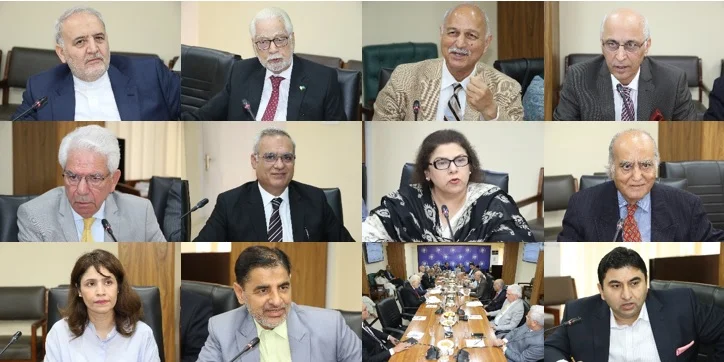
Speaking at a roundtable discussion at the Institute of Strategic Studies Islamabad (ISSI) on October 8, the Iranian envoy said the geographical proximity of the two countries offered significant opportunities to expand trade, connectivity and regional economic cooperation.
“Pakistan and Iran, as neighbouring countries with deep historical, cultural and people-to-people ties, have a shared interest in strengthening cooperation across all areas. Our geographical proximity provides significant opportunities to expand trade, connectivity and regional economic cooperation,” he said.
Dr Moghadam said Pakistan and Iran shared a long border and maritime connectivity, adding that these factors, along with historic and cultural linkages, provided a strong basis for further strengthening bilateral relations.
He said geographical proximity could help reduce transportation and logistical costs, creating greater space for bilateral trade. The ambassador highlighted Iran’s potential as a gateway for Pakistan to Central Asia, the Caucasus, Turkiye and European markets. He said Pakistan, in turn, could provide Iran access to markets in South Asia and beyond.
The Iranian ambassador identified road, maritime and railway connectivity as key pillars of bilateral economic cooperation. Referring to possible cooperation among Karachi, Gwadar and Bandar Abbas, he underlined the need to expand border crossings and improve border infrastructure.
He also highlighted the potential for increased Pakistani food exports to Iran and greater transit activity through Pakistan.
On railway connectivity, Dr Moghadam said Iran had developed infrastructure towards Zahedan and the Pakistani border. He added that further development on the Pakistani side would be required to establish an effective rail link connecting Pakistan with Central Asia and European markets.
Discussing regional security, the ambassador appreciated the solidarity expressed by the government and people of Pakistan during the hostilities between the United States and Iran.
He acknowledged the diplomatic efforts of Prime Minister Muhammad Shehbaz Sharif, Field Marshal Asim Munir and Pakistan’s senior leadership in seeking de-escalation and facilitating dialogue.
Dr Moghadam said Iran remained committed to negotiations and a peaceful and sustainable solution, while maintaining readiness to respond to security challenges if needed.
Referring to the Islamabad Memorandum of Understanding, he said credible commitments and their implementation were essential for future diplomatic processes.
The ambassador expressed concern over continuing tensions in Lebanon, Syria, Yemen and Gaza, warning that prolonged confrontation was pushing the region towards greater instability. He called for sustained diplomatic efforts to reduce tensions and promote peaceful solutions.
He concluded by saying that stronger and sustained bilateral engagement between Pakistan and Iran was important for regional peace and stability.
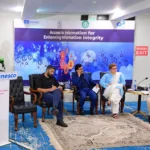
The roundtable was hosted by ISSI and organised by its Centre for Afghanistan, Middle East and Africa under the Ambassador’s Platform. The discussion was moderated by ISSI Director General Ambassador Moin Ul Haque.
Pakistan’s former senior diplomats, politicians and military officials, leading academics and security analysts attended the discussion.