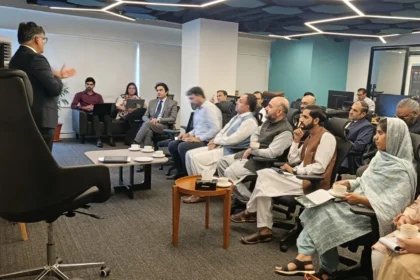




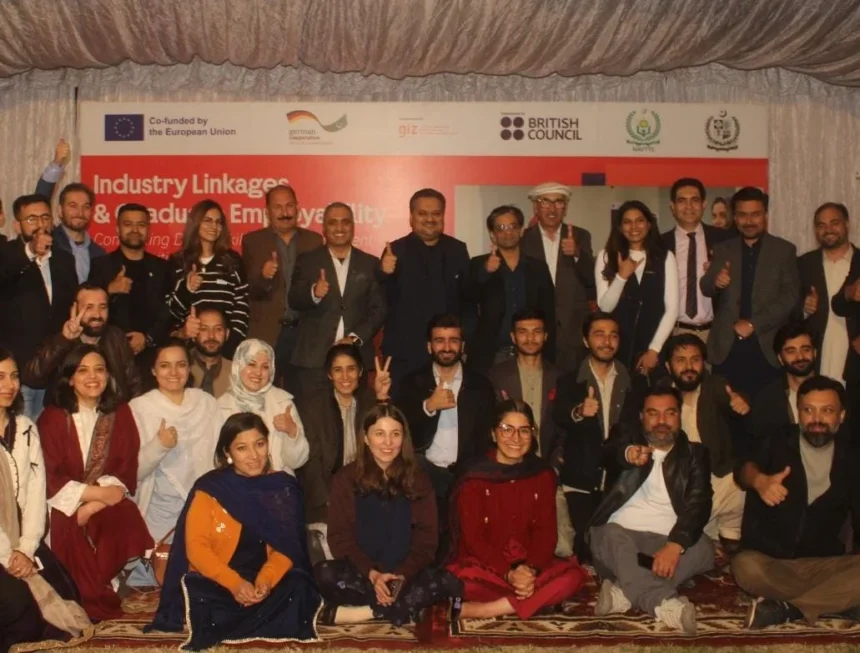
Islamabad: The Pakistan Software Houses Association (P@SHA) has joined hands with the British Council under Team Europe’s Technical and Vocational Education and Training (TVET) Sector Support Programme to host a session on Industry Linkages and Graduate Employability at Serena Hotel, Gilgit.
Muhammad Zohaib Khan, Chair Special Initiatives at P@SHA, said the session was aimed at highlighting the importance of trilateral coordination and synergy among the government, academia and industry.
Addressing the forum, Zohaib Khan said Gilgit-Baltistan possessed immense untapped digital talent that could contribute significantly to national IT exports and local job creation. He, however, pointed out that the region’s economic potential depended critically on reliable, uninterrupted and high-speed internet connectivity.
He cautioned that without robust digital infrastructure, the youth of Gilgit-Baltistan would remain cut off from opportunities in the global market. He also stressed the need for synchronised government-academia-industry linkages to align university and TVET curricula with real-time IT export demands.
P@SHA is also collaborating with the Gilgit-Baltistan Software Houses Association (GBSHA), the local IT sector association, in policy advocacy, skills development, export facilitation and employment generation.
The event featured panel discussions with regional and national stakeholders, including Muhammad Zohaib Khan; Prof Dr Abdul Razaq, Acting Vice Chancellor of Karakoram International University (KIU); and Zameer Abbas, Secretary IT, Gilgit-Baltistan. Former P@SHA Central Executive Committee member Nadia Iqbal also attended the session.
P@SHA said the participation reflected its continued commitment to grassroots IT infrastructure and regional development initiatives in the territory.
Dr Shoab Ahmed Khan, Chairman of P@SHA, said national IT export targets could not be achieved by focusing only on major metropolitan hubs. He said integrating underserved regions such as Gilgit-Baltistan into the national IT mainstream was a strategic priority for P@SHA.
He added that, through collaborative interventions supported by international partners including the European Union and the British Council, P@SHA was working to ensure that regional graduates gained accredited and in-demand technical competencies linked directly with high-value employment.
P@SHA said it remained committed to advocating for nationwide telecom and digital infrastructure improvements so that talent across Pakistan could contribute to the country’s knowledge-based export economy.