




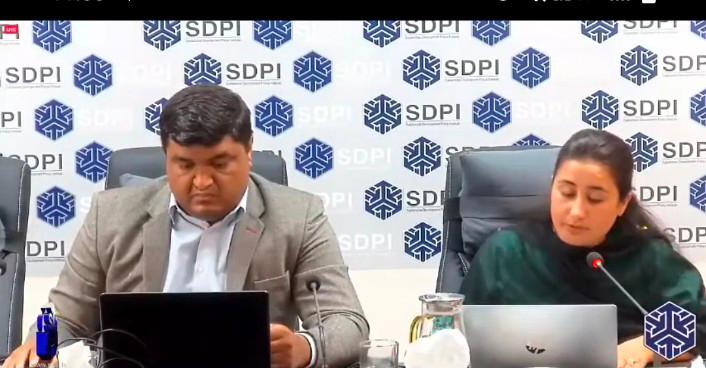
Islamabad, April 14, 2026 — Policy experts, environmentalists and development practitioners urged coordinated action to tackle the smog crisis driven by crop residue burning and black carbon emissions in Punjab. The consultation brought together government officials, researchers and civil society to map practical steps that can be implemented at provincial and district levels.
Malik Amin Aslam noted that Pakistan already has solid research identifying pollution sources and solutions but suffers from weak implementation. He called for stronger enforcement of clean-air policies and for Pakistan to adapt lessons from regional successes such as Beijing and Delhi where coordinated interventions helped reduce smog.
Zainab Naeem of SDPI stressed market-based and circular economy approaches that link farmers with small and medium enterprises to turn crop residues into a resource rather than waste. She argued that enabling farmers to sell residues would reduce open burning and create new rural value chains.
Mohsin Rose from the World Bank Pakistan emphasised the need for integrated cross-sectoral coordination and digital data-sharing mechanisms between public institutions and private stakeholders. He recommended short-, medium- and long-term strategies guided by research-driven planning to achieve measurable air quality improvements.
Dr. Ambreen Latif of the EPCCD Punjab described recent institutional steps, including approved provincial climate plans and the launch of data dashboards to improve transparency and coordination. She also highlighted biomass-based energy initiatives as a viable alternative to open burning of crop residues.
Abid Omar of the Pakistan Air Quality Initiative recommended expanding real-time air-quality monitoring by combining satellite, remote sensing and ground-based networks. Better forecasting and localized monitoring would allow targeted, district-specific responses such as selective school measures rather than blanket actions.
Dr. Umar Maqsood from FAO Pakistan called for direct engagement with farmers through sustainable agriculture initiatives and field-level demonstrations to promote climate-smart practices and reduce greenhouse gas emissions from cropping systems.
The experts also urged standardized national data reporting, development of crop suitability maps, improved access to machinery for smallholders through government-supported service delivery, stronger private-sector engagement and regional cooperation on clean air diplomacy. They agreed that coordinated institutional action, farmer incentives and integrated monitoring systems are essential to addressing the smog crisis and ensuring sustainable environmental management across Pakistan.