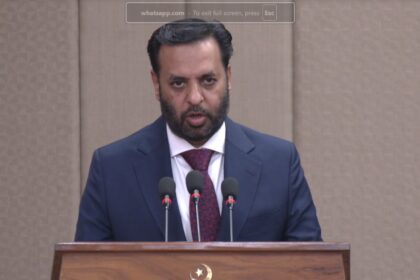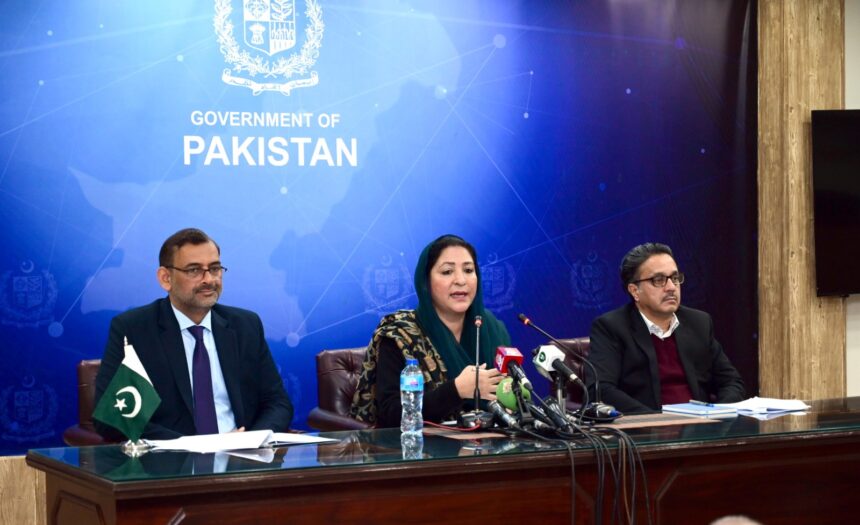
In Islamabad on 27 January 2026, Minister of State Ms. Wajeeha Qamar set out a broad package of measures to strengthen accountability, merit and public trust through digital transparency across the federal education sector.
Ms. Qamar said that since 2024 all procurements within the Ministry of Federal Education and Professional Training are conducted under PPRA rules through the e-Pak Acquisition and Disposal System (EPADS). Tenders are openly advertised while bid opening, evaluation and award processes are digitally recorded and financial approvals follow defined digital workflows to reduce manual intervention and the scope for favoritism.
The ministry has been 100 percent E-Office compliant since February 2019, making it one of the first federal ministries to reach full digital correspondence and approval workflows. This e-office compliance ensures complete audit trails, time-bound decision-making and elimination of undocumented verbal instructions.
A monitoring and reporting portal is currently operational for Federal Directorate of Education schools, and an AI-based Education Management System is under development to support evidence-based decisions through structured digital reporting of projects and programmes.
All public complaints related to education services are routed through the Prime Minister’s Performance Delivery Unit with strict monitoring and defined timelines, creating a transparent and trackable response mechanism that reduces reliance on informal influence.
NAVTTC trainings now follow merit-based written tests, monitored delivery and strict syllabus compliance. Databases are maintained for successful trainees with periodic follow-ups to track employment outcomes and assess training effectiveness.
Higher education reforms include implementation of HEC’s centralized ERP system Maktab in 25 universities with nationwide expansion planned. Maktab digitizes the entire student lifecycle to cut delays, reduce errors and enable real-time oversight. HEC has also introduced blockchain-based degree verification to provide tamper-proof, globally verifiable academic credentials and enhance Pakistan’s academic credibility abroad.
The Federal Directorate of Education launched its first centralized e-Admission Portal for BS programmes in the Islamabad Capital Territory to ensure transparent and efficient admissions. The IBCC One-Window Online Platform now delivers end-to-end digital services for attestation, equivalence and verification with QR-based verification, online tracking and doorstep delivery to reduce time and cost for citizens.
The DGSE Reform Agenda 2025 has introduced merit-based recruitment, PPRA-compliant procurements, digital monitoring systems and citizen engagement mechanisms including Khuli Kacheris. The establishment of a Centre of Excellence for Autism under PSDP was presented as a landmark initiative governed through transparent, expert-led oversight.
FBISE has deployed an AI chatbot for public queries, digital payment systems, AI-assisted assessment of descriptive papers, online selection of evaluators and strengthened quality assurance in e-marking. Together these steps are intended to institutionalize digital transparency, limit discretionary practices and deliver efficient, technology-driven, citizen-focused education services across Pakistan.