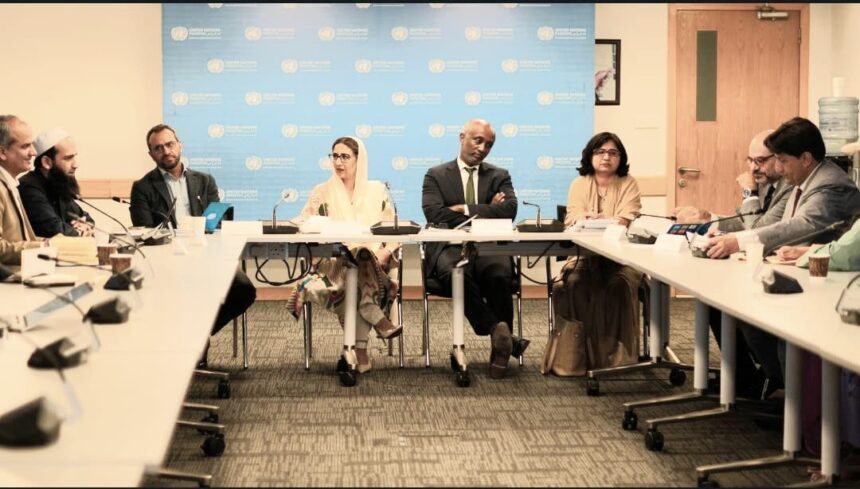
Experts at a policy dialogue in Islamabad warned that policy coherence, domestic resource mobilization and targeted social protection are essential to ensure a just and sustainable energy transition in Pakistan. The event, organised by the Sustainable Development Policy Institute and UNESCAP, also showcased the Economic and Social Survey of Asia and the Pacific 2026.
Dr Shezra Mansab Ali Khan Kharal, Minister of State for Climate Change, said the energy transition must be linked to socioeconomic development to preserve productivity, price stability and inclusive growth. With limited fiscal space, she underlined the need to mobilize private investment, international climate finance and innovative funding mechanisms to make the transition financeable and realistic, while managing trade-offs and political economy challenges such as resistance from vested interests and distributional impacts.
The minister stressed integrated policymaking and protection of vulnerable groups, calling for sustained coordination across federal and provincial governments and stronger regional cooperation to bolster implementation capacity. She urged practical implementation strategies that reflect Pakistan’s fiscal and institutional realities.
Dr Sajid Amin Javed, Deputy Executive Director of SDPI, argued that the global shift to green energy must be embedded within Pakistan’s economic governance framework. He emphasised policy coherence across social, economic and energy sectors to avoid unintended trade-offs and warned that weaknesses in the global energy architecture increase the urgency of a clean energy transition while ensuring safeguards for vulnerable populations.
Dr Hamza Ali Malik of UNESCAP noted that while the Asia Pacific accounts for a large share of global growth, the region faces rising risks from geopolitical tensions, inflation volatility and slowing growth. He recommended enhancing economic resilience through targeted, temporary and transparent fiscal support for vulnerable groups while anchoring inflation expectations. He also said health, education and social protection must remain central as conflicts threaten remittances and purchasing power.
Dr Malik proposed a pragmatic three step approach to achieve an energy transition alongside socioeconomic prosperity: set clear transition goals such as reducing fossil fuel dependence and expanding renewable energy; confront political economy obstacles including institutional fragmentation and resistance from incumbent industries; and sustain reform momentum through behavioural incentives and deeper regional cooperation. He advised relying more on domestic and regional demand, integrating macroeconomic stability with energy policies and adopting consultative, context specific pathways.
Dr Samuel Rizk from UNDP highlighted Pakistan’s evolving socioeconomic situation after recent floods and political changes, urging the operationalisation of frameworks like URAAN Pakistan and Nationally Determined Contributions. He cautioned that over reliance on international finance is unsustainable and called for stronger domestic resource mobilisation so energy transition investment can also stimulate economic growth.
Dr Shazia Ghani from the Prime Minister’s Office pointed to structural constraints including limited fiscal space, technological gaps and difficulties in accessing climate finance. She recommended realistic, phased targets aligned with Pakistan’s capacity and noted that market driven solutions such as household solar uptake show promise. Dr Ghani emphasised moving beyond a narrow reliance on monetary policy to focus on implementation of reforms.
Raja Mohsin Hasan, Economic Advisor at the Ministry of Finance, described the report’s recommendations as grounded in realities on the ground and urged sustaining growth momentum while seizing emerging opportunities such as electric vehicle investment.
In closing, UN Resident and Humanitarian Coordinator Mohamed Yahya described energy security as a national security concern, saying energy independence and resilience are prerequisites for development. He called for accelerating the energy transition through a mix of incentives and strategic prioritisation to protect the most vulnerable and strengthen national resilience.
Participants agreed that a successful energy transition in Pakistan requires coordinated policy coherence, robust domestic resource mobilisation, and targeted social protection to manage distributional impacts and sustain reform momentum. By aligning economic governance with clear, financeable transition pathways and greater regional cooperation, Pakistan can pursue a just energy transition that supports growth and protects vulnerable communities.