



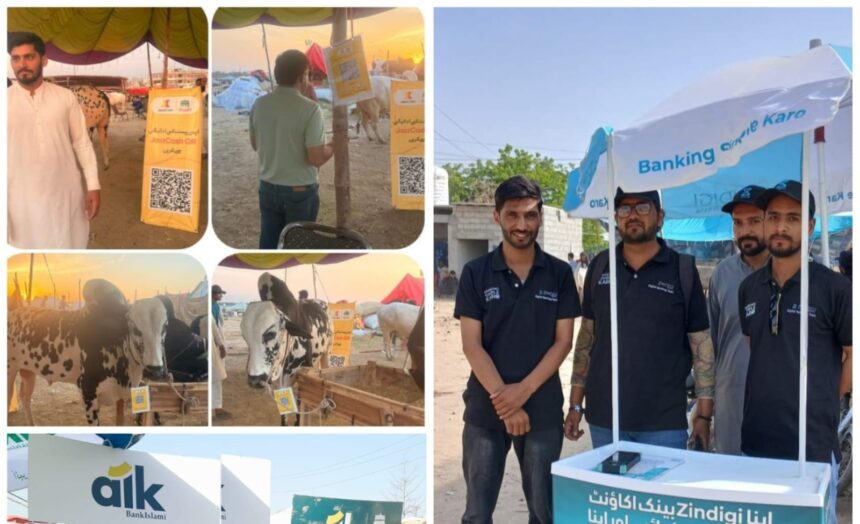
The State Bank of Pakistan in Rawalpindi has stepped up efforts to expand the digital economy by ensuring the presence of bank stalls and representatives in 13 major livestock markets to promote Cashless Livestock transactions. The initiative aims to raise digital awareness, register buyers and traders for online payments, and enable secure digital purchases of animals.
Markets covered under the programme include Tench Bhata market in Rawalpindi, Chackri Road, Rawat, Gujar Khan, Wah Cantt, Taxila, Kahuta, Chakwal, Talagang, Dina, Dhudial, Kallar Syedan and Pachanand. These locations now host a supportive ecosystem where customers receive guidance on digital payments and traders can be onboarded to accept electronic transactions.
At Tench Bhata market, banks have set up ground-level booths to provide immediate assistance with payment issues and remove barriers to digital transactions. The district administration and cantonment board partnered to offer space free of charge to banks, enabling quick deployment of services. More than ten banks and fintech firms are actively participating to promote digital payments in the markets.
Beyond onboarding buyers and livestock traders, participating banks are also registering related service providers such as animal feed shops and refreshment stalls so the broader market economy benefits from digital payment adoption. In Gilgit Baltistan the State Bank is supporting individual trader onboarding where formal livestock markets are not established, extending the Cashless Livestock approach to remote areas.
Shoppers and traders have welcomed the move, saying it reduces the need to carry large sums of cash and lowers the risk of theft, robbery and counterfeit notes. Many market participants now describe digital payments as a safer and more transparent way to buy and sell animals, aligning with the State Bank message to Go Cashless and modernise market transactions.
The State Bank says the programme will help advance the digital economy while curbing cash-related crimes, reinforcing the role of Cashless Livestock payments in improving security and financial inclusion across the region.