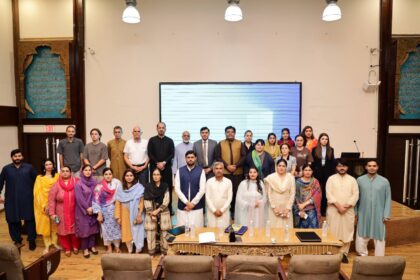




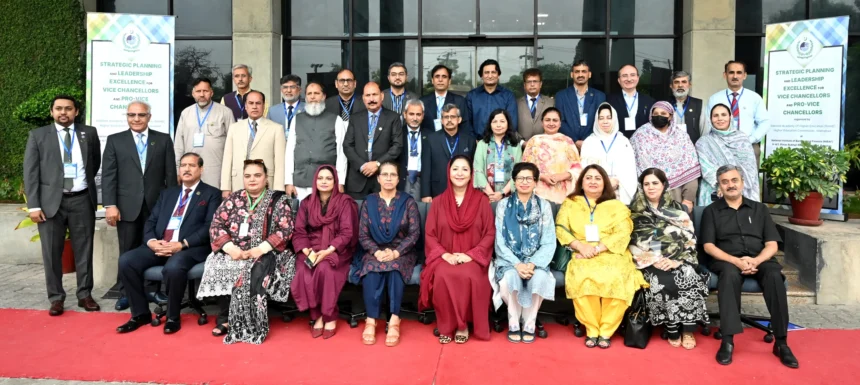
ISLAMABAD, Aug 18, 2026: The National Academy of Higher Education (NAHE), Higher Education Commission (HEC) Pakistan, has launched a three-day workshop titled “Strategic Planning and Leadership Excellence” to strengthen the leadership and management capacity of senior university leadership.
The workshop is aimed at enabling university leaders to effectively address academic, administrative, governance and financial challenges faced by higher education institutions.
The three-day training is being held at the National Institute of Business and Finance (NIBAF). It has brought together Vice Chancellors, Pro-Vice Chancellors, senior Deans and statutory heads of public sector universities from Azad Jammu and Kashmir and Gilgit-Baltistan, along with women universities of Khyber Pakhtunkhwa and the Rawalpindi region.
The training focuses on strategic planning, institutional sustainability, resource mobilisation, governance, performance management, digital transformation in the realm of artificial intelligence, and innovation in higher education. It also provides a platform for academic leaders to exchange experiences and deliberate on emerging trends and opportunities in the higher education sector.
Minister of State for Federal Education and Professional Training Wajiha Qamar was the chief guest at the opening ceremony. Managing Director NAHE Dr Noor Amna Malik and her team were also present.
Addressing the ceremony, the minister underlined the crucial role of university heads in shaping the future of higher education, promoting sustainable institutional development and bringing reforms to the sector.
She said Pakistan was blessed with abundant natural resources and stressed that universities must play their role in developing the knowledge, technology and skilled human capital required to harness these resources for national development.
Ms Qamar called for moving beyond conventional approaches and empowering graduates with the skills and competencies needed to become self-reliant. She emphasised stronger industry-academia linkages and highlighted the need for industry-driven academic institutions that provide students with hands-on training and enhanced employment opportunities.
She further stressed that universities had a paramount responsibility to prepare youth for the modern world. Referring to changing global realities, she observed that the relevance of certain academic disciplines had reduced.
“Redundant disciplines need to be phased out and youth be equipped well to pace up with the world,” she said.
The minister urged the participants to openly identify gaps and express their views about possible solutions to the issues confronting the sector.
“Each one of you should rise and speak up about the challenges and their possible way out so that we may head towards the real solutions,” she said, assuring the participants of her continuous support in a holistic manner.
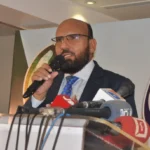
In her opening remarks, Dr Noor Amna Malik said the workshop had been developed to provide university leaders with opportunities to engage with experts and practitioners on critical issues facing the higher education sector.
She shed light on the background of the Strategic Planning and Leadership Excellence workshop, noting that the first exclusive cohort was held in December 2025 for university leadership of Balochistan.
Dr Malik said the current cohort was highly dynamic and diversified, with representation from six universities from AJK, two universities from GB, and three universities each from KP and the Rawalpindi region.
She underlined the importance of universities as individual entities and said it was imperative to work collectively to address their challenges.
“We need to make sure we hold one another’s hands to go forward together,” she said.
She stressed the importance of active participation by the participants and expressed the hope that the workshop would serve as a valuable learning platform and promote collaborative problem-solving.
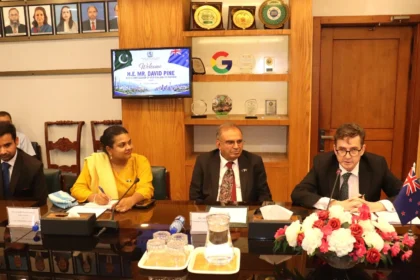
The interactive opening ceremony provided a platform for open discussion, where participants directly exchanged views with the Minister of State on issues being faced by higher education institutions.
Participants highlighted the need for greater collaboration and resource sharing among universities, while acknowledging the unique circumstances and challenges faced by individual institutions.
They emphasised the importance of legislative reforms for university autonomy, formulation of a national model university act and effective implementation of national policies.
The participants also drew attention to stagnation in recurring grants for public sector universities and stressed the need for enhanced public investment in higher education to support institutional sustainability and national socio-economic development.
The discussion further highlighted the importance of diversifying revenue streams and strengthening the financial sustainability of universities. The minister assured the university leadership of her full support to address and alleviate the burning issues and concerns.
The workshop includes in-depth sessions on key areas of higher education management, including sustainability and resource mobilisation; financial management, challenges and potential solutions; Vice Chancellors’ playbook: strategy, stakeholders and sustainable growth; strategic planning and university governance models; standardisation in performance management; and artificial intelligence in higher education: a strategic imperative for Pakistani universities.
The speakers and resource persons include senior officials and experts from various areas.
The training initiative reflects HEC’s continued efforts to strengthen leadership capacity in the higher education sector and support institutional development in AJK, GB and across the country through structured learning and professional development.